Beyond the Grey Zone - Why the War with Iran Marks a Strategic Turning Point
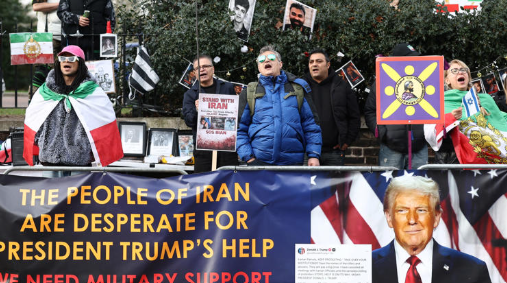
For years, confrontation with Iran remained deliberately ambiguous. Deterrence, covert action, cyber operations, and limited strikes defined a conflict designed to stay below the threshold of open war. That era has ended.
The large‑scale U.S.–Israeli military operation against Iran represents a strategic rupture, not simply an escalation. As analysts note, the speed and scope of the strikes reflected a judgment that traditional tools were no longer sufficient to secure core security interests — particularly in light of Iran’s advances in missile technology and its nuclear program.
Time, once a strategic buffer, had become a liability.
From containment to preemption
The operation reflects a high‑risk preemptive logic. By striking political and military leadership targets alongside critical military and nuclear‑related infrastructure, Washington and Jerusalem signaled a shift toward decapitation and capability degradation, rather than incremental containment.
Yet while the strikes have temporarily reduced Iran’s operational capacity, they have not altered Tehran’s underlying political objectives. Nor have they produced a clearly articulated political end state. As multiple European and transatlantic analysts warn, there is a growing incongruence between ends and means: maximum military force deployed in pursuit of an undefined outcome.
Regime change is implied, but the “day after” remains unplanned.
Escalation without boundaries
Iran’s response underscores the danger. Retaliatory actions — direct and indirect — have expanded what Tehran considers legitimate targets, pushing the conflict out of the grey zone of asymmetric warfare and toward open state‑on‑state confrontation with horizontal escalation across multiple theaters.
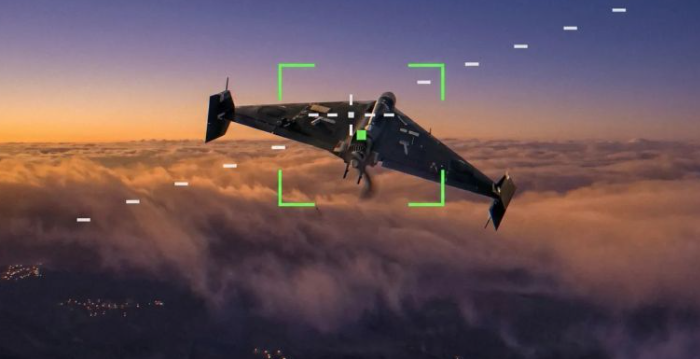
This includes attacks and threats affecting Western military installations beyond the immediate region. Drone strikes on British facilities in Cyprus have already demonstrated how Iranian countermeasures can impact NATO and EU territory without clearly triggering alliance mechanisms.
The result is a strategic grey zone of a different kind: Europe may be affected without being formally at war.
Europe’s uneasy position
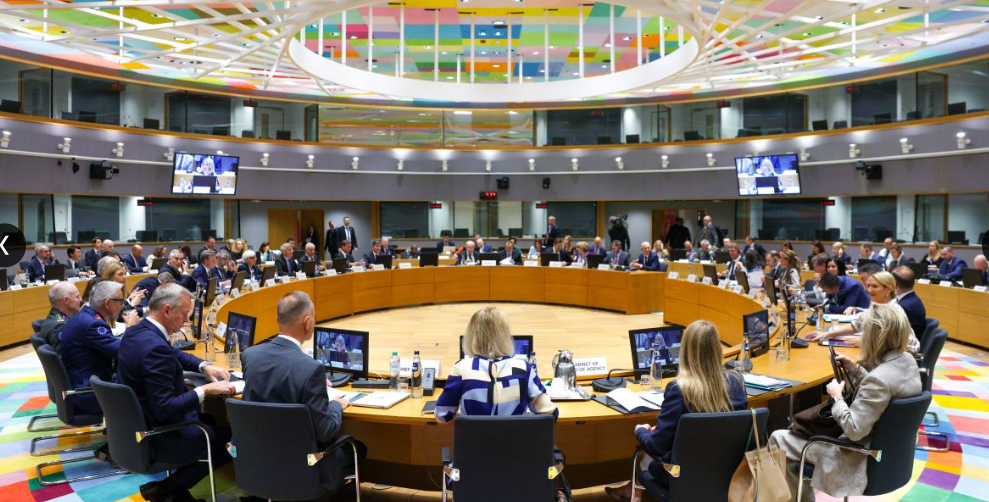
Europe’s response has been fragmented and reactive. Taken by surprise by the scale of the strikes, European governments have struggled to reconcile legal concerns, alliance solidarity, and national security interests.
Germany exemplifies this tension. Chancellor Friedrich Merz initially adopted a firmer tone toward Tehran, condemning the Iranian regime while declining to directly criticize the U.S.–Israeli operation. But as the economic and security consequences of the war have become clearer, Berlin’s position has visibly hardened, reflecting concern over energy prices, regional instability, and the absence of an exit strategy.
Across the EU, the pattern is similar: strong rhetoric, limited leverage.
A geopolitical struggle over space
The conflict is not confined to missiles and airstrikes. It unfolds across strategic пространства — energy flows, sea lanes, military basing, and supply chains. The Strait of Hormuz, Red Sea routes, and forward‑deployed Western installations have become objects of confrontation in their own right.
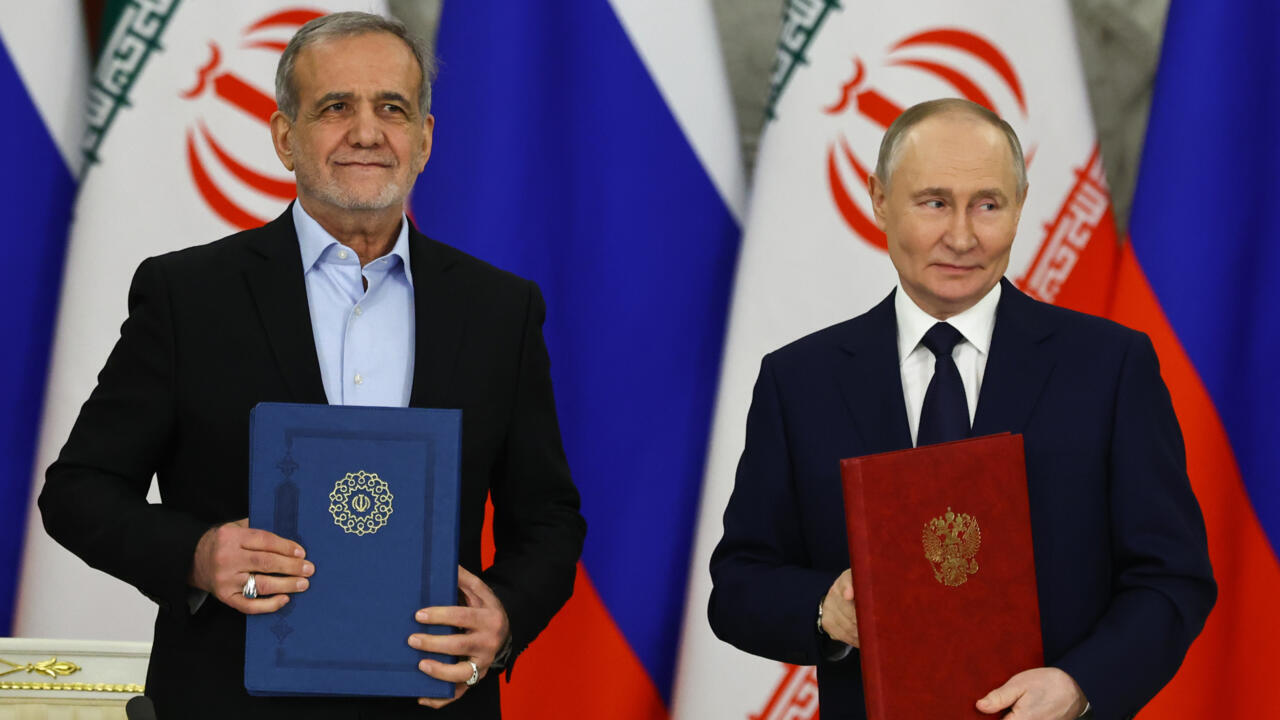
In this sense, the war is embedded in a broader global competition of power. Iran is not only a regional actor but a strategic partner of Russia and a critical energy supplier to China. Disruption in Iran reverberates across Beijing’s energy security calculations and its Belt and Road Initiative.
The implications extend far beyond the Middle East.
Strategic effects, limited durability
Three factors define the current phase of the conflict. First, military effects are inherently temporary, while Iran retains significant capacity to reconstitute its capabilities. Second, there is no clearly defined political end state. Third, the international response remains fractured along existing geopolitical fault lines.
Europe, for now, appears relegated to the role of observer rather than shaper — a position at odds with its exposure to the conflict’s economic, security, and societal consequences.
The war with Iran is not simply another crisis. It is a test of whether escalation can substitute for strategy — and whether Europe can move from commentary to agency before the next threshold is crossed.