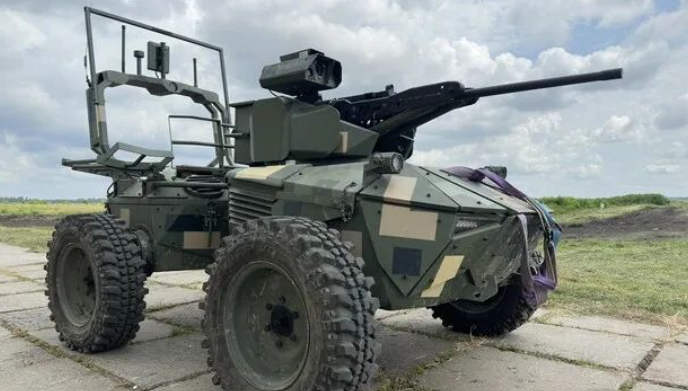
Autonomous Shockwave - Harmattan AI Is Reengineering the Future of Force at Scale
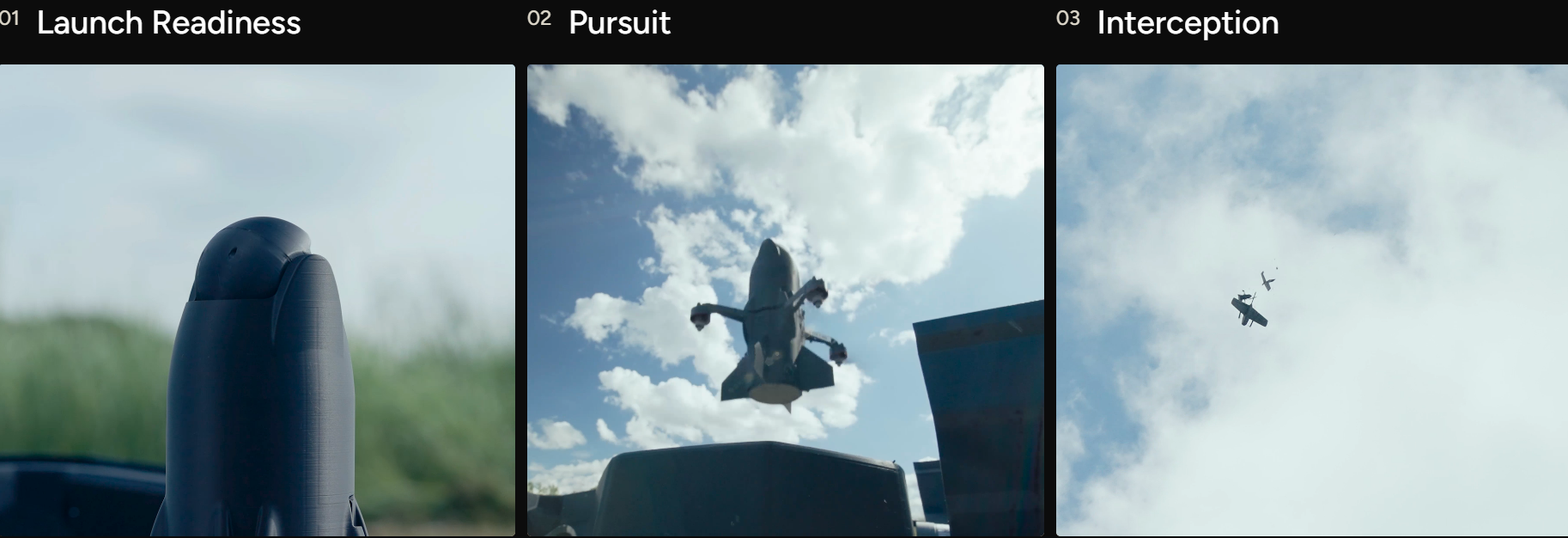
At Eurosatory 2026, amid the usual parade of armored vehicles and missile systems, one message cuts through the noise with unsettling clarity: warfare is no longer about platforms—it’s about coordination at scale.
Harmattan AI is not building better drones. It is building something far more disruptive—autonomous forces.
And that distinction matters.
From Platforms to Systems of Systems
For decades, military innovation has focused on singular excellence—faster jets, more precise missiles, heavier payloads. Harmattan AI flips this paradigm on its head. The company’s vision is deceptively simple yet operationally radical: multiply mass and capability through autonomy.
The result? A transition from individual assets to fully orchestrated, networked forces capable of acting as a cohesive whole.
This is not evolution. It is doctrinal disruption.
Mission Orchestration: The Real Weapon
At the core of Harmattan AI’s offering lies its Mission Orchestration Platform—a digital brain designed to coordinate autonomous systems across mission types and domains. Whether it’s Persistent ISR, VSHORAD, or Precision Strike, the emphasis is not only on execution but on synchronized execution.
Their two-layer autonomy model suggests a structured hierarchy of decision-making—where tactical responsiveness meets strategic intent. In practice, this means fleets that don’t just execute orders—they dynamically adapt, coordinate, and optimize in real time.
A swarm is no longer chaos. It becomes design.
Coordinated Saturation at the Edge
The language Harmattan AI uses is telling: “coordinated saturation at the edge.”
In operational terms, this implies the ability to deploy a high volume of autonomous assets in contested environments, overwhelming defenses not through brute force, but through synchronized intelligence.
It’s a shift from linear engagements to distributed complexity. Defense systems designed to detect and intercept singular threats now face orchestrated waves—adaptive, responsive, and increasingly difficult to counter.
This raises a provocative question:
When autonomy scales faster than defense, who controls the battlefield?
A Portfolio Built for Modern Conflict
Harmattan AI’s ecosystem spans multiple mission capabilities:
- Persistent ISR for continuous situational awareness
- Precision Strike for targeted, high-impact engagements
- VSHORAD for short-range air defense
- Mission Management & Force Readiness to maintain operational tempo
Supporting this capability set are modular system families—Gobi, Kalahari, Sahara, Barkhan, Sonora—each representing building blocks in a larger operational architecture.
These are not isolated products. They are nodes in a network.
Geography Meets Strategy
With locations spanning Europe, North Africa, the Middle East, and the United States, Harmattan AI is positioning itself not just as a technology provider, but as a global defense player embedded within key geopolitical corridors.
This distributed presence mirrors its technological philosophy: decentralized, connected, always at the edge.
The Ethical and Strategic Tension
But innovation at this level does not exist in a vacuum.
The rise of autonomous force multiplication introduces fundamental questions about escalation, control, and accountability. When decisions are accelerated by algorithms and executed by coordinated systems, the margin for human intervention narrows.
Harmattan AI is not alone in this race—but it is among the few openly embracing the idea that autonomy is no longer an enhancement. It is the foundation.
The Future Has Already Begun
The defense industry often speaks in hypotheticals—future capabilities, next-generation systems, emerging threats.
Harmattan AI speaks in the present.
Its message at Eurosatory is unmistakable: autonomy is not coming. It is already operational. Already scaling. Already changing how forces are built, deployed, and understood.
The battlefield is no longer defined by the strongest unit.
It is defined by the most coordinated system.
And if Harmattan AI is right, the winners of tomorrow’s conflicts will not be those who build the best machines…
…but those who teach them to act together.