America’s Border Is Becoming the Pentagon’s cUAS Drone War Laboratory
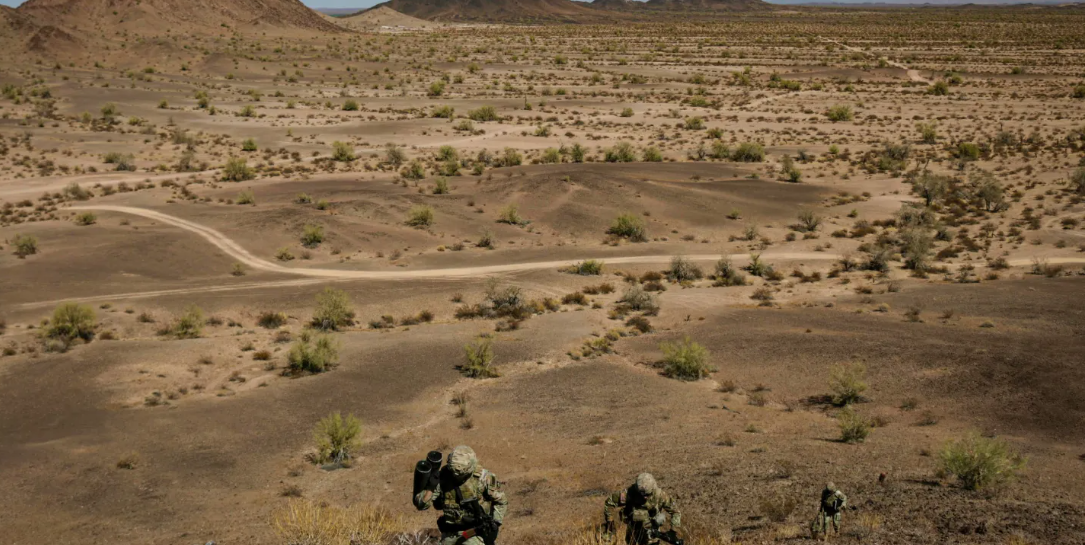
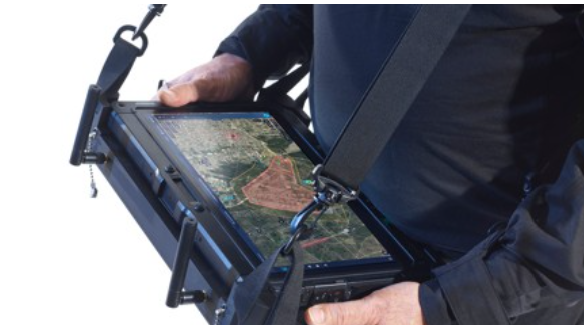
The Pentagon has made a revealing choice about the future of warfare: it is testing tomorrow’s counter-drone battles not first in a distant combat zone, but along the U.S.-Mexico border. In early June, officials confirmed that SkyValor — a counter-UAS “detect and defeat” system developed by CACI International — has now been validated for use across the joint force after a two-day evaluation at Marine Corps Air Station Yuma, Arizona.
That alone is a headline. But the bigger story is what it says about how the Pentagon now sees the drone threat: persistent, domestic-adjacent, and urgent enough to justify rapid field validation in a homeland security environment. DefenseScoop reported that the system adds to a growing suite of counter-drone capabilities being deployed to the southern border, a region that senior U.S. military leaders have explicitly described as a testbed or “sandbox” for such technology.
In other words, the border is no longer just a border. It is becoming a weapons lab.
According to both DefenseScoop and DVIDS, SkyValor was tested over two days in mid-May against drones flying at different ranges, elevations, and flight paths. Joint Interagency Task Force 401, working with Joint Task Force-Southern Border and U.S. Customs and Border Protection, said the system demonstrated long-range counter-UAS capability and 24/7 automated sensing, and that it successfully detected, tracked, identified, and defeated threats at extended ranges.
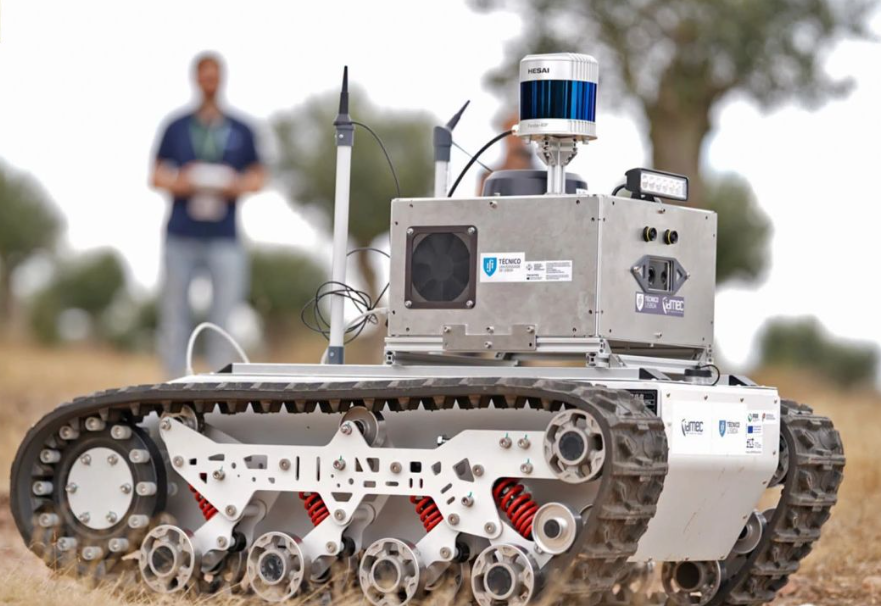
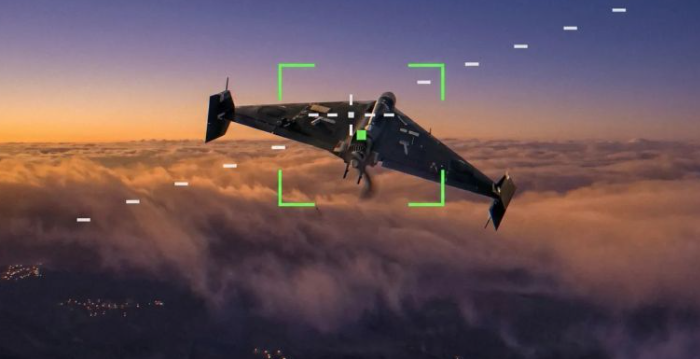
The technical profile is what makes the system especially notable. CACI International says SkyValor can counter drones ranging from small first-person-view systems up to the military’s largest platform category, using non-kinetic jamming at ranges of more than 40 miles in some cases. The company also describes “low/no-collateral” defeat mechanisms, including nets capable of capturing drones from nearly four miles away and radio-frequency jammers using automated sense-and-shoot algorithms.
That phrase — “low collateral” — matters. U.S. officials have repeatedly emphasized that capture and controlled defeat options are important because they can preserve the drone for exploitation, forensics, and attribution. In a threat environment where understanding the drone’s origin can be as valuable as stopping the drone itself, that makes systems like SkyValor strategically attractive.
Still, this is not just a story about one system. It is a story about institutional acceleration. Joint Interagency Task Force 401 exists precisely because the Pentagon decided the drone threat was outpacing older processes. A 2025 Defense Department memorandum establishing Joint Interagency Task Force 401 said the Department needed to “focus on speed over process,” replace the previous office structure, and centralize authorities to deliver counter-small-UAS capabilities faster and at scale.
That policy backdrop makes the SkyValor validation look less like an isolated technical success and more like proof that the Pentagon is changing how it acquires and fields drone defense. DVIDS described the Yuma event as a significant milestone in validating next-generation counter-UAS technology, while DefenseScoop quoted Lt. Col. Adam Scher saying SkyValor is now validated as one component of a layered defense across the joint force.
And yet the story also exposes what is still missing. Even as border-based testing expands, officials have warned about capability gaps. DefenseScoop noted that Gen. Gregory Guillot, commander of U.S. Northern Command, said the military still lacks counter-UAS systems that can follow and protect patrolling troops along the barrier. That means the Pentagon’s counter-drone architecture may be growing, but it is not yet complete.
There is also a bureaucratic undertone here that should not be ignored. The Pentagon’s push on border counter-UAS has involved multiple agencies, including U.S. Customs and Border Protection and the Federal Aviation Administration, and DefenseScoop reported that earlier miscoordination contributed to temporary airspace shutdowns in Texas. Rapid deployment may be necessary, but speed without clean coordination creates its own risks.
So what does this really mean? It means the U.S. military is treating the drone problem the way modern combat demands: as an always-on, layered, networked challenge that spans war zones, borders, and critical infrastructure. The southern border is emerging as the place where systems are not just showcased, but stress-tested under operational pressure before broader adoption.
The most provocative part is not that SkyValor works. The most provocative part is that America’s next counter-drone doctrine may be written in Arizona first — under real domestic pressure, with interagency partners watching, and with the Pentagon racing to close the gap before adversaries force the lesson somewhere far more painful.