Zelenskyy’s MAGA Gamble. Can Ukraine Win Over Trump’s America Before Time Runs Out?
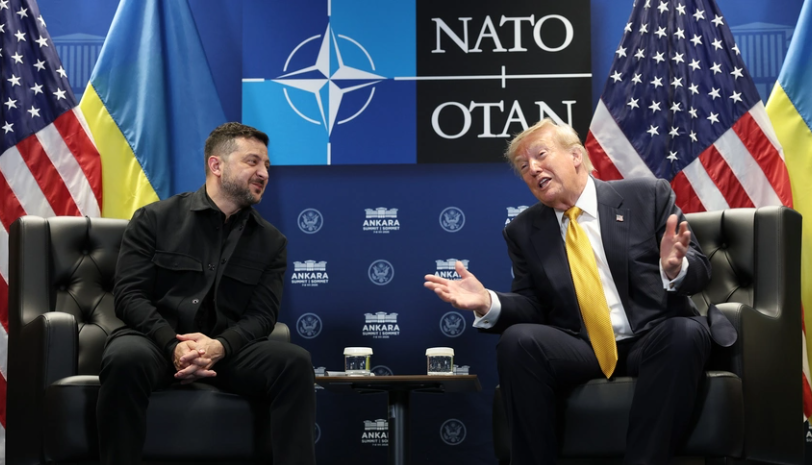
For most of the war, Ukraine fought Russia on the battlefield and skepticism in Washington.
Now President Volodymyr Zelenskyy has opened a new front: the battle for MAGA.
Arriving in Washington this week, the Ukrainian leader faces a political reality that would have seemed unimaginable a few years ago. Ukraine's future may depend less on European capitals and NATO communiqués than on whether Donald Trump's movement decides Kyiv is worth backing.
This is no ordinary lobbying campaign. It is a high-stakes effort to rewrite one of the most entrenched narratives in American politics.
For years, much of the America First movement viewed Ukraine through a lens of skepticism. Billions in military aid, endless congressional debates, and concerns about foreign entanglements turned Kyiv into a symbol of everything many anti-interventionist conservatives opposed.
Now Zelenskyy is trying to change that.
The most unexpected sign of progress came from conservative influencer Laura Loomer, one of Trump's most loyal allies. After visiting Ukraine and meeting Zelenskyy, she emerged as a vocal supporter of Kyiv, arguing that Americans need to understand the war through firsthand observation rather than social media narratives.
Whether her conversion represents a genuine shift or merely a political curiosity remains unclear. But it reveals something important: Ukraine believes persuasion is still possible.
The timing is no accident.
After more than four years of war, Ukraine is entering a new phase. Its expanding drone campaign has fundamentally altered the battlefield. Deep strikes into Russian territory have exposed vulnerabilities in Moscow's defenses and demonstrated Ukraine's capacity to innovate faster than many Western analysts predicted.
Success changes perceptions.
Political movements respect victories far more than pleas for sympathy. Zelenskyy understands that cheering for a winner is easier than financing a victim.
That may explain why the language surrounding Ukraine has begun to evolve among some conservatives. Rather than emphasizing humanitarian concerns, advocates increasingly frame Ukraine as a model of resilience, technological innovation, and military effectiveness. In this narrative, Ukraine isn't a burden. It's a success story.
Donald Trump appears to be watching.
His recent remarks about maintaining a positive relationship with Zelenskyy surprised many observers accustomed to seeing friction between the two leaders. While Trump remains focused on ending the war, his tone has become noticeably less hostile than in previous years.
For Kyiv, that shift matters enormously.
The Ukrainian president arrives in Washington armed with a carefully prioritized agenda: stronger sanctions on Russia, expanded drone cooperation, increased Patriot missile support, and renewed momentum in peace negotiations.
Yet behind every request lies a deeper objective.
Persuade Trump that supporting Ukraine is not a charitable act but a strategic investment.
The challenge is enormous.
Many America First Republicans remain unconvinced. They see domestic concerns, border security, debt, and economic pressures as far higher priorities than a war thousands of miles away. No battlefield success automatically changes those calculations.
And Zelenskyy has lost one of his strongest allies.
The death of Senator Lindsey Graham removes perhaps the most influential Republican advocate for Ukraine on Capitol Hill. For years, Graham served as a bridge between Kyiv and parts of the Republican establishment. His absence leaves a vacuum that will not be easily filled.
That makes this visit especially significant.
Zelenskyy is not merely meeting lawmakers or attending ceremonies. He is trying to reshape the political coalition supporting Ukraine before the next phase of the war begins.
The irony is profound.
The same movement that once symbolized resistance to foreign intervention now contains voices beginning to argue that a Ukrainian victory serves American interests. Whether that remains a fringe position or evolves into a broader trend could determine not only the future of U.S. support but also the trajectory of the entire conflict.
History often turns on unexpected alliances.
Today, as Ukraine fights one of the largest wars in Europe since 1945, Zelenskyy is betting that the road to continued American support may run through the very political movement that once seemed least likely to embrace his cause.
It is a risky gamble.
But in politics, as on the battlefield, survival often belongs to those willing to adapt first.