YFQ-44A from Anduril Industries Integrates with the Experimental Operations Unit

The future of airpower may not arrive with a parade of shiny prototypes. It may arrive the way software does: quietly, iteratively, and with a deployment mindset that treats doctrine as a living document.
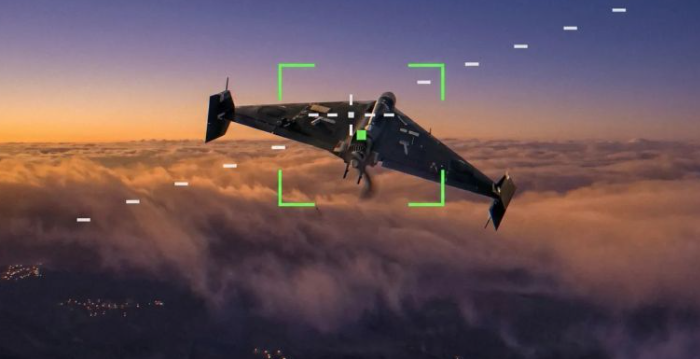
That is the subtext of Anduril’s announcement that its YFQ‑44A has begun experimental testing with the U.S. Air Force’s Experimental Operations Unit (EOU) during an exercise at Edwards Air Force Base. In Anduril’s telling, the point of the exercise was not simply to prove airworthiness, but to bridge the real gap that kills first‑in‑class systems: the gulf between raw capability and day‑to‑day operational integration—tactics, techniques, procedures, sustainment, trust.
The Air Force agrees—at least in public. In an official release, it calls the event a “shift” toward earlier operator‑driven experimentation to refine operational and logistical procedures for deploying and sustaining CCA concepts in contested environments, aligning with a broader “Warfighting Acquisition System” ethos of speed and feedback loops. The EOU’s mission is explicitly described as building a playbook for how CCAs will be integrated and made tactically viable—meaning this isn’t just about flying a drone; it’s about rehearsing the future organization of air combat.
Here’s what made the exercise a milestone: operators ran the full sortie cycle. Reporting on the event describes EOU Airmen executing pre‑ and post‑flight checks, handling weapons loading and unloading, initiating autonomous taxi and takeoff, tasking the aircraft in flight, and managing post‑flight data—work Anduril personnel had previously led. The EOU commander’s quote is unusually blunt about intent: this was done “with a warfighter, not an engineer or test pilot,” controlling prototypes end‑to‑end.
That is the real story: a deliberate inversion of the traditional order. Historically, programs perfect the machine first and invite operators later. CCA flips it—because autonomy without operator confidence is just an expensive science project.
Anduril claims it accelerated this handoff by “front‑loading” autonomy—conducting taxi and flight tests semi‑autonomously from the start—accepting early friction to buy long‑term speed. External coverage echoes that this approach enabled Air Force maintainers to turn the aircraft between sorties with minimal training, supporting the thesis that the hidden cost of autonomy isn’t code—it’s manpower.
Then comes the detail that reads like a doctrine grenade: the ground element. Anduril says its Menace‑T command-and-control compute setup served as the core ground capability, enabling mission plan uploads, autonomous taxi and takeoff initiation, in‑flight tasking, and post‑flight data ingestion—described as compressing what once required fixed infrastructure into “two Pelican cases and a laptop.” Whether that exact packaging becomes standard is almost beside the point. The concept aligns with the Air Force’s Agile Combat Employment logic: distributed operations, reduced footprint, and survivability through dispersion—where the logistics tail is as decisive as the aircraft.
There’s also a competitive clock running. Aviation coverage notes the Air Force is experimenting with multiple CCA prototypes (including the YFQ‑44A and a separate General Atomics entry) and describes the EOU’s role as learning tactics and procedures for a new class of collaborative aircraft, with a production selection expected later—underscoring that doctrine is being written while industry still competes.
The provocative conclusion is not that “fighter drones are coming.” It’s that the Air Force is attempting something rarer: turning acquisition into operations, early—so the system evolves with the people who must trust it. If the EOU model works, the decisive innovation of CCA may be less about autonomy in the air and more about agility on the ground.

.jpg)
.png)