MTU Aero Engines expands its portfolio to include drone engines

In a defence industry obsessed with aircraft and missiles, propulsion rarely steals the spotlight. MTU Aero Engines intends to change that—without making much noise.
With its acquisition of Aero Design Works GmbH, MTU formally enters the market for UAV and guided‑missile propulsion, a sector quietly becoming one of the fastest‑growing pillars of modern airpower. The Cologne‑based company is now a 100‑percent MTU subsidiary, though it will continue to operate as a legally independent entity.
This structure matters. Rather than absorbing Aero Design Works into a heavyweight corporate machine, MTU is preserving what made it valuable in the first place: speed, flexibility, and engineering density.
Aero Design Works emerged in 2011 from Germany’s aerospace research ecosystem and has since carved out a niche in compact gas‑turbine propulsion, delivering turbojet engines up to 400 N thrust. Crucially, it has already moved beyond prototypes into series production, fulfilling sizeable defence contracts while developing higher‑thrust engines for future UAV and missile programmes.
For MTU, the attraction is clear. The company is deeply embedded in Europe’s most important military aviation programmes, from the Eurofighter and Tornado to the CH‑53K helicopter and A400M transport aircraft. It is also contributing to propulsion technology for a next‑generation European combat aircraft, anchoring its role in high‑end, crewed systems.
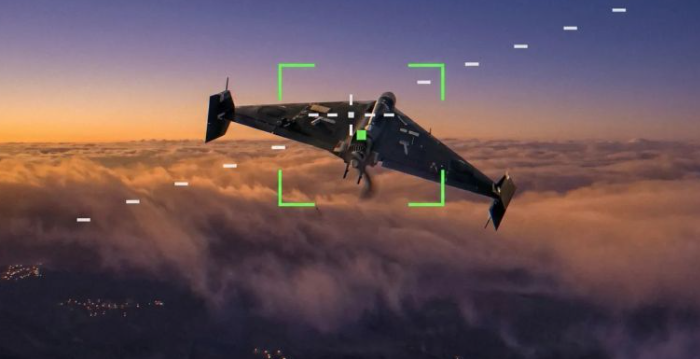
But modern warfare no longer revolves solely around exquisite platforms. It increasingly depends on quantities of autonomous systems—drones for reconnaissance, strike, saturation, and decoys; missiles designed for precision or volume. Those systems rise or fall on the reliability, cost, and scalability of their engines.
MTU’s leadership has been explicit: autonomous and high‑precision systems are becoming central to European defence strategies, and propulsion is a critical enabler of technological independence. By combining Aero Design Works’ turbojet know‑how with MTU’s industrialization capability, the company aims to scale production to meet growing demand from European armed forces and defence manufacturers.
This acquisition also fits a broader pattern. MTU already owns eMoSys, a specialist in electric motors for autonomous systems, giving it a foothold across multiple propulsion technologies for uncrewed platforms. Aero Design Works extends that portfolio into gas‑turbine propulsion, covering missions where endurance, speed, or payload exceed what electric systems can deliver.
There is a strategic message here—one directed as much at policymakers as competitors. Europe’s dependence on non‑European propulsion technologies has long been a vulnerability. By consolidating expertise in both crewed and uncrewed propulsion under a German industrial champion, MTU is positioning itself as a cornerstone supplier for future European defence programmes.
Notably, the transaction avoids the usual excesses of defence megamergers. No restructuring drama. No consolidation rhetoric. Just a focused acquisition aimed at a specific technological bottleneck.
The future of air combat will not be decided solely by the aircraft that dominate airshows. It will be decided by the engines buried inside drones and missiles—systems designed to be produced at scale, deployed fast, and replaced without regret.
MTU understands that. And with Aero Design Works, it has quietly bought its ticket into the uncrewed age.