Why Drone Logistics Will Live or Die on Efficiency And What the Aero‑200 from Dufour Aerospace Gets Right

In commercial drone logistics, performance headlines are easy to chase.
Range, payload, endurance, vertical takeoff—each one makes for a compelling spec sheet. But history has already shown that performance alone does not create viable logistics businesses. Efficiency does.
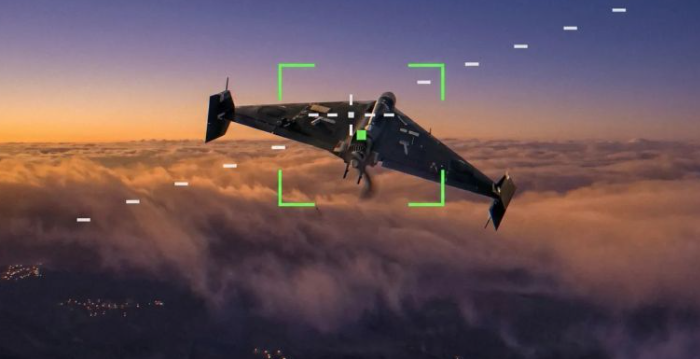
That is the design philosophy behind the Aero‑200, a hybrid‑electric VTOL aircraft built not for short demonstration flights or niche experiments, but for repeatable regional logistics missions.
Its concept is straightforward but deliberate: combine vertical takeoff and landing with the aerodynamic efficiency of fixed‑wing cruise. The result is an aircraft that can operate runway‑independently without accepting the fuel and range penalties that plague pure multirotor systems.
With a wingspan of 6.12 meters and a maximum take‑off mass of 208 kilograms, the Aero‑200 is positioned squarely in the middle ground between light cargo drones and conventional aviation. Its useful load reaches 38 kilograms, while a typical mission profile is defined as 20 kilograms over 200 kilometers, flown at an efficient cruise speed of about 125 km/h.
That distinction matters.
Drone logistics has suffered in part because many platforms are optimized for edge cases—short distances, empty airspace, ideal conditions. The Aero‑200 is designed around a distance where the economics start to matter.
According to data from the International Road Transport Union (IRU), a 200‑kilometer regional road transport mission in Europe typically costs $200 to $400, at roughly $1 to $2 per kilometer, before accounting for congestion, indirect routing, or driver time constraints.
Those are the real numbers drones must compete against.
Helicopters, often cited as an alternative for urgent or remote deliveries, operate in an entirely different cost universe. Analysis by Thunder Said Energy estimates operating costs of roughly $4,000 per flight hour for a platform such as the Airbus Super Puma, with $6,000 or more for a 200‑kilometer mission once time and routing are considered.
This is the efficiency gap the Aero‑200 targets.
By using a hybrid‑electric two‑stroke boxer powertrain running on gasoline, the aircraft avoids the energy penalties of all‑electric VTOL at longer ranges while retaining lower operating complexity than turbine‑based aviation. It is not optimized for zero‑emission marketing narratives—it is optimized for cost per kilometer moved.
Payload handling reflects the same thinking. The Aero‑200 supports internal, front‑loaded cargo as well as slide‑in external payload modules, enabling faster turnaround times and compatibility with different logistics workflows without reconfiguring the airframe.
Just as important is what the Aero‑200 does not promise.
It does not claim overnight transformation of supply chains. It does not position itself as a replacement for trucks everywhere. Instead, it targets the spaces where roads are slow, indirect, congested, or operationally expensive, and where helicopters are economically unjustifiable.
In those zones—regional medical logistics, infrastructure support, spare‑parts distribution, and time‑critical industrial supply—efficiency determines survivability.
The presence of a proprietary flight control system reinforces that intent. Logistics aircraft live or die by reliability, not by experimental autonomy. Control architecture becomes an operational asset, not a demo feature.
Market availability is planned for 2027 serial production, which is another quiet signal. This is not a prototype searching for use cases. It is a platform approaching industrialization.
The drone logistics sector does not need more announcements.
It needs aircraft that fit into balance sheets, not just pitch decks.
If drone logistics is ever going to scale, it will not be because drones can fly.
It will be because they can compete.
The Aero‑200 is built for that argument.