When Cell Towers Become Watchtowers - How France Quietly Built a National Drone Radar
France has just done something that sounds mundane—and is anything but.
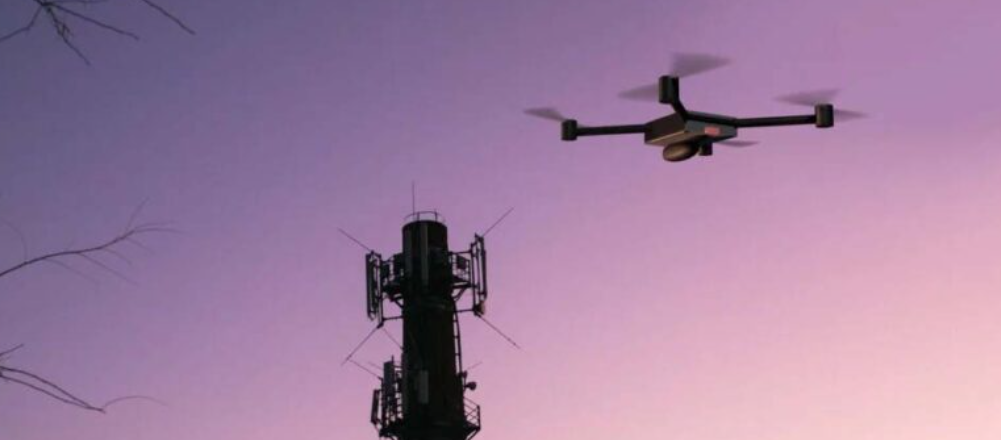
Without unveiling a single new radar dome or deploying visible military hardware, the country has rolled out a nationwide drone detection network by quietly repurposing what it already had: mobile phone towers. Nearly 20,000 of them.
The system, developed by telecom operator Orange and branded Orange Drone Guardian, transforms France’s 5G infrastructure into a persistent, low-altitude surveillance layer. It detects, identifies, and classifies drones across the country, including in dense urban environments. No pilots. No missiles. No dramatic intercepts. Just data—relentless, real-time data.
This is not a sci‑fi concept or a pilot project. It is live. And it makes France the first EU country to deploy drone detection at national scale using telecom infrastructure.
The network was already there
The brilliance—and controversy—of the system lies in its architecture. Orange did not build a new sensor network from scratch. Instead, it leveraged approximately 19,700 tower sites operated by its subsidiary TOTEM, turning rooftops and pylons into elevated sensor positions.
From these vantage points, sensors monitor radio-frequency activity between drones and their controllers. The data flows through Orange’s own network into a sovereign, France-based cloud platform, where it is processed in real time. The result is a continuously updated picture of the low-altitude airspace—an invisible layer of situational awareness hovering just above cities, ports, factories, and stadiums.
For customers, this means no antennas to install, no infrastructure to maintain, and no long procurement cycles. Access is delivered through a subscription model—what Orange calls “drone detection as a service.”
Airports, ports, logistics hubs, critical infrastructure operators, and major event organizers are the primary targets. The pitch is simple: you don’t own the radar; you subscribe to the sky.
Detection, not domination
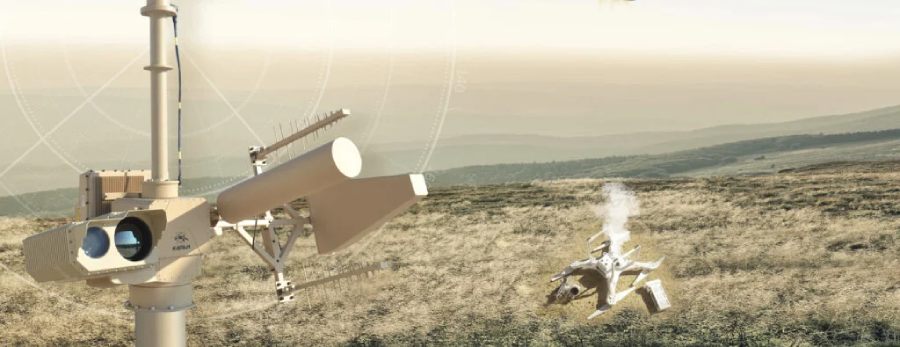
Despite the marketing language, Orange Drone Guardian is not a weapon system. It does not jam drones. It does not take control of them. It does not shoot them down.
The system is purely RF-based, meaning it listens for radio signals exchanged between drones and their operators. Fully autonomous drones, pre-programmed flight paths, or systems using non-RF links may remain invisible. This is not a silver bullet—and Orange does not pretend it is.
Instead, Drone Guardian functions as a command-and-control layer. It provides early warning, classification, and tracking—enough to trigger procedures, protect operations, and hand off actionable information to authorities that are legally empowered to intervene.
In Europe’s tightly regulated airspace, that distinction matters. Civilian operators are often prohibited from deploying countermeasures. Detection, however, is legal—and increasingly essential.
Telecoms as security providers
What makes this rollout truly significant is not the sensor technology itself, but who is operating it.
With Drone Guardian, Orange steps beyond connectivity and into national security infrastructure. Telecom operators are no longer passive data carriers; they are becoming airspace intelligence providers. Their towers double as sensors. Their clouds host sensitive security data. Their networks form the backbone of real-time situational awareness.
This aligns neatly with recent European Commission policy, which explicitly points to 5G networks as a foundation for large-scale drone detection. France is no longer debating that idea—it is implementing it.
The quiet shift
There are no dramatic press photos of intercepted drones. No public countdowns. Just a subtle shift in how the sky is managed.
France has not militarized its airspace. It has digitized it.
And in doing so, it has demonstrated something profound: in the age of cheap drones and ubiquitous connectivity, the most powerful security systems may already be standing—disguised as cell towers, humming quietly above our heads.