What Happens When Drones Go Down? And Why EagleNXT Will Never Allow This to Happen
%20(1).png)
Here’s a question most people never ask:
What happens when a country’s drones stop flying?
Not because of enemy fire. Not because of bad weather. But because a battery fails. A sensor wears out. A spare part never arrives.
In modern security, wars aren’t always lost in battle. Sometimes they’re lost in logistics.
That’s why EagleNXT’s latest delivery to the United Arab Emirates deserves attention — and not just from defense insiders. The company has successfully completed the delivery and customer acceptance of a comprehensive spare parts package for 20 eBee VISION drone systems already operating in the UAE. Quiet. Methodical. Unflashy. And strategically critical.
Because drones that can’t fly are just expensive paperweights.
This follow-on delivery, executed with the support of EagleNXT’s in-country partner, The Drone Centre, a FEDS company, ensures uninterrupted operational capability for the UAE’s eBee VISION fleet. In other words, when these systems are needed — tomorrow, not “eventually” — they will be ready.
And readiness is the real currency of power.
EagleNXT CEO Bill Irby said it directly: “We pride ourselves on working with our customers to help them meet their operational needs, reaching beyond delivery, supporting and sustaining them as they move into day-to-day operations.” That’s not marketing fluff. That’s an admission that the real test of defense technology doesn’t happen at delivery. It happens months later, under pressure, when something breaks.
Most companies sell hardware. Fewer stay for the hard part.
What makes this delivery different is what came with it. EagleNXT provided in-country assistance in the UAE, supporting inventory verification, integration guidance, and acceptance procedures. This wasn’t a drop-and-run transaction. It was hands-on sustainment — the kind that defense planners actually care about.
The effort is part of a two-year agreement that includes spare parts provisioning and maintenance training for UAE operators. Because without trained people and reliable logistics, even the most advanced systems fail.
Ask yourself: how many countries buy cutting-edge technology they can’t fully maintain?
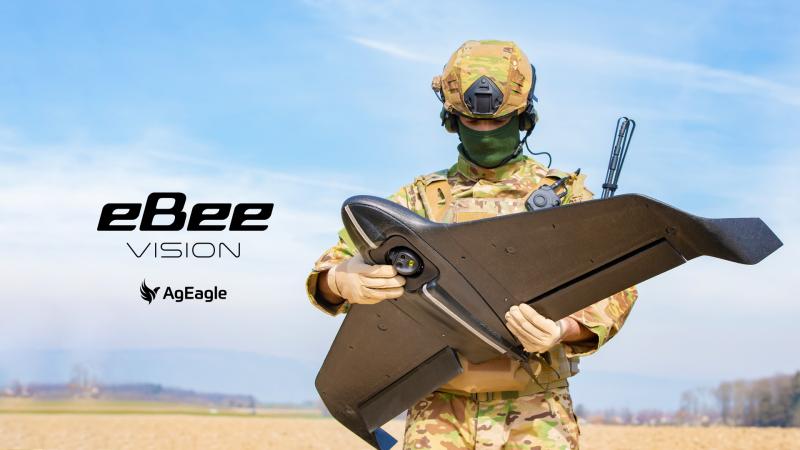
The eBee VISION drone itself is built for environments where failure isn’t an option. Lightweight at just four pounds (1.8 kg), deployable in three minutes, capable of flying up to 90 minutes, and resistant to winds of 38 mph. It operates at ranges up to 12 miles and — crucially — continues functioning in GNSS-denied conditions.
That last detail should make you pause.
In an era where electronic warfare and GPS jamming are no longer theoretical, systems that depend entirely on satellite navigation are liabilities. The eBee VISION is designed for the world as it is, not the one described in brochures.
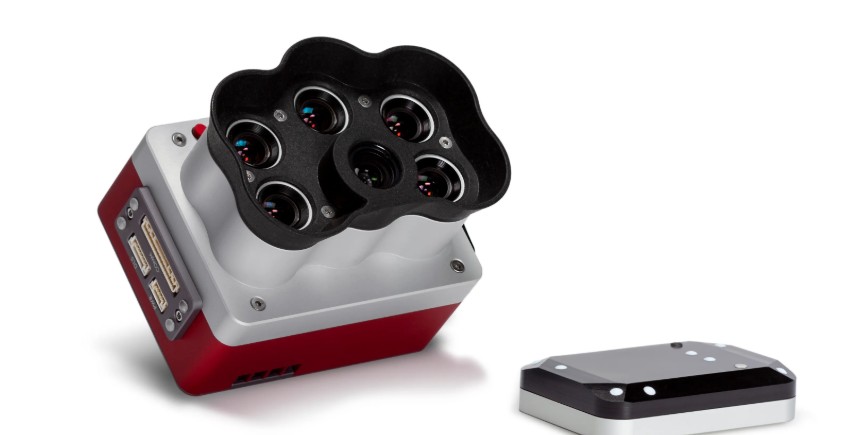
Add AES-256 encryption, real-time data processing, and ISR-grade sensors, and this isn’t a consumer drone with a military label. It’s a purpose-built intelligence platform for public safety and security missions in demanding environments.
Irby made the broader implication clear: “We have implemented processes to streamline essential sparing for our customers, and this will continue as more countries acquire our drones and sensors with their advanced capabilities.”
That’s a signal. EagleNXT isn’t positioning itself as a vendor. It’s positioning itself as part of national security ecosystems.
And that raises a bigger question.
In a world where conflicts escalate quickly, communications are contested, and reaction time defines outcomes — which nations will still be operational when systems start failing?
Those who planned for sustainment.
Those who invested in partnerships, not just platforms.
Those who understood that spare parts are not an afterthought — they are strategy.
The UAE clearly understands that.
The rest of the world should be asking whether they do.