“We Should Beg Ukraine”. Has America Fallen Behind in the Drone Revolution?

United States taught the world how to wage modern war.
Stealth aircraft.
Precision-guided weapons.
Satellite navigation.
Network-centric warfare.
America was the undisputed technology leader, setting the standard that every military sought to emulate.
But according to one of Washington's most respected foreign policy voices, that era of unquestioned dominance may be facing a serious challenge.
And the challenger is Ukraine.
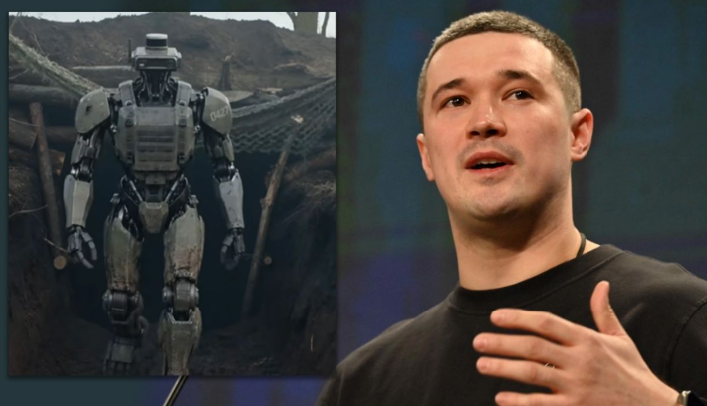
Richard Haass, Honorary President of the Council on Foreign Relations and one of America's most influential strategic thinkers, recently delivered a statement that would have sounded unimaginable just a few years ago.
"We should beg Ukraine for help."
The remark was not about diplomacy.
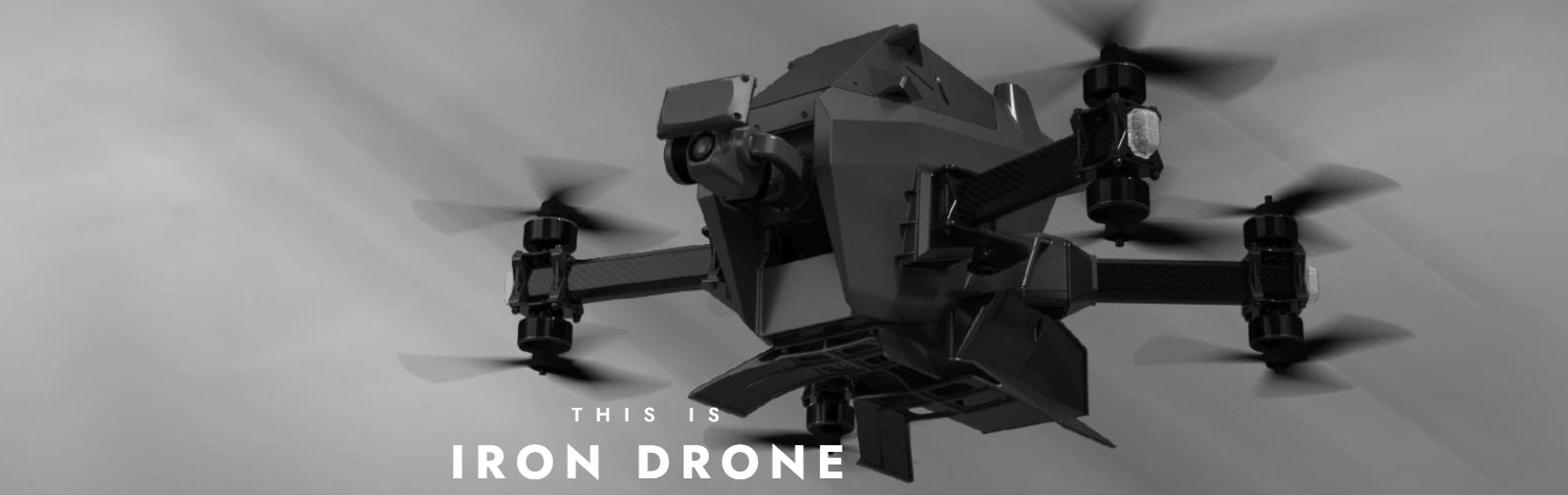
It was about drones.
And behind the provocative wording lies a growing concern across Western defense circles: Ukraine may now understand the economics, scale, and operational realities of drone warfare better than the United States itself.
That claim would have seemed absurd before Russia's full-scale invasion.
Today, it is increasingly difficult to dismiss.
The reason is simple.
Ukraine has spent years fighting the world's first large-scale drone war.
Not conducting exercises.
Not running simulations.
Not testing prototypes.
Actually fighting.
Every day.
Every week.
Every month.
Under conditions where failure carries immediate consequences.
The result has been an extraordinary acceleration of innovation.
Ukrainian manufacturers have transformed garages into factories, startups into defense companies, and battlefield necessity into a national innovation ecosystem. Engineers, soldiers, and operators maintain a constant feedback loop measured in days rather than years.
A drone fails.
The design changes.
A new version appears.
The cycle repeats.
This is a pace of innovation that traditional defense procurement systems struggle to match.
The contrast with the United States is becoming increasingly visible.
American defense remains technologically advanced, but much of its procurement structure was designed for another era. Large programs often take years or even decades to progress from concept to deployment.
That approach produced unmatched systems such as the F-35.
The question is whether it can keep pace with modern drone warfare.
Because drones are not fighter jets.
They are software-driven, rapidly evolving, and increasingly disposable.
Success depends less on perfection and more on adaptation.
Less on exquisite engineering and more on production scale.
This is where Ukraine's experience becomes relevant.
The country has been forced to solve problems that NATO planners only recently began to fully appreciate.
How do you produce large quantities of affordable drones?
How do you counter electronic warfare?
How do you rapidly update software in response to battlefield changes?
How do you overwhelm a larger adversary with low-cost systems?
Most importantly, how do you build an entire military culture around unmanned technologies?
These are no longer theoretical questions.
Ukraine is answering them in real time.
Haass's comments highlight another uncomfortable reality.
Industrial capacity matters.
Advanced military systems are valuable only if they can be produced in sufficient quantities.
This extends beyond drones.
The issue affects missile production as well.
Patriot interceptor missiles remain among the world's most capable air-defense systems. Yet capability alone does not solve shortages.
If production cannot keep pace with demand, even the most sophisticated technology becomes a limited resource.
The war in Ukraine has repeatedly exposed this challenge.
Western countries entered the conflict assuming that precision and quality would compensate for volume.
The battlefield delivered a different lesson.
Quantity still matters.
A lot.
The ability to manufacture thousands or millions of systems can be just as strategically important as technological superiority.
This realization is forcing a profound reassessment inside defense ministries across NATO.
For years, Ukraine was viewed primarily as a recipient of military assistance.
That perception is rapidly changing.
Increasingly, Western governments are treating Ukraine not only as a partner in security but as a source of innovation.
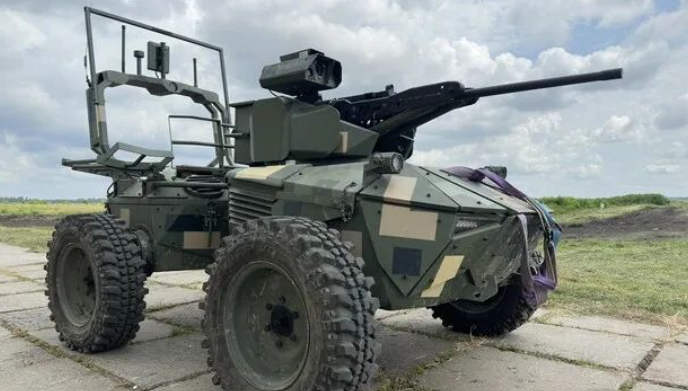
Its drone industry has become a laboratory for the future of warfare.
Its engineers are solving problems others expect to face tomorrow.
Its manufacturers are proving what can be achieved when urgency replaces bureaucracy.
None of this means the United States has lost its technological edge.
America still possesses enormous advantages in research, advanced manufacturing, aerospace engineering, and military power.
But the drone revolution is teaching a humbling lesson.
Leadership in one era does not guarantee leadership in the next.
Military history is filled with powers that assumed yesterday's strengths would automatically dominate tomorrow's battlefields.
The smart ones adapt.
The successful ones learn.
Perhaps that is the deeper significance of Haass's statement.
Not that America should literally beg.
But that it should be willing to listen.
Because one of the most important innovations in modern warfare may not be a machine.
It may be the willingness to learn from those fighting today's war instead of preparing for yesterday's.