Watching the Coastline: How HENSOLDT Is Quietly Rebuilding Maritime Security
Europe’s borders are no longer drawn only on maps. Increasingly, they are traced along coastlines—busy, cluttered, and politically sensitive zones where smugglers, hybrid threats, fishing fleets, and commercial traffic share the same waters. This is where the next generation of security competition is unfolding. Quietly. Constantly. And increasingly with radar.
HENSOLDT’s delivery of 50 coastal surveillance radar systems to SRT Marine System Solutions is not a headline-grabbing mega‑deal. There are no fighter jets, no missiles, no dramatic launch footage. But that is precisely why it matters.
This is infrastructure.
Through its UK subsidiary, HENSOLDT will provide SRT with radar systems built around its SharpEye transceiver technology, to be integrated into national coastal surveillance networks around the world. All systems are scheduled for delivery within the year, reinforcing a rapidly accelerating trend: governments are investing less in episodic patrols and more in persistent maritime awareness.
The modern coastline is an information problem.
Illegal fishing, trafficking, sanctions evasion, grey‑zone activity, and environmental crime rarely announce themselves. They blend into normal traffic, exploit cluttered environments, and operate under difficult weather and sea conditions. The challenge for authorities is no longer the lack of sensors—but the lack of reliable, continuous ones.
That is the gap HENSOLDT and SRT are aiming to fill.
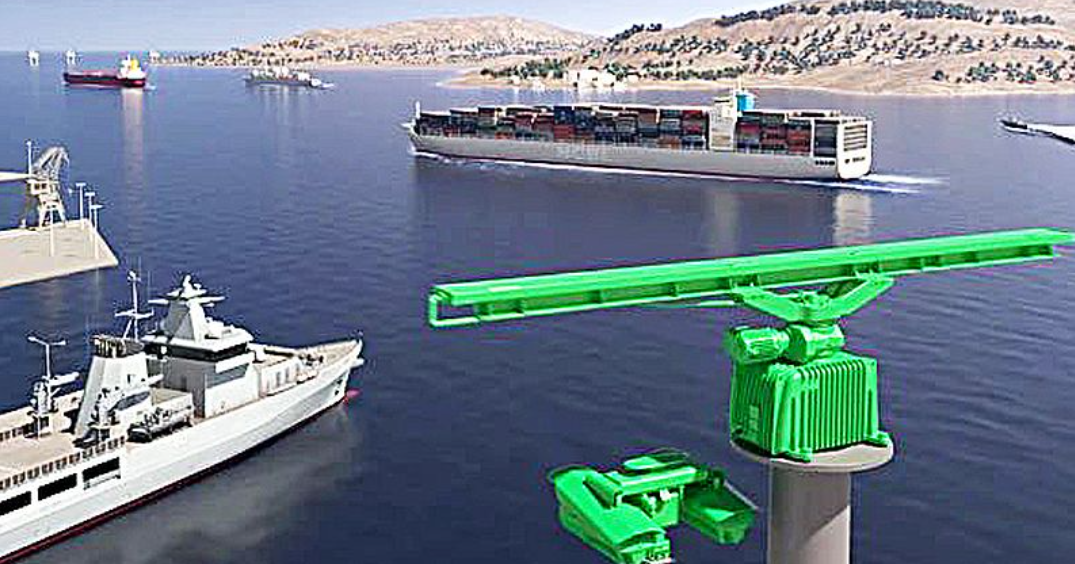
At the core of the solution is HENSOLDT’s Coherent Shore‑Based Sensor architecture, designed specifically for complex coastal environments where high traffic density, wave clutter, and changing weather challenge conventional radars. The SharpEye transceiver—solid‑state, mast‑integrated, and low maintenance—is engineered for exactly this kind of persistent operation.
It does not promise spectacular range figures or exotic features. Instead, it prioritises consistency, reliability, and clarity over long periods of time—qualities that matter far more to operators tasked with managing thousands of vessel tracks day after day.
This reflects a broader shift in the defence and security market.
Maritime Domain Awareness (MDA) is becoming the backbone of national security strategies, not an optional add‑on. Rather than relying solely on ships, aircraft, or satellites, countries are building layered systems that combine coastal radars, AIS data, electro‑optical sensors, and command‑and‑control platforms into a single operational picture.
SRT has positioned itself as a system integrator in this space, delivering turnkey MDA solutions for civil and defence authorities alike. Its choice of HENSOLDT technology underlines a demand for proven, field‑ready sensors rather than experimental systems.
Executives on both sides point to the same dynamic: adoption is accelerating.
Integrated coastal surveillance systems are no longer confined to high‑risk regions. They are increasingly deployed by states seeking independent, sovereign visibility over their maritime approaches—whether for border protection, fisheries enforcement, port security, or environmental monitoring.
What makes this deal particularly European in character is its quiet pragmatism.
There is no grand strategic rhetoric here, no claims of technological revolution. Just a clear recognition that resilience starts with knowing what is happening at the nation’s edges—and that this knowledge must be available continuously, not occasionally.
In an era dominated by discussions of space‑based sensors and autonomous maritime systems, shore‑based radar may sound unglamorous. But it remains one of the few tools that works around the clock, in all weather, without diplomatic clearance or orbital constraints.
That reliability is increasingly valuable.
HENSOLDT’s radar delivery will not change the strategic balance overnight. But multiplied across coastlines and integrated into national systems, it strengthens something far more important: routine control.
And in maritime security, control—quiet, persistent, and boring—is what prevents crises before they ever reach the horizon.

.png)