War in the Air, Lives on the Line - The Machines Rewriting Our Sky at Xponential 2026

The future didn’t arrive quietly in Detroit—it landed with rotors spinning, sensors scanning and algorithms making decisions faster than any human could. At Xponential 2026, the world’s most advanced drone and autonomy technologies converged under one roof, offering a glimpse into a reality where machines don’t just assist—they decide, deliver and defend.
What stood out most wasn’t just innovation. It was urgency.
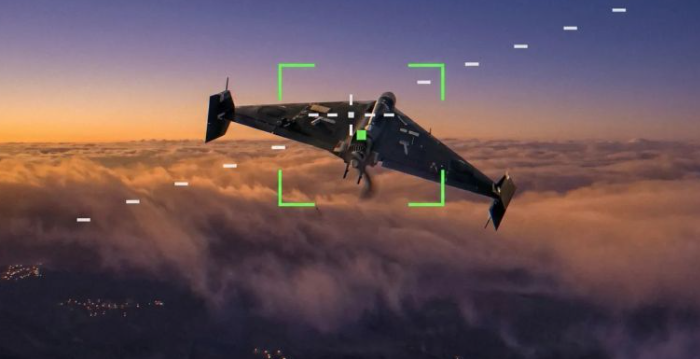
Take the Windracers ULTRA, the largest drone on the floor and a blunt reminder that logistics is no longer a background function—it’s a frontline weapon. Capable of carrying 440 pounds across 1,200 miles, the aircraft has already resupplied troops in Ukraine and delivered essentials to isolated regions. In a world defined by fragile supply chains and contested territories, the question is no longer whether drones will dominate logistics—but how fast.
Yet for every machine that flies, another is being built to stop it.
The University of Michigan’s drone defense turret embodies the new economics of warfare. When multimillion-dollar missiles are used to destroy relatively cheap drones, the imbalance is glaring—and unsustainable. The student-built prototype offers a provocative alternative: modular, adaptive, and designed for affordability. In demonstration form, it used an airsoft gun. In reality, it signals a shift toward scalable counter-drone ecosystems that could redefine defense budgets worldwide.
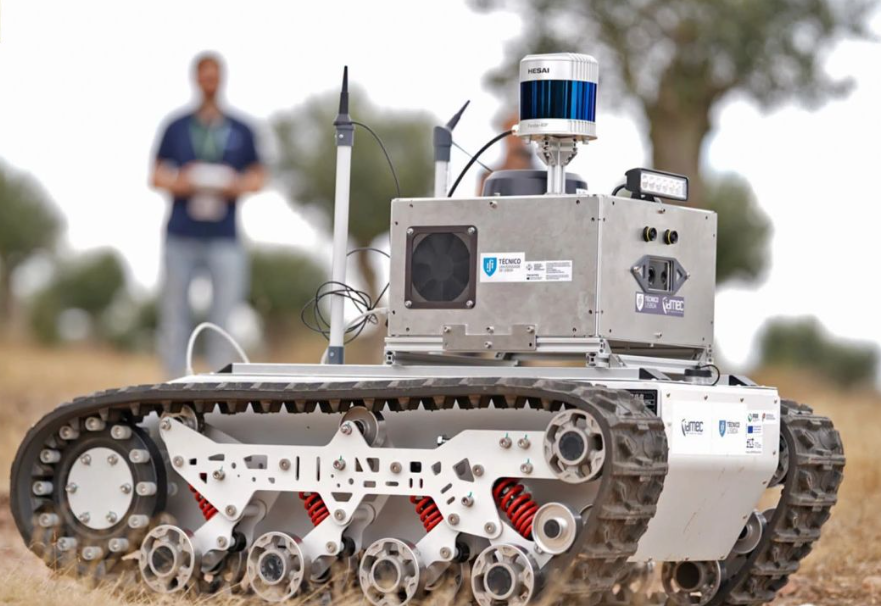
Meanwhile, Detroit Defense is quietly dismantling the assumption that autonomy requires starting from scratch. Its bolt-on autonomy kit effectively upgrades any fleet vehicle into a self-driving platform using lidar, cameras and integrated sensors. The disruptive idea? The future of autonomous mobility may not come from entirely new vehicles—but from retrofitted ones already on the road.
But autonomy is not just about war or industry—it’s about survival.
Blueflite’s Cobalt drone may be one of the most human-centered technologies showcased. Built with lightweight 3D-printed components and designed for high-speed, stable flight, it can deliver blood, defibrillators and critical supplies in minutes. In emergency medicine, minutes are the difference between life and death. This isn’t innovation for efficiency—it’s innovation for impact.
Even Amazon’s MK30 delivery drone, already completing thousands of deliveries in Metro Detroit, reveals something deeper: what once felt extraordinary is quietly becoming routine. Fully electric, quieter and compliant with aviation safety standards, the MK30 turns backyard drop zones into logistics hubs. The disruption is no longer future tense—it is embedded in everyday life.
Behind these flying machines, another revolution is taking shape—one you don’t see in the air but feel in the materials.
Stratasys’ PolyJet technology demonstrates how additive manufacturing is evolving from niche to necessity. The ability to print multi-material objects—like a detailed human skull with simulated bone, nerves and brain tissue—in a single process radically compresses development cycles and transforms medical training. Complexity is no longer a limitation; it’s the baseline.
Yet perhaps the most overlooked innovation addresses a silent risk in all this progress: failure.
Eureka Dynamics’ gyroscopic drone testing systems allow engineers to simulate real flight conditions without ever leaving the ground. In an industry where a minor defect can mean total loss, controlled testing is not just safer—it’s essential. As drones become more autonomous, understanding their limits becomes just as important as expanding their capabilities.
Taken together, these seven technologies tell a story far bigger than an industry showcase. They reveal an inflection point.
Autonomous systems are no longer experimental—they are operational. They are shaping battlefields, saving lives, redefining logistics and challenging the boundaries between human control and machine intelligence.
The real question is not whether these technologies will change the world.
It’s whether we are ready for how fast they already are.

.jpg)
.jpg)