Victor Takes Off. The German Heavy-Lift Drone Redefining Military Logistics
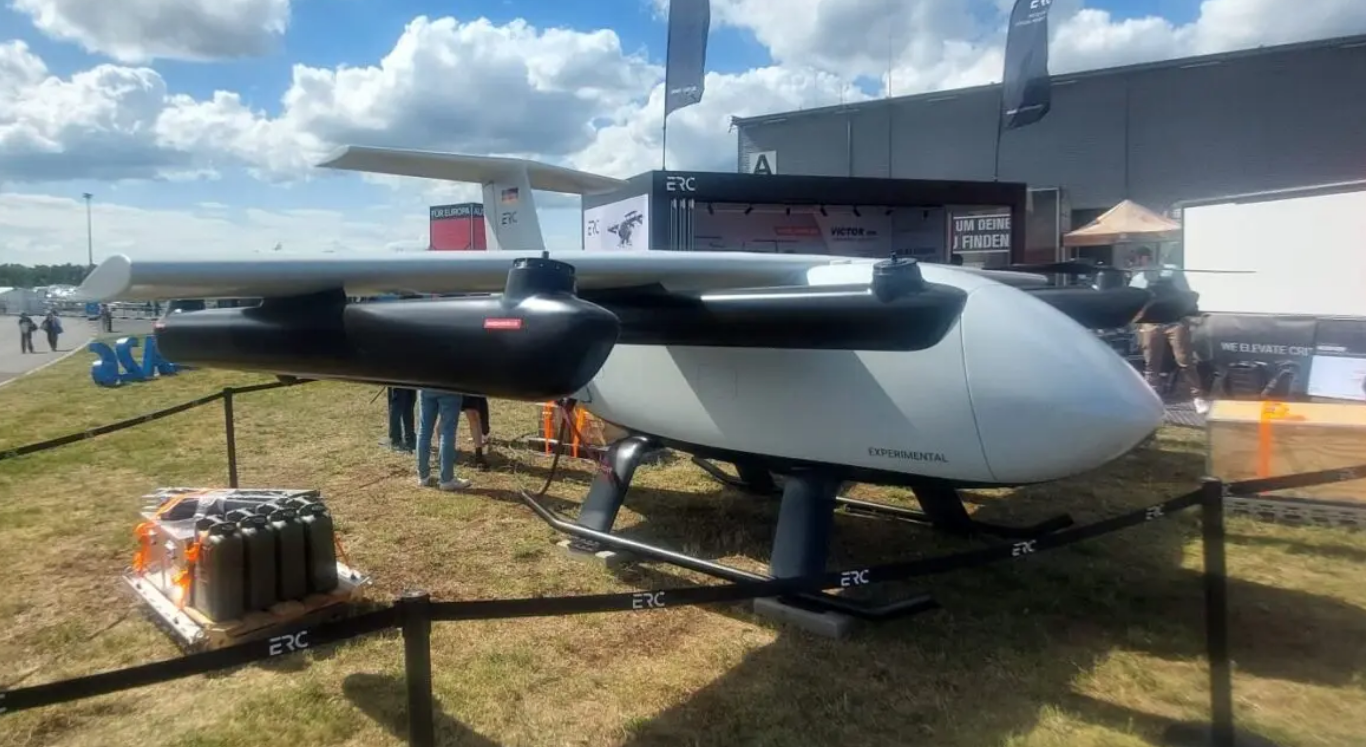
In an era where speed, flexibility, and survivability define operational success, the ability to deliver critical supplies under pressure is becoming as decisive as the weapons themselves. And now, a Munich-based startup is stepping into that space with a bold proposition: take humans out of the logistics chain and replace them with autonomous air systems.
Meet Victor.
Unveiled by ERC System at the ILA Berlin 2026 aerospace exhibition, this hybrid-electric heavy-lift drone is designed for a simple but transformative mission: move cargo faster, farther, and into places no conventional system can safely reach. But behind that simplicity lies a deeper disruption—one that challenges how military and civil logistics are conceived.
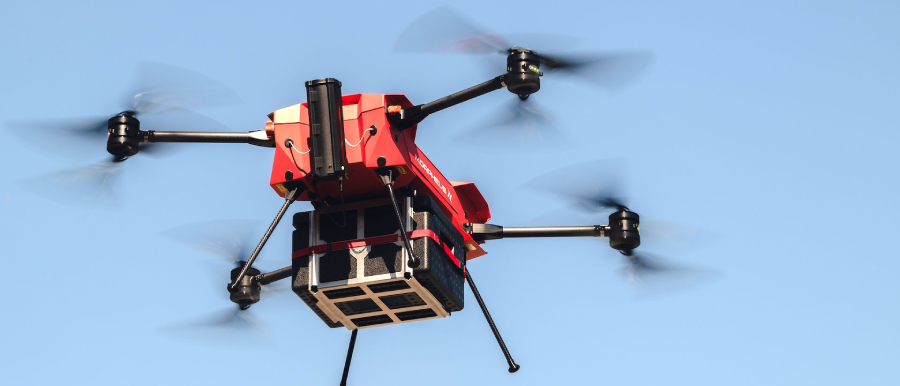
At first glance, Victor’s specifications are striking. A payload capacity of up to 250 kilograms, a range of 300 kilometers, and a cruising speed of around 250 km/h put it well beyond the capabilities of traditional multirotor drones. But it’s not just about numbers—it’s about architecture.
Victor uses a “lift-and-cruise” eVTOL design. It can take off vertically like a helicopter, then transition into forward flight using wings for efficiency and speed. That means it doesn’t need runways. It doesn’t need infrastructure. It needs space—and a mission.
And in modern conflict zones, space is often the only thing available.
This is where Victor becomes provocative. Military logistics has traditionally depended on trucks, helicopters, and large transport aircraft—systems that are visible, vulnerable, and resource-intensive. Every supply run involves risk: to the crew, to the convoy, and to the mission.
Victor removes that human risk.
It is designed to fly autonomously, deliver cargo directly to the front line, and even drop payloads without landing—avoiding exposure in high-threat environments. That capability alone could redefine last-mile logistics, especially under conditions where landing is impossible or too dangerous.
But Victor is not just a military tool. ERC positions it as a dual-use platform—equally relevant for disaster relief, humanitarian aid, and commercial logistics. In crisis zones after natural disasters, where roads are destroyed and infrastructure is compromised, a drone capable of delivering supplies quickly and independently could be the difference between response and delay.
Yet the military implications remain dominant.
Over the past few years, Ukraine has demonstrated how drone logistics—alongside strike drones—can reshape battlefield dynamics. Smaller payload drones have already been used to resupply units in contested areas. Victor takes that concept and scales it.
Heavier loads. Longer distances. Higher speed.
The result is a system that begins to blur the line between tactical drone and strategic logistics asset.
ERC itself is not entering this space from scratch. The company previously developed “Romeo,” described as the EU’s heaviest unmanned eVTOL platform. Victor builds on that expertise but shifts the focus from experimentation to operational use. According to ERC, demand came directly from both military and civilian operators seeking a scalable logistics solution.
That demand says something important.
It reflects a broader shift in thinking: logistics is no longer a background function—it is a competitive advantage. In future conflicts, the side that can move faster, adapt quicker, and resupply smarter will likely hold the edge.
Victor fits neatly into that doctrine.
Still, questions remain. As with many emerging defence technologies, the gap between design and deployment is critical. ERC plans first deliveries by 2028—a timeline that reflects both ambition and the complexity of certification, scaling, and integration into existing systems.
There are also strategic considerations. Autonomous logistics systems depend on communication networks, navigation resilience, and protection against electronic warfare—factors that are increasingly contested in modern battlefields.
But even with these uncertainties, one thing is clear: Victor represents more than a drone.
It represents a shift in mindset.
From manned to unmanned.
From centralized to distributed.
From vulnerable supply lines to adaptive, autonomous networks.
And if that shift continues, the future of logistics may no longer roll on roads or fly in formation.
It may arrive quietly, precisely—and without a pilot.