ThinKom’s Alecto Signals a Shift in Counter‑Drone Warfare: Energy Weapons Go Mobile

For years, counter‑drone defence has been stuck in a numbers game: one interceptor missile, one drone—an equation that collapses under the weight of mass drone and swarm attacks. ThinKom Solutions believes it has a different answer, and it doesn’t rely on kinetic interceptors at all.
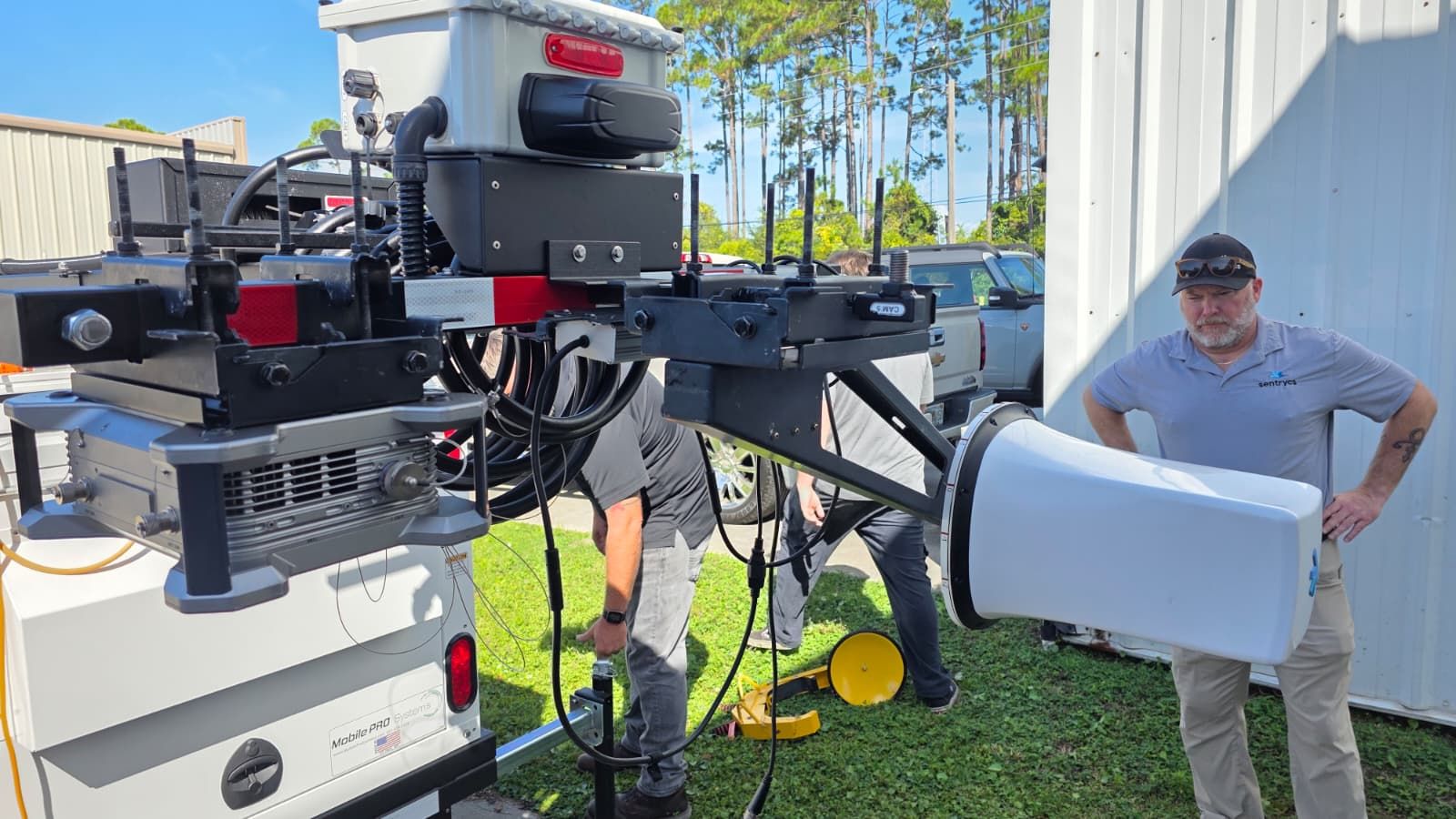
The U.S. company has unveiled Alecto, a high‑power microwave (HPM) directed‑energy system designed to neutralise drone swarms while on the move. The system introduces a critical new capability for counter‑UAS operations: fire‑on‑the‑move, allowing mobile units to engage aerial threats without stopping, repositioning, or relying on prior target identification.
At a time when low‑cost drones are becoming faster, more autonomous, and increasingly deployed in coordinated groups, Alecto represents a structural shift in how militaries are thinking about air defence at short range.
Microwaves Instead of Missiles
Unlike traditional C‑UAS systems that depend on jamming, missiles, or gun‑based solutions, Alecto uses directed microwave energy to disrupt and disable drone electronics. The effect is immediate and scalable: a single emission can affect multiple airborne targets simultaneously, making it particularly suited to swarm scenarios.
At the core of the system is ThinKom’s patented VICTS (Variable Inclination, Continuous Transverse Stub) antenna technology, paired with high‑performance vacuum electronics. This combination allows Alecto to generate significantly higher power levels than systems based on solid‑state technologies such as gallium nitride.
The operational advantage is critical: the system does not require prior knowledge of the target’s identity, control link, or navigation system. That matters in conflicts where drones operate autonomously, switch modes mid‑flight, or arrive as part of heterogeneous swarms designed specifically to confuse defenders.
In simple terms, Alecto does not need to “understand” the drone. It just needs to reach it with energy.
Designed for Mobility, Not Fixed Sites
One of Alecto’s defining features is its reduced size, weight, power consumption, and cost (SWaP‑C). This design philosophy allows the system to be integrated on light tactical vehicles, infantry platforms, or unmanned ground systems, rather than being confined to fixed base defence.
Its compact, low‑profile form factor enables full 360‑degree horizon coverage, while mechanical phased‑array antennas provide high pointing accuracy. This precision helps limit unintended electromagnetic effects in dense or contested operational environments—an increasingly important requirement as directed‑energy weapons move closer to friendly forces and civilian infrastructure.
The result is a system designed not just to protect bases, but to move with convoys, patrols, and maneuvering units, offering continuous protection rather than point defence.
Built for Operators, Not Engineers
ThinKom has also focused on usability. Alecto is operated via a tablet‑based control interface and is compatible with existing command‑and‑control (C2) networks, allowing it to integrate into deployed architectures without extensive retraining or bespoke software stacks.
Just as importantly, the company states that the system complies with military electromagnetic radiation safety standards, ensuring the protection of personnel, fuel, and sensitive equipment during operation—an essential concern for high‑power microwave systems operating at the tactical edge.
A Growing Market for Directed Energy
Alecto is ThinKom’s first move into the directed‑energy weapons market, developed with internal funding. The timing is deliberate. The U.S. Department of Defense has increasingly identified directed‑energy systems as key tools for countering emerging threats such as drone swarms, precisely because they offer near‑unlimited “ammunition”, rapid engagement, and a dramatically lower cost per shot.
In modern air defence, economics matter. Shooting down a $5,000 drone with a $500,000 missile is not a sustainable strategy. Energy weapons flip that equation.
With Alecto, ThinKom is positioning itself not only as a technology provider, but as part of a broader shift toward layered, non‑kinetic air defence architectures, where microwaves, lasers, and traditional systems complement each other.
As drone threats continue to scale in number and speed, one thing is becoming clear: the future of counter‑UAS may be powered less by explosives—and more by electrons.
%20(1).jpg)