The Targets That Must Never Be Hit. Why Ukraine’s Restraint Speaks Louder Than Russia’s Nuclear Threats
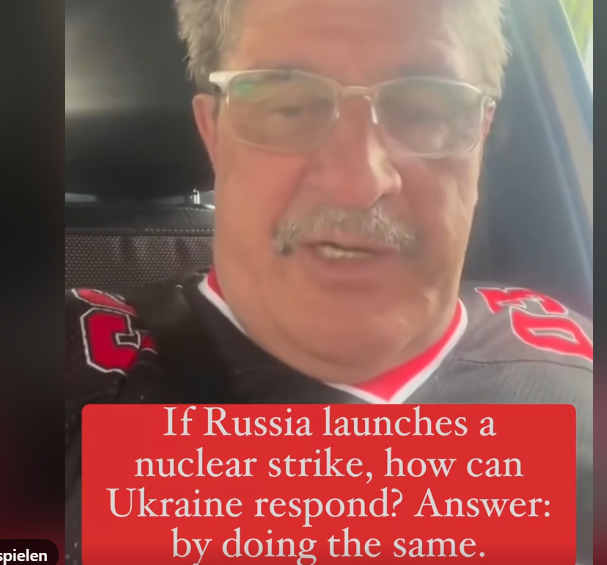
For years, the Kremlin has relied on nuclear rhetoric as a strategic weapon. The message has been consistent: Russia possesses the world's largest nuclear arsenal, and any direct challenge to its ambitions risks catastrophic escalation.
Yet amid the constant threats, an uncomfortable reality is often overlooked.
Russia's nuclear power plants are not untouchable.
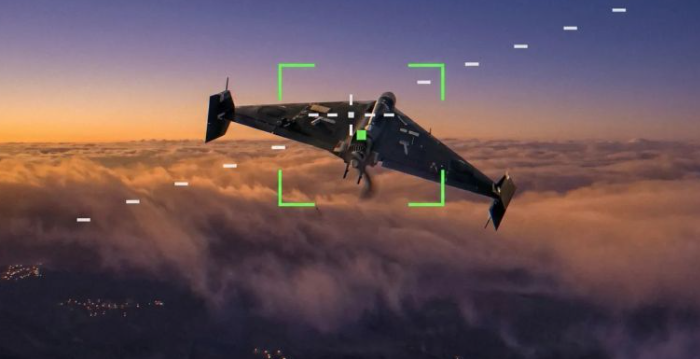
Modern warfare has changed dramatically. Long-range drones and precision missiles have rewritten the geography of conflict. Distances that once guaranteed safety no longer provide protection. Critical infrastructure hundreds or even thousands of kilometers from the front line can now be reached with increasing accuracy.
That includes nuclear infrastructure.
To be clear, a nuclear power plant is not a nuclear bomb. A reactor cannot produce a nuclear detonation in the way a weapon can. But severe damage to a nuclear facility, its cooling systems, power supply, or other critical components could trigger a radiological disaster with devastating consequences for civilians and the environment.
Radioactive contamination respects no border.
The radioactive clouds released after Chernobyl did not stop at Ukraine's frontier. They spread across Europe. Any major incident at a nuclear facility today would produce consequences far beyond the territory of the country under attack.
This is precisely why nuclear power plants occupy a unique place in international law and military ethics. They are among the few targets that should remain outside the logic of war.
And yet Russia has repeatedly transformed nuclear safety into a battlefield issue.
The occupation of the Zaporizhzhia Nuclear Power Plant became one of the most alarming examples of this behavior. The facility, Europe's largest nuclear power station, was turned into a military asset. Armed forces operated in and around the site. The plant's personnel worked under extraordinary pressure. Military activity around the complex repeatedly raised concerns among international observers about the risks of a nuclear accident.
In other words, the country issuing nuclear warnings to the world simultaneously normalized dangerous behavior around a nuclear facility.
Against this backdrop, an important distinction emerges.
Ukraine increasingly possesses the means to threaten strategic targets deep inside Russia. Technological innovation, domestic drone production, and expanding strike capabilities have altered the balance of what is militarily possible. Infrastructure once considered beyond reach no longer enjoys that privilege.
But possibility and intent are not the same thing.
The fact that a state can strike a target does not mean it should.
This distinction is often lost in discussions of military capability. Analysts focus on range, payload, and accuracy. Governments count launchers, aircraft, and missiles. Yet one of the most important factors in any conflict remains a political and moral choice: deciding which targets will never be attacked.
Ukraine's restraint toward Russian nuclear infrastructure reflects such a choice.
It is not evidence of weakness. It is evidence of limits. Self-imposed limits. The kind that distinguish warfare from recklessness.
That restraint also creates a revealing contrast. Russia frequently attempts to project an image of unlimited escalation. Nuclear threats are used to influence public opinion, intimidate foreign governments, and shape strategic calculations.
But deterrence is not only about convincing an opponent that you can act. It is also about demonstrating that you choose not to cross certain lines.
The paradox is striking.
One side repeatedly talks about catastrophic escalation. The other side demonstrates restraint despite possessing growing capabilities.
In the long run, that difference may matter more than any missile, drone, or headline-grabbing threat.
Because military power is measured not only by what a country can destroy.
It is measured by what it refuses to destroy.
And in an era when entire societies can be placed within striking range, that refusal may be one of the most powerful strategic messages of all.