£5.9 Billion Beneath the Waves: Britain's Nuclear Submarine Bet Signals a New Era of Deterrence
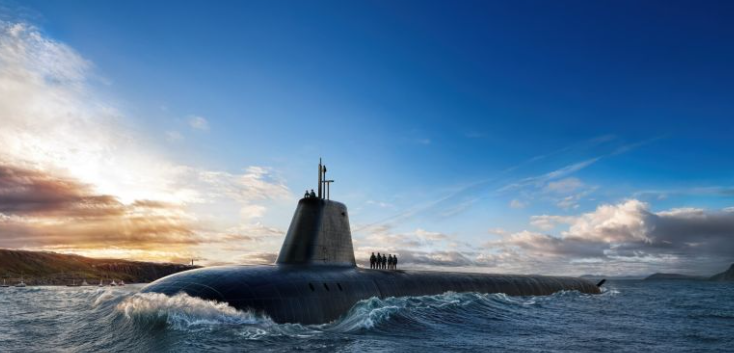
While headlines focus on drones over Ukraine, AI-powered warfare, and hypersonic missiles, Britain has quietly made one of the most consequential defense decisions of the decade.
A £5.9 billion contract awarded to BAE Systems will push forward the construction of the Royal Navy's next generation of nuclear deterrent submarines, the Dreadnought Class.
At first glance, it looks like another defense procurement announcement.
In reality, it is something much bigger.
It is a statement about how Britain views the world, the future of deterrence, and the uncomfortable reality that military power still depends on platforms measured not in months, but in decades.
The Most Expensive Insurance Policy in Britain
Unlike fighter jets, drones, or warships that are frequently deployed and photographed, strategic nuclear submarines exist primarily for one purpose:
Never to be used.
Their value lies in uncertainty.
At any given moment, an adversary must assume that a British ballistic missile submarine is somewhere beneath the world's oceans, undetected and operational.
That uncertainty forms the foundation of the UK's Continuous At Sea Deterrent (CASD), maintained without interruption for more than half a century.
The Dreadnought Class will replace the aging Vanguard fleet and continue that mission well into the second half of the twenty-first century.
In an era dominated by rapid technological change, Britain is making a remarkable bet:
That strategic deterrence still matters.
The Return of Great-Power Competition
Only a few years ago, some policymakers argued that major interstate conflict was becoming less likely.
History has been unkind to that assumption.
Russia's invasion of Ukraine, instability in the Middle East, tensions in the Indo-Pacific, and growing competition between major powers have fundamentally altered Western security thinking.
The result is clear.
Defense budgets are rising.
Industrial capacity is expanding.
And nuclear deterrence is once again moving toward the center of strategic planning.
The Dreadnought program reflects that reality.
This is not a response to a single crisis.
It is preparation for an uncertain future stretching decades ahead.
More Than Four Submarines
The most misunderstood aspect of the Dreadnought program is that it is not just about submarines.
It is about industrial power.
The numbers tell the story.
Approximately 30,000 jobs are supported across the United Kingdom.
More than 1,500 suppliers contribute to the program.
Almost £9 billion has already flowed through the national supply chain.
The workforce at BAE Systems' Barrow shipyard has grown dramatically, transforming the town into one of Europe's most important defense manufacturing hubs.
The submarines may disappear beneath the ocean.
Their economic impact is impossible to miss.
The Industrial Battlefield
Modern wars are increasingly revealing a simple truth:
Industrial capacity is strategic capacity.
Nations able to design, manufacture, maintain, and modernize complex military systems enjoy advantages that extend far beyond the battlefield.
The Dreadnought program demonstrates Britain's determination to preserve one of the most exclusive industrial capabilities on earth:
The ability to build nuclear-powered submarines.
Only a handful of countries possess that expertise.
Once lost, it is extraordinarily difficult to rebuild.
That makes the investment about more than today's fleet.
It is an investment in knowledge, skills, and sovereign capability.
The Paradox of Deterrence
There is an irony at the heart of the Dreadnought project.
The more successful these submarines become, the less visible their impact will be.
A deterrent works when nobody tests it.
Its victories are invisible.
Its successes appear as crises that never happen.
Yet governments continue spending billions because history repeatedly demonstrates the cost of being unprepared.
Strategic deterrence is not designed for normal times.
It exists for moments when normality collapses.
A Signal to Allies and Adversaries
The £5.9 billion contract carries an unmistakable message.
To allies, it signals continuity.
Britain intends to remain one of NATO's principal military powers and a cornerstone of the Alliance's nuclear posture.
To adversaries, it signals persistence.
Governments may change. Economic cycles may rise and fall. Technologies may evolve.
But Britain's nuclear deterrent is not being retired.
It is being renewed.
Looking Beyond 2030
The first Dreadnought submarine is expected to enter service in the early 2030s.
By then, warfare may look radically different.
Artificial intelligence could shape military decision-making.
Autonomous systems may dominate battlefields.
Space assets will become even more important.
Yet beneath these transformations, one reality is likely to remain.
Nations will continue seeking credible ways to deter existential threats.
That is why the Dreadnought program matters.
It is not simply the construction of four submarines.
It is Britain's decision to anchor its security strategy in one of the most enduring principles of modern geopolitics:
Peace is often preserved not by weapons that are used, but by weapons that nobody dares challenge.