Dronivo Defence Red Team - Inside the Simulated Battles Preparing Europe’s Forces for the Next Aerial Threat
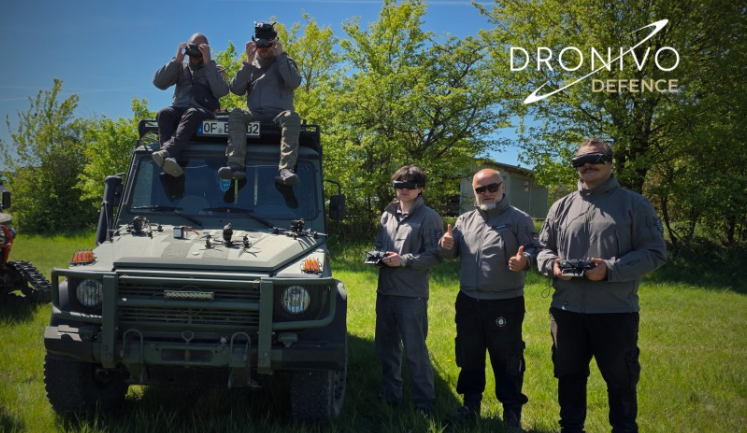
The battlefield of tomorrow is already here—and it fits in a backpack.
In a controlled but highly realistic training environment, Dronivo has been pushing the boundaries of military preparedness, simulating the kind of aerial threats that are rapidly redefining modern warfare. Over the course of an intensive two-week Red Teaming exercise, the company worked alongside the German Armed Forces to test one critical question: Are today’s defense systems ready for tomorrow’s drone-driven conflict?
The answer, as these exercises suggest, is still evolving.
At the center of the training were fast, agile FPV (first-person view) drones—small, inexpensive, and devastatingly effective. These systems conducted repeated attack and reconnaissance missions, mimicking real-world threat behaviors with unsettling precision. Flying low and fast, they executed urban approach patterns, rapidly identified targets, and simulated strike attempts under pressure.
This wasn’t a demonstration. It was a stress test.
In contrast to traditional military exercises that often rely on predictable scenarios, Dronivo introduced dynamic, adaptive threats. Attack profiles changed in real time. Routes were unpredictable. The tempo was relentless. The objective wasn’t just to simulate an attack—it was to overwhelm detection systems and expose weaknesses under realistic conditions.
And weaknesses, inevitably, appeared.
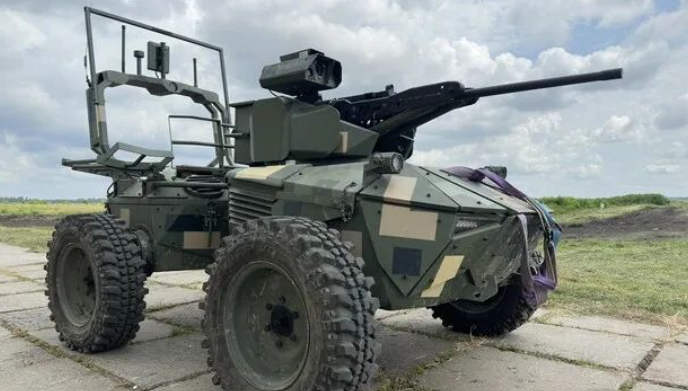
But aerial threats were only half the story. On the ground, Dronivo deployed its unmanned rover system, “Wolfgang,” adding another dimension to the exercise. These ground units performed reconnaissance tasks, positioned sensors, and supported coordination across the training area. Together with the drones, they created a multi-domain operational environment, where air and ground systems interacted in complex, coordinated ways.
This integration is critical. Modern threats don’t operate in isolation. They move across domains, leveraging speed, coordination, and unpredictability. By combining aerial and ground systems, the exercise replicated the kind of hybrid threat landscape that armed forces are increasingly likely to face.
The real focus, however, was not on the attackers—but on the defenders.
The Red Teaming approach forced military personnel to confront high-pressure scenarios where detection, decision-making, and response timelines were constantly tested. Could operators identify a drone before it reached its target? Could different units coordinate effectively under stress? Could response mechanisms keep pace with rapidly evolving threats?
These are not theoretical questions. In recent conflicts, drone swarms and FPV attacks have demonstrated how quickly traditional defense systems can be outpaced. The advantage increasingly belongs to those who can see first, decide fastest, and respond with precision.
Training like this is designed to close that gap.
Participants were able to identify vulnerabilities not just in hardware, but in processes and coordination. Communication delays, blind spots in sensor coverage, and gaps in response protocols became visible under simulated combat conditions. More importantly, these issues could be addressed in real time—refining tactics, improving situational awareness, and accelerating reaction speeds.
This is where the value of such exercises truly lies.
Rather than relying on theoretical readiness, Dronivo’s approach emphasizes experiential learning under pressure. It’s about exposing systems to failure in a controlled environment—so they don’t fail when it matters most.
The implications extend far beyond a single training event.
As drone technology continues to evolve, becoming cheaper, smarter, and more accessible, the threat landscape will only become more complex. State and non-state actors alike can deploy advanced aerial systems with minimal resources, forcing armed forces to rethink traditional defense strategies.
In this context, readiness is no longer defined by static capabilities. It is defined by adaptability, speed, and integration.
Dronivo’s Red Teaming exercise offers a glimpse into this future—a future where battles are fought not just with weapons, but with data, coordination, and real-time decision-making.
And perhaps the most important lesson is this: preparation cannot be theoretical.
It must be tested, challenged, and continuously refined.
Because in the next conflict, the drones won’t wait.

%20(1).jpg)