The Rise of the Digital Mercenary Soldiers. When Engineers Become Combat Power
For centuries, warfare has been defined by armies, generals, and governments. Today, an entirely different figure is moving closer to the center of military power: the engineer.
The battlefield of the twenty-first century is no longer controlled solely by soldiers in uniform. Increasingly, it is shaped by software developers writing code, AI specialists training algorithms, drone engineers modifying hardware, and cybersecurity professionals launching operations from keyboards hundreds or thousands of kilometers away.
A recent White House policy may mark a historic turning point in this transformation. Under the new framework, vetted private cybersecurity companies can conduct offensive operations against foreign networks on behalf of the US government. The operators can manipulate, degrade, disrupt, or destroy adversary systems under government oversight, provided their actions are not expected to cause death or serious physical injury.
The implications extend far beyond cyberspace.
For decades, states maintained a monopoly on the use of force. Defence industries produced weapons, but governments employed them. The new model blurs those boundaries. Private companies are increasingly becoming participants in military operations rather than suppliers standing safely behind the front line.
The trend is already visible in Ukraine.
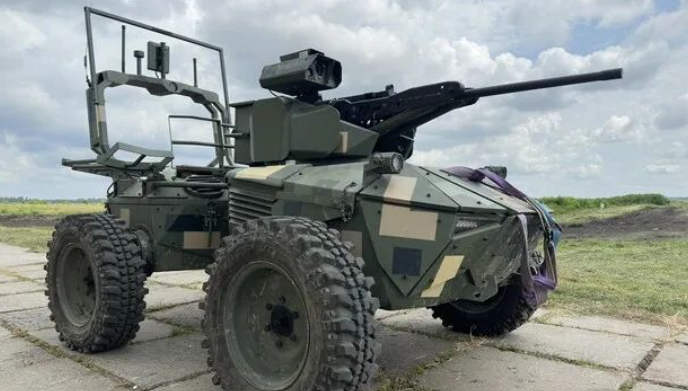
Since the beginning of Russia's full-scale invasion, Ukrainian military units and technology companies have developed a uniquely integrated relationship. Drone manufacturers work directly with operators. Engineers receive immediate battlefield feedback. Software updates that once required years of procurement bureaucracy can be delivered in days or weeks.
The result has been one of the most rapid military innovation cycles in modern history.
Electronic warfare appears on the battlefield. Engineers analyze weaknesses. Software is adjusted. New capabilities return to combat almost immediately.
The traditional military acquisition model, built around long procurement timelines and multi-year development programs, struggles to compete with that speed.
This is the defining characteristic of modern warfare.
Victory increasingly belongs not to the side with the largest inventory but to the side capable of adapting fastest.
The United States is beginning to move in the same direction.
The Pentagon has accelerated digital engineering initiatives, embraced rapid prototyping, and expanded experimentation with contractor-operated systems. US Central Command's decision to employ contractor-owned and contractor-operated V-BAT drones demonstrated the growing willingness of military institutions to place private technical specialists closer to operational missions.
The logic is simple.
The people who build technology understand it best. Keeping engineers close to users dramatically shortens the process of identifying failures and implementing fixes.
Yet speed creates new risks.
A soldier acts under military law.
An intelligence officer operates within established state structures.
But what exactly is a private cyber operator conducting offensive actions for a government?
The legal and political answer remains unclear.
If a contractor launches a cyber operation against a foreign network that accidentally escalates into a wider confrontation, who bears responsibility? The company? The employee? The government that authorized the mission?
The state ultimately remains accountable under international law. Yet attribution becomes more complex when operational activity is carried out by private actors rather than government personnel.
This ambiguity may prove strategically dangerous.
Adversaries may interpret cyber operations conducted by contractors as direct state action. Retaliation could follow regardless of who pressed the keyboard.
At the same time, governments face mounting pressure to embrace private expertise.
Artificial intelligence is accelerating cyber conflict at unprecedented speed. Automated vulnerability discovery, AI-assisted attacks, autonomous drones, and machine-speed targeting systems are redefining operational requirements. Many governments struggle to recruit and retain the highly skilled specialists needed to compete in this environment.
The private sector already possesses much of that talent.
As a result, national security increasingly depends on partnerships between governments and technology companies.
This shift creates a new class of strategic actor: the digital mercenary.
Unlike the mercenaries of previous centuries, these individuals do not carry rifles or operate armored vehicles. They write software, train machine-learning models, analyze battlefield data, and identify vulnerabilities in enemy networks.
Their work can determine whether a military operation succeeds or fails.
The emergence of these specialists does not mean traditional soldiers are becoming obsolete.
Rather, military organizations are expanding.
Tomorrow's military workforce will include coders, drone pilots, data scientists, AI architects, cyber operators, and engineers working alongside conventional forces in ways previously unimaginable.
The real challenge is not technological.
It is political.
Governments must decide which military functions can be delegated to private innovation and which must remain under direct public command.
The answer will shape the future of warfare.
Because as artificial intelligence, autonomous systems, and cyber operations move ever closer to the front line, the most important military question may no longer be who has the biggest army.
It may be who has the best engineers.