The Quiet Moonshot - Artemis II Just Turned Deep Space Into Broadband
There are two kinds of people. The first group falls asleep wondering how you could ever stream 4K video across 380,000 km of empty space. The second group just streams Netflix and calls it a night.
Artemis II has been feeding both groups—one with human drama, the other with a technical revolution hiding in plain sight.
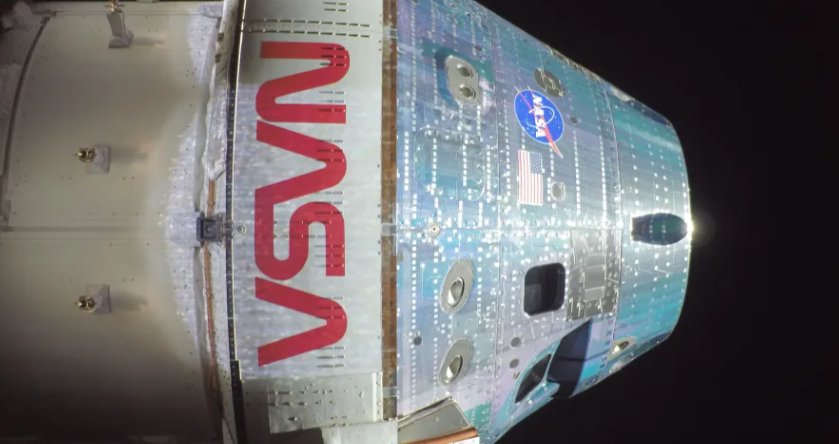
On Flight Day 4, while headlines followed the crew’s routines and the mission’s lunar choreography, a less photogenic milestone landed with far bigger consequences: the Orion Artemis II Optical Communications System (O2O) pushed deep‑space comms into a new era—high‑bandwidth data carried not on radio waves, but on a laser beam.
In other words: the Moon didn’t just get closer. It got connected.
From Apollo “dial‑up” to lunar broadband
Apollo’s communications were miraculous for their time—but brutally limited by the physics and the era’s electronics. The solution was heroic: unified radio links, massive antennas, and relentless coordination. NASA even documented the design work and constraints in detail in its Apollo S‑band experience reporting.
Fast‑forward to Artemis II: NASA’s own framing is blunt—RF works, but it doesn’t scale cleanly to the future. Spectrum congestion, link budgets, and the simple fact that you can only squeeze so much information onto wide, power‑spreading radio beams all collide with the data demands of modern exploration.
The comms architecture behind the magic
Artemis II doesn’t rely on one link—it relies on an ecosystem. Mission communications are coordinated through NASA’s Space Communications and Navigation (SCaN) approach, using the Near Space Network and the Deep Space Network as the primary backbone—while O2O rides alongside as a mission‑grade demonstration of what comes next. [nasa.gov], [news.mit.edu]
The point is not that radio disappears. It’s that radio becomes the safety net—and laser becomes the firehose.
What O2O actually is (and why it’s disruptive)
O2O is not a lab demo and not a “cute experiment.” It’s a laser communications terminal flying on a crewed lunar mission, built by MIT Lincoln Laboratory in collaboration with NASA Goddard Space Flight Center, designed specifically to prove operational utility—not just peak numbers.
NASA describes the system as a set of major components (optical module, modem, controller) and a ground segment that receives the optical signal at dedicated sites including White Sands (New Mexico) and Table Mountain (California)—locations chosen specifically because clouds are the enemy of lasers.
And the performance targets are no longer science fiction. Independent technical descriptions of the O2O ground terminal note discrete downlink rates from 20 Mb/s up to 260 Mb/s, with uplink in the 10–20 Mb/s range—numbers that push deep‑space communications into territory that used to belong exclusively to terrestrial networks.
That’s why the “quiet” milestone matters: reports describe O2O surpassing 100 GB downlinked early in the mission—real operational data return from lunar distance, not a staged press demo.
Why this matters far beyond the Moon
NASA is not doing this for prettier footage—though it will absolutely reshape public experience. The real target is scale: Moon infrastructure, cislunar operations, and eventually Mars‑class distances where data return and autonomy become existential mission requirements.
Laser links win because they concentrate energy into a narrow beam and can carry vastly more information per second than RF—at the cost of extreme pointing precision and weather dependency. O2O’s ground architecture is already shaped by that reality, distributing receiving sites to reduce cloud risk.
So yes: the crew is the headline. The flyby is the spectacle.
But the real moonshot may be that deep space is starting to look like an addressable network—built, quite literally, one photon at a time.