The Next Battlefield Starts in the Clinic. Why Germany's Military Is Rebuilding Healthcare for War
Modern warfare is changing—and so is military medicine.
For decades, armed forces primarily prepared medical systems for overseas deployments involving relatively small numbers of casualties. Today, Europe faces a different strategic reality. Large-scale territorial defense has returned to military planning, bringing entirely new demands for medical support.
The Bundeswehr's ongoing healthcare transformation reflects that shift.
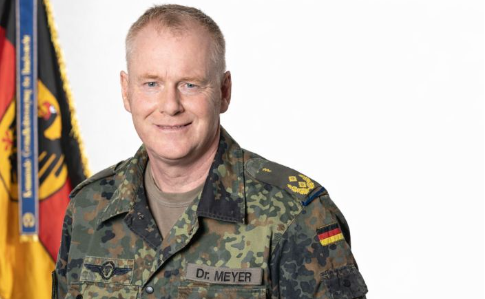
In an interview, Major General Dr. Jürgen Meyer, Commander of Ambulatory Care and Deputy Commander of the Bundeswehr Medical Command, outlined how Germany is reorganizing military healthcare to meet future operational requirements.
The changes extend far beyond hospitals.
Military medicine increasingly includes preventive care, rehabilitation, emergency medicine, sports medicine, operational readiness and—beginning in 2027—a significantly expanded framework for civil-military cooperation.
This represents more than administrative reform.
It is a strategic adaptation to a security environment where healthcare capacity becomes part of national defense.
One of the interview's central themes is readiness.
The mission of ambulatory military healthcare is not simply treating illness. Its purpose is to preserve, restore and maintain the operational capability of soldiers. Every recovered service member contributes directly to military effectiveness.
That philosophy is captured in one expression frequently used throughout modern military medicine:
Return to Duty.
Rehabilitation therefore becomes a strategic capability rather than simply a medical service.
Germany plans to further strengthen rehabilitation centers while expanding sports medicine and interdisciplinary recovery programs capable of returning personnel to operational status as efficiently as possible.
Another major development involves civil-military integration.
Beginning in 2027, cooperation between military healthcare and civilian medical providers is expected to become one of the command's primary responsibilities.
This reflects an important lesson observed across recent conflicts.
Military medical systems alone cannot sustain prolonged, high-intensity warfare involving large casualty numbers.
Instead, resilience depends on integrated national healthcare networks combining military hospitals, university medical centers, trauma facilities, rehabilitation clinics and civilian physicians.
The Bundeswehr is already developing regional healthcare clusters linking military hospitals with civilian institutions to create coordinated treatment pathways during crises.
Equally important is interoperability.
Germany's Multinational Medical Coordination Centre – Europe (MMCC-E), operating under Dr. Meyer's responsibility, coordinates multinational medical procedures among NATO and EU partners.
As more European armed forces prepare for collective defense, common medical standards become just as important as compatible weapons or communications systems.
Medical logistics, evacuation procedures and rehabilitation protocols increasingly require multinational coordination.
Digitalization also plays a growing role.
Standardized digital processes are expected to reduce administrative burdens while allowing frontline medical personnel to focus more directly on patient care and operational support.
At the same time, Germany continues expanding medical evaluation systems for deployability, reservist integration and specialist medical services.
These reforms are directly connected to the Bundeswehr's broader force expansion.
As personnel numbers increase, medical assessments, rehabilitation capacity and routine healthcare services must expand alongside combat formations.
Perhaps the most important message from the interview is that healthcare is no longer viewed as a rear-area support function.
It has become an operational enabler.
Military planners increasingly recognize that successful defense depends not only on ammunition, vehicles or advanced technologies, but also on resilient healthcare systems capable of sustaining forces throughout prolonged operations.
In tomorrow's conflicts, hospitals, rehabilitation centers and civilian healthcare networks may become just as strategically important as command posts or logistics hubs.
The battlefield no longer ends at the front line.
It increasingly begins with the ability to keep soldiers healthy enough to return to it.