The New Warriors of Europe. How Ukraine Turned the Battlefield Into the World’s Most Advanced Defense Laboratory
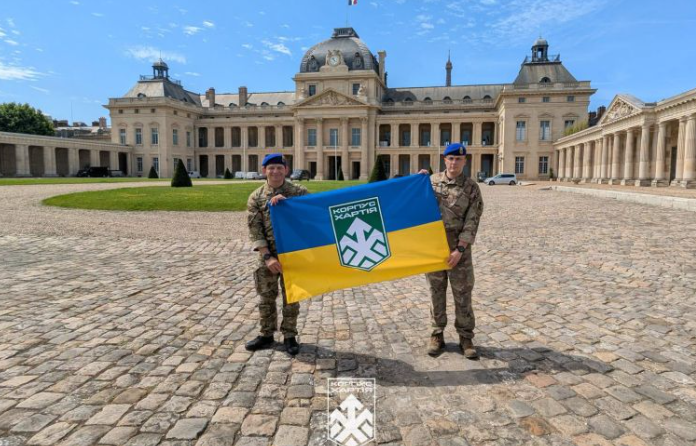
Paris has seen countless military exhibitions.
Tanks, missiles, armored vehicles, and defense contracts have filled the halls of Eurosatory for decades. Yet at Eurosatory 2026, some of the most important lessons were not displayed on stands or showcased in polished presentations.
They arrived directly from the battlefield.
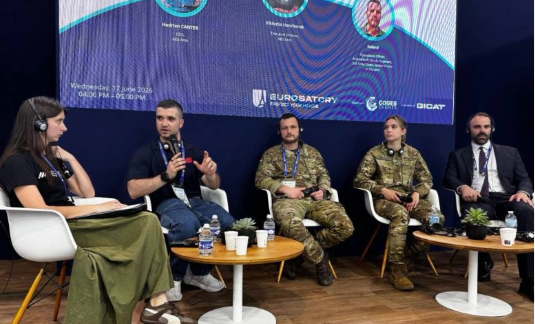
A delegation from Ukraine's Khartiia Corps, supported by partners and hosted within the IRON Cluster, brought something that defense companies, generals, and policymakers increasingly seek: real combat experience from the largest conventional war Europe has witnessed since World War II.
In an era where military technology evolves faster than procurement cycles, Ukraine has become something unprecedented—a live laboratory of modern warfare.
And the world is paying attention.
The Battlefield Has Become the Ultimate Innovation Hub
For years, defense conferences revolved around promises.
Manufacturers unveiled prototypes. Startups showcased concepts. Governments debated future capabilities.
Ukraine changed the equation.
Today, every drone, targeting system, communication platform, and electronic warfare solution must answer a brutal question:
Does it work under fire?
At Eurosatory, representatives of the Khartiia Corps shared lessons learned not in simulations or test ranges but in active combat operations. Their presence underscored a fundamental shift transforming the defense industry.
Combat effectiveness has become the ultimate validation metric.
The defense sector increasingly looks toward Ukraine not only as a customer but as a source of operational knowledge capable of shaping the next generation of military technologies.
Drones Are Rewriting the Rules of War
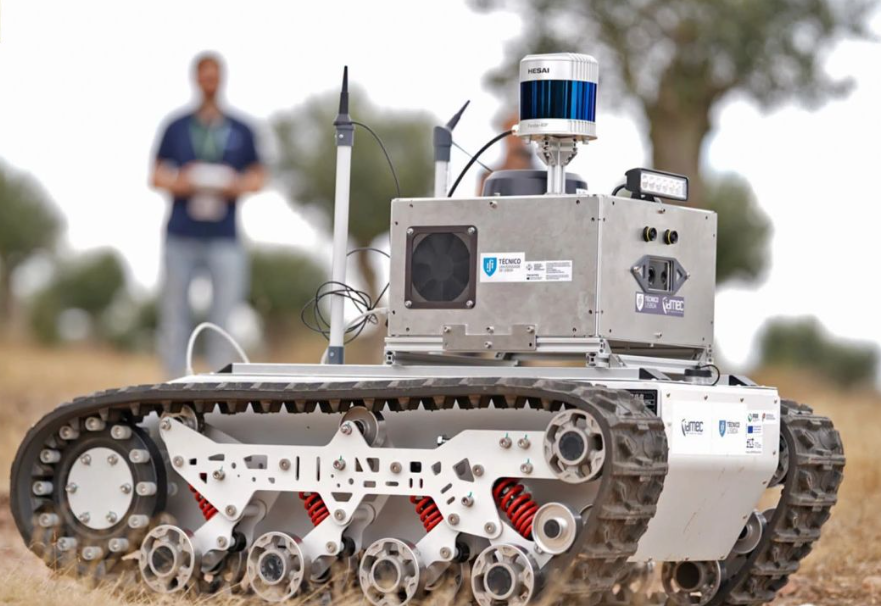
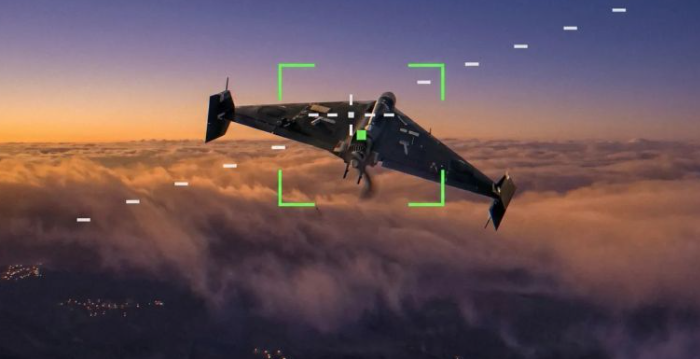
One of the central themes throughout the delegation's activities was unmanned systems.
The rapid evolution of FPV drones, reconnaissance platforms, electronic warfare tools, and autonomous targeting solutions has fundamentally altered battlefield dynamics.
What once required expensive aircraft and complex command structures can now be achieved with technologies measured in hundreds rather than millions of euros.
This democratization of military capability represents one of the most disruptive developments in modern defense.
At a joint event with General Cherry FPV, Ukrainian representatives presented operational insights while highlighting the growing cooperation between military units and technology developers.
The message was clear:
Innovation cycles measured in years are no longer sufficient.
Modern warfare evolves in weeks.
Sometimes days.
The World's Military Academies Are Listening
The significance of the Ukrainian delegation extended well beyond the exhibition floor.
Among the side events was a lecture delivered to officers participating in command and staff training at France's prestigious École de Guerre.
The symbolism matters.
Historically, military expertise flowed from established NATO armies toward developing partners.
Today, knowledge increasingly flows in both directions.
Ukrainian officers bring practical experience in drone warfare, distributed command systems, battlefield digitization, and hybrid operations that many Western military institutions are eager to study.
A generation ago, military education focused on doctrine.
Today, survival depends on adaptation.
Few armed forces have adapted faster than Ukraine's.
Behind the Technology Stand Real People
Defense exhibitions often celebrate equipment.
Missiles attract cameras.
Drones attract investors.
Artificial intelligence attracts headlines.
But one of the most important reminders from the Ukrainian delegation was that technology alone never determines outcomes.
Behind every showcased drone, precision munition, targeting solution, or communication platform stand engineers, operators, commanders, and soldiers whose experiences shaped those capabilities.
Technology provides leverage.
Human expertise creates advantage.
This combination is increasingly becoming the defining characteristic of modern military power.
The Soldier of the Future Has Already Arrived
Perhaps the most provocative lesson from Eurosatory 2026 is that the profession of soldiering itself is changing.
The image of warfare dominated solely by physical courage is being replaced by something more complex.
Today's battlefield rewards technical expertise, systems thinking, data literacy, rapid decision-making, and the ability to integrate human judgment with autonomous technologies.
The most effective combat units increasingly resemble high-performance technology organizations operating under extreme pressure.
Military success now depends as much on software updates, drone operators, engineers, and data analysts as it does on traditional firepower.
The soldier of the future is not a concept.
The soldier of the future is already operating on Europe's eastern frontier.
A Glimpse Into Tomorrow
Eurosatory 2026 revealed something larger than a defense exhibition.
It showcased a transformation in how nations think about security, technology, and military readiness.
Ukraine's presence demonstrated that innovation can no longer be separated from operational experience.
The next breakthroughs in defense will not emerge solely from laboratories or boardrooms.
They will emerge from the interaction between technology developers and those who use those technologies under the most demanding conditions imaginable.
In Paris, the world came to examine the future of defense.
What many discovered instead was that the future had already arrived.
And much of it spoke Ukrainian.