The Drone Shield. How TEKEVER Became a Silent Force Behind Ukraine’s New Way of War
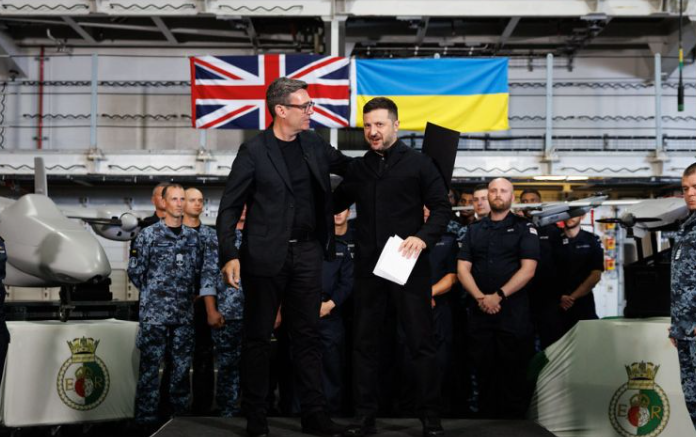
When President Volodymyr Zelenskyy stepped aboard HMS Queen Elizabeth in Portsmouth, the symbolism was impossible to miss.
Standing alongside British leadership and surrounded by one of NATO's most recognizable military assets, the Ukrainian president was not simply discussing today's war. He was looking at the future of warfare itself.
And increasingly, that future is autonomous.
While tanks, missiles, and fighter jets continue to dominate headlines, a quieter revolution is unfolding across Europe. The battlespace is becoming software-defined. Intelligence moves at machine speed. Surveillance never sleeps. Decisions once requiring entire command structures now depend on real-time data streams delivered by autonomous systems operating across land, sea, and air.
In this environment, information has become as important as firepower.
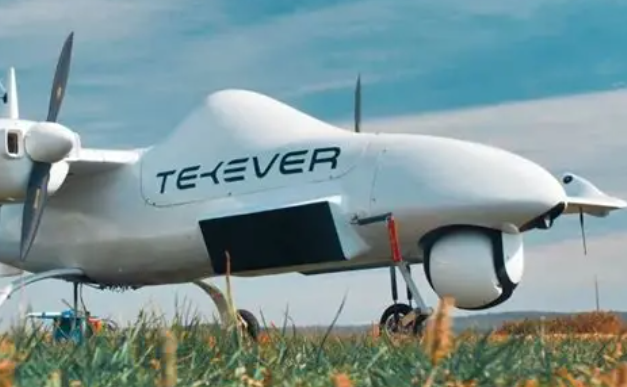
That is where companies like TEKEVER are carving out a strategic role.
The New Currency of War
For centuries, military power was measured in ships, aircraft, and troop numbers.
Today, it is increasingly measured in awareness.
Who sees first?
Who understands first?
Who acts first?
Ukraine's war has demonstrated that battlefield advantage no longer belongs exclusively to the side with the largest military budget. It belongs to the side capable of integrating intelligence, surveillance, reconnaissance, and autonomous systems into a continuous operational network.
The lesson is being studied in defense ministries worldwide.
The ability to detect threats early, monitor vast maritime areas, track hostile activity, and provide commanders with real-time decision-making tools is rapidly becoming the defining capability of twenty-first-century conflict.
Beyond Drones: The Rise of Autonomous Security
Many still view uncrewed systems primarily as drones.
That perception misses the bigger picture.
The most significant transformation is not the aircraft itself but the ecosystem surrounding it. Modern autonomous platforms are increasingly software-centric intelligence networks capable of collecting, analyzing, and distributing information across multiple domains.
This is precisely why autonomy has become central to UK-Ukraine defense cooperation.
Both nations understand that future conflicts will demand persistent surveillance, flexible deployment, and rapid adaptation. Traditional platforms remain essential, but they are increasingly supported by autonomous systems capable of operating longer, covering larger areas, and providing continuous operational awareness.
TEKEVER's growing presence within this landscape reflects that shift.
Rather than focusing solely on hardware, the company positions itself at the intersection of autonomy, software, and intelligence gathering, areas becoming increasingly important as security environments grow more complex.
Ukraine: The World's Largest Defense Innovation Laboratory
No country has accelerated military innovation faster than Ukraine.
Under constant pressure from a technologically capable adversary, Ukraine has become a real-world testing ground for autonomous capabilities. Technologies that once followed multi-year development cycles are now evaluated, adapted, and deployed in weeks.
Innovation has become a survival mechanism.
The result is a battlefield that is changing military doctrine across NATO.
Autonomous systems are no longer niche capabilities. They are increasingly integrated into frontline operations, maritime security missions, intelligence collection, and infrastructure protection.
The implications extend far beyond Eastern Europe.
Every lesson learned in Ukraine influences future defense planning from London to Washington and beyond.
Why the HMS Queen Elizabeth Meeting Matters
Zelenskyy's visit to HMS Queen Elizabeth represented more than diplomatic theater.
It highlighted a deeper reality: modern security depends on collaboration between governments, militaries, and technology innovators.
The UK's continued support for Ukraine increasingly involves not only training and equipment but also the development of capabilities designed to meet emerging security challenges.
Autonomy sits at the center of that effort.
The maritime domain, in particular, is becoming a critical arena where intelligence gathering, domain awareness, and rapid response capabilities determine strategic advantage.
Maintaining that advantage requires continuous technological evolution.
The Future Is Software-Defined
The defense sector is entering an era similar to what occurred in the commercial world decades ago.
Hardware remains important.
Software becomes decisive.
The most powerful security platforms of the future may not be those carrying the largest weapons loads but those capable of generating the most accurate, actionable, and timely information.
That shift is already underway.
As Ukraine continues to defend itself and allied nations strengthen collective security, the demand for autonomous intelligence and surveillance capabilities will only grow.
Companies such as TEKEVER are positioning themselves at the center of that transformation, helping build a future where technology extends situational awareness, improves decision-making, and strengthens resilience against evolving threats.
The lesson emerging from Portsmouth is clear.
The next generation of security will not be defined solely by military power.
It will be defined by who can see, understand, and adapt fastest.
And increasingly, autonomous systems will make the difference.