The Drone-Airplane Hybrid Is Here. Why VTOL FPVs Could Rewrite the Rules of Aerial Warfare
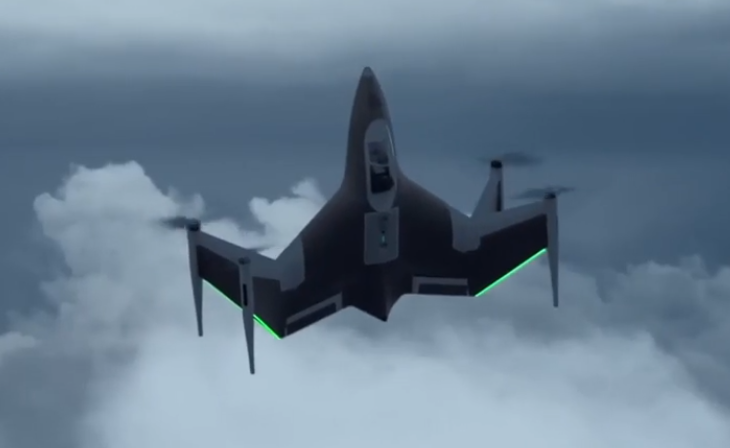
For years, military and commercial drone designers faced a stubborn engineering dilemma.
Choose a multirotor drone, and you get vertical takeoff, hovering, precision control, and flexibility. But flight times remain limited and speed is constrained.
Choose a fixed-wing aircraft, and you gain endurance, range, and efficiency. Yet you lose the ability to launch from confined spaces and require infrastructure for takeoff and landing.
The industry has spent years searching for a solution.
Flywing's new X-WING suggests that solution may finally be arriving.
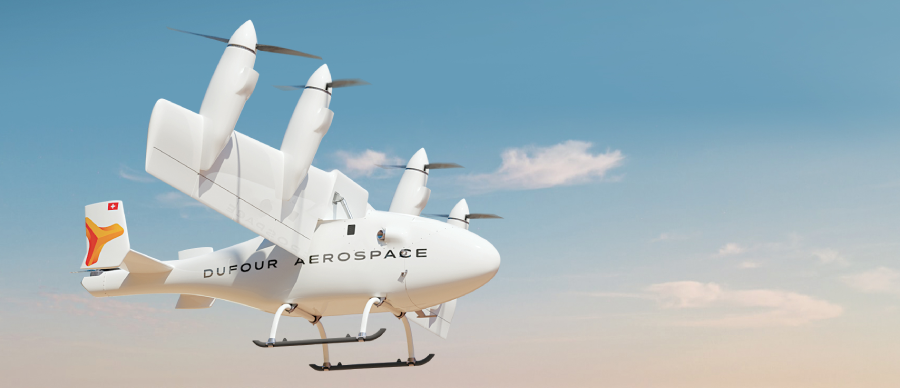
The compact VTOL FPV aircraft combines two traditionally competing concepts into a single platform. It can lift off vertically like a drone, hover in place, and then transition into high-speed forward flight like a fixed-wing aircraft, all through a seamless command process.
At first glance, this sounds like another drone product launch.
It is not.
It represents a broader shift taking place across military aviation, where the distinction between drones and aircraft is beginning to disappear.
The future belongs to hybrids.
The logic is straightforward.
Modern battlefields increasingly demand range, persistence, flexibility, and survivability simultaneously. Traditional quadcopters excel at precision missions but struggle with endurance. Conventional fixed-wing systems offer excellent range but require launch equipment or dedicated runways that can limit operational flexibility.
The X-WING aims to eliminate that tradeoff.
A unit operating from a field, rooftop, forest clearing, ship deck, or urban environment can launch vertically without specialized infrastructure. Once airborne, the aircraft can switch into efficient fixed-wing flight, dramatically extending mission reach compared to traditional multicopters.
In practical terms, that means more time over target, larger operational areas, and reduced logistical burden.
Those advantages matter increasingly in modern conflicts.
The war in Ukraine has demonstrated that aerial warfare is becoming a contest of adaptability rather than pure technology. Drones must operate under conditions of intense electronic warfare, rapidly changing frontlines, and constant pressure to reduce costs while increasing effectiveness.
Every additional minute of endurance translates into greater operational value.
Every reduction in launch requirements expands deployment options.
Every improvement in portability increases survivability.
That makes platforms like the X-WING particularly interesting.
Its foldable design reflects a growing trend across defense technology: mobility is becoming as important as capability.
Large systems are powerful.
Portable systems survive.
Soldiers increasingly need equipment that can move quickly, deploy immediately, and operate from unpredictable locations. A compact aircraft that folds for transport while maintaining fixed-wing performance aligns perfectly with that requirement.
Yet the significance extends beyond military applications.
The same characteristics attractive to military operators could prove valuable across numerous civilian sectors.
Infrastructure inspection.
Emergency response.
Search and rescue.
Environmental monitoring.
Border security.
Disaster assessment.
In all these scenarios, organizations want the precision deployment of a drone combined with the endurance of an aircraft.
Historically, they had to choose.
Hybrid VTOL systems increasingly remove that constraint.
More broadly, the X-WING reflects a larger technological evolution within aviation itself.
For more than a century, aircraft categories remained relatively fixed.
Helicopters hovered.
Airplanes flew forward.
Drones mostly behaved like scaled-down versions of one or the other.
That distinction is fading.
Advanced flight-control software, lighter materials, improved batteries, and more powerful onboard processors now allow entirely new aircraft architectures to emerge.
The result is a generation of aerial platforms that can adapt their behavior during flight rather than being limited by a single design philosophy.
This flexibility could become one of the defining characteristics of next-generation aerial systems.
The most successful aircraft of the future may not be the fastest, largest, or most heavily armed.
They may simply be the most adaptable.
That is why systems like the X-WING deserve attention.
They are not trying to replace drones.
They are not trying to replace airplanes.
They are attempting to become something new.
A platform that combines the strengths of both while reducing their weaknesses.
The drone revolution transformed aerial operations by putting eyes in the sky everywhere.
The next revolution may come from aircraft that refuse to choose between hovering and flying.
And that future may already be taking off.