The Bavarian Drone Revolution. AVILUS Startup Quietly Rewriting the Future of Aviation
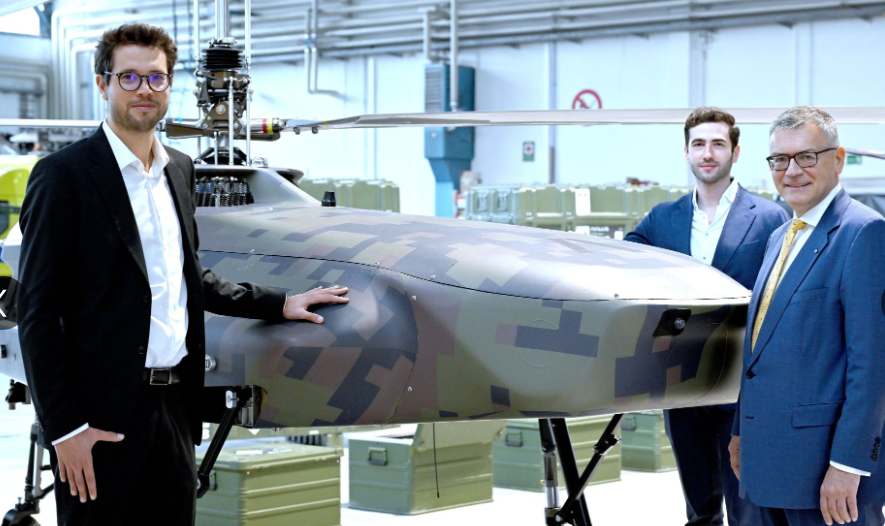
While much of Europe debates the future of autonomous aviation, a young company in Bavaria is busy building it.
Hidden within the historic aviation ecosystem of Erding, AVILUS is not trying to create the next delivery gadget or consumer drone. Instead, the startup is tackling one of the most ambitious challenges in modern aerospace: scalable autonomous air mobility for both civilian and defense applications.
And it may be doing so at exactly the right moment.
The world is entering an era in which aircraft no longer need pilots onboard to perform some of the most dangerous, complex, and time-critical missions. Advances in artificial intelligence, autonomous navigation, battery technology, sensors, and communications are rapidly transforming what is possible in the air.
For decades, unmanned aviation remained a niche technology.
Today, it is becoming a strategic industry.
At the center of this transformation stands a new generation of European innovators. Among them is AVILUS, led by CEO Nicolas Bähr and CTO Max Söpper, whose vision extends beyond traditional drone operations toward a future where autonomous aerial systems become a normal part of everyday logistics, emergency response, defense, and public services.
One project already illustrates the potential.
The rescue drone "Grille" is designed to support medical evacuation missions and help save lives in situations where speed can mean the difference between survival and tragedy. In dangerous environments, autonomous systems can reach locations faster, operate in hazardous conditions, and reduce risks for human crews.
The significance of such technologies extends far beyond military use.
Natural disasters, remote healthcare, infrastructure inspections, search-and-rescue operations, humanitarian logistics, and rural supply chains are all areas where autonomous aircraft could dramatically increase efficiency and accessibility.
The next mobility revolution may not happen on roads.
It may happen above them.
That possibility helps explain why Bavaria has become one of Europe's most dynamic startup ecosystems. The region combines several ingredients that are difficult to replicate elsewhere: world-class universities, cutting-edge research institutions, advanced manufacturing capabilities, aerospace expertise, strong industrial networks, and targeted public support programs.
In innovation, geography still matters.
Ideas can emerge anywhere, but scaling breakthrough technologies requires talent, capital, infrastructure, testing environments, and industrial partners. Bavaria offers a rare combination of all five.
This ecosystem is strengthened through initiatives that seek to accelerate the commercialization of advanced air mobility technologies. By supporting companies such as AVILUS, policymakers are making a strategic bet that Europe's future competitiveness will increasingly depend on its ability to lead emerging industries rather than follow them.
That bet is not without urgency.
The global drone industry has become one of the fastest-moving technology sectors in the world. Competition is intense. New capabilities appear almost monthly. Nations that fail to develop domestic expertise risk becoming dependent on foreign technologies for critical infrastructure, transportation, and security needs.
Autonomous aviation is no longer a futuristic concept.
It is an industrial race.
And unlike previous technological revolutions, the winners may be determined by how quickly they can move from prototype to deployment.
That is where startups often possess an advantage over established players. Free from layers of bureaucracy and legacy systems, they can experiment rapidly, iterate constantly, and bring innovative solutions to market faster than traditional aerospace giants.
The challenge, however, is scaling.
A brilliant prototype is not enough. Building thousands of systems, certifying them, supporting customers, integrating them into existing airspaces, and ensuring safety at scale requires industrial maturity as well as technological excellence.
The companies that can combine both will define the future of flight.
AVILUS represents something larger than a single startup success story. It symbolizes Europe's opportunity to lead in a field that could reshape transportation, emergency services, logistics, and defense for decades to come.
The conversation about drones often focuses on machines.
The real story is about ecosystems.
It is about engineers, researchers, entrepreneurs, manufacturers, investors, and policymakers working together to transform bold ideas into operational reality.
And if that happens, the next chapter of aviation may not be written in Silicon Valley, Shenzhen, or Seattle.
It may be written in Bavaria.