The 55% Problem: Why Ukraine Is Inventing the Future of Air Defense in Real Time
Military revolutions rarely announce themselves.
They arrive quietly, hidden inside percentages.
Today, one number may tell us more about the future of warfare than almost any battlefield map:
50-55%.
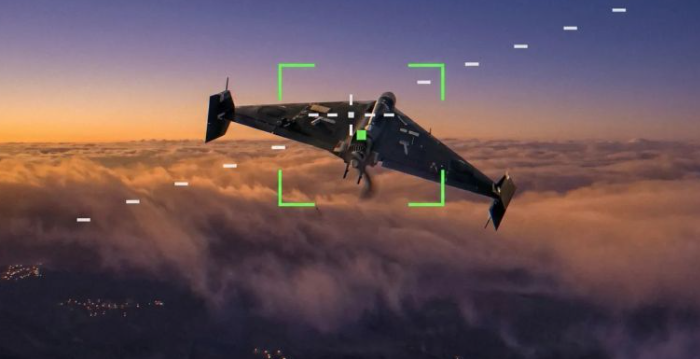
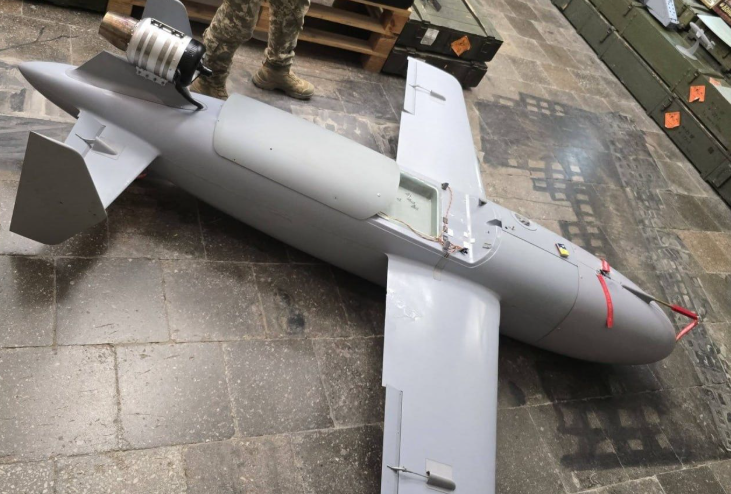
That is approximately the share of jet-powered attack drones currently being intercepted by Ukrainian air defenses.
At first glance, the figure appears reassuring. More than half of incoming threats are being destroyed.
But military planners see the number differently.
They see the other half.
And that other half may be forcing one of the most important transformations in air defense since the advent of guided missiles.
Because the emergence of fast, jet-powered drones is changing the fundamental economics of protection.
The End of Comfortable Interception
For years, counter-drone warfare followed a relatively straightforward logic.
Most unmanned threats were slow.
Many were predictable.
Detection systems had time to identify them.
Interceptors had time to engage them.
Command networks had time to react.
Jet-powered drones are beginning to compress that timeline dramatically.
A target traveling significantly faster creates a very different operational challenge.
Detection windows shrink.
Decision time disappears.
Interception becomes harder.
Mistakes become more expensive.
And suddenly, air defense must operate at a speed that begins to resemble missile defense rather than traditional counter-UAS operations.
The result is not simply a new threat.
It is the arrival of an entirely new category between drones and cruise missiles.
The F-16 Solution
One response to this challenge has been the increasing role of F-16 fighters equipped with 20-mm ammunition.
The logic is simple.
A fast target requires a fast interceptor.
Aircraft remain among the most flexible assets available for rapidly engaging airborne threats across large areas.
But flexibility comes with a price.
Aircraft consume fuel.
Pilots require training.
Maintenance infrastructures are complex.
Ammunition stockpiles must be continuously replenished.
This immediately creates a sustainability question.
Can high-end assets remain the primary answer when fast drones become increasingly numerous?
History suggests the answer is no.
Military systems are effective when they scale.
And scale is ultimately an industrial question.
The Rise of the Interceptor Drone
This is why one of the most fascinating developments emerging from Ukraine is not another attack drone.
It is the interceptor drone.
Systems such as the Bars family represent a glimpse into what may become the future architecture of air defense.
Instead of using expensive missiles against inexpensive targets, interceptor drones introduce a different equation.
Fight drones with drones.
Adapt quickly.
Manufacture continuously.
Modify software rapidly.
Deploy at scale.
The concept mirrors many of the principles that have already transformed offensive drone warfare.
Affordable platforms.
Rapid iteration.
Continuous adaptation.
Industrial scalability.
The objective is not merely achieving one successful interception.
It is creating an ecosystem capable of sustaining thousands.
Air defense is becoming a software problem as much as an engineering problem.
The Return of the Machine Gun
Yet perhaps the most surprising innovation is also the oldest.
The machine gun.
The installation of automated gun turrets around Kyiv reflects an uncomfortable reality of modern warfare.
Not every threat requires a missile.
And not every defense can afford one.
For decades, military technology moved toward ever-greater complexity.
Now warfare is encouraging a simultaneous return to simplicity.
Machine guns guided by automation.
Sensors connected to algorithms.
Human operators supervising autonomous engagement systems.
The weapon itself is old.
The intelligence controlling it is new.
This combination may prove extraordinarily powerful.
Not because it is revolutionary.
But because it is sustainable.
Wars are won not by what works once.
They are won by what continues working after thousands of engagements.
The Real Competition
Many observers describe the current battle as drones versus air defenses.
That interpretation misses the bigger picture.
The real contest is adaptation versus adaptation.
A drone becomes faster.
Air defenses evolve.
Interceptor drones emerge.
Attack systems change again.
Automated turrets are deployed.
New countermeasures appear.
The cycle repeats.
And each cycle is becoming shorter.
The critical capability is no longer a specific weapon.
It is the ability to shorten the time between observation, learning, production, deployment, and adaptation.
The side that masters that process gains more than an operational advantage.
It gains the ability to continuously create new advantages.
Air Defense Becomes an Industry
This may be the most important lesson of all.
Future air defense will not be defined by a single revolutionary system.
It will be defined by the speed of an ecosystem.
Factories.
Software developers.
Drone manufacturers.
AI engineers.
Operators.
Production chains.
Data analysts.
All connected through a continuous cycle of learning.
The famous military question used to be:
"How many targets can we destroy?"
The emerging question is different:
"How quickly can we adapt after the enemy changes?"
Ukraine's 55% interception rate is therefore more than a statistic.
It is evidence that modern warfare is entering another phase.
A phase where victory may depend less on possessing the perfect defense and more on building the fastest learning system.
Because in the age of drones, the real battle is no longer taking place only in the sky.
It is taking place inside the adaptation cycle itself.