The 40-Millisecond War: Why Latency Has Become the New Arms Race in Drone Combat
For years, the drone industry obsessed over range.
Then it obsessed over endurance.
Then autonomy.
Now the battlefield is increasingly focused on something far smaller and far more decisive:
Milliseconds.
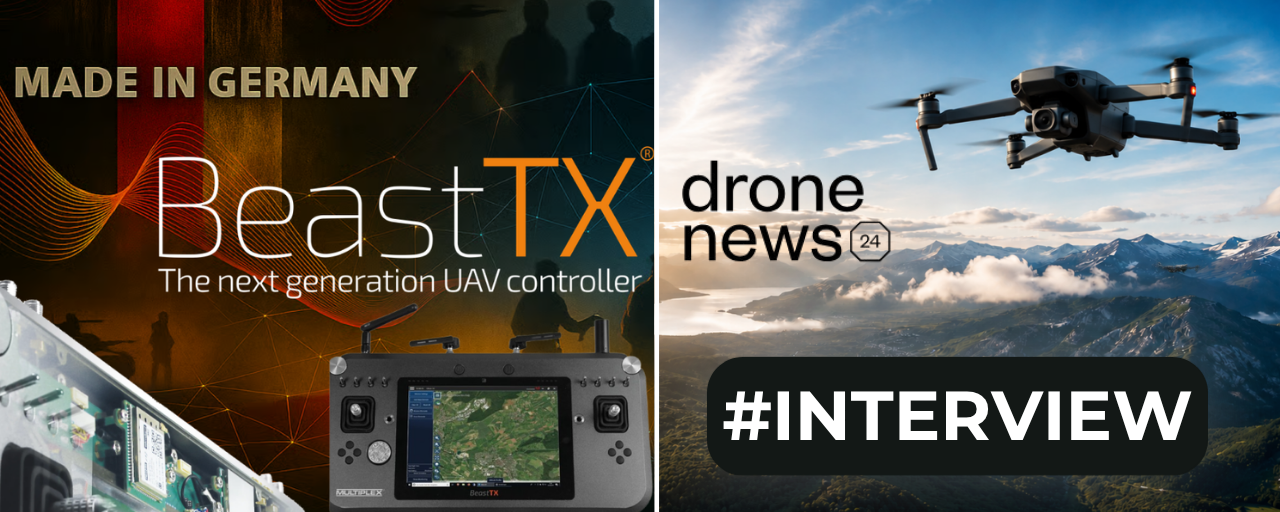
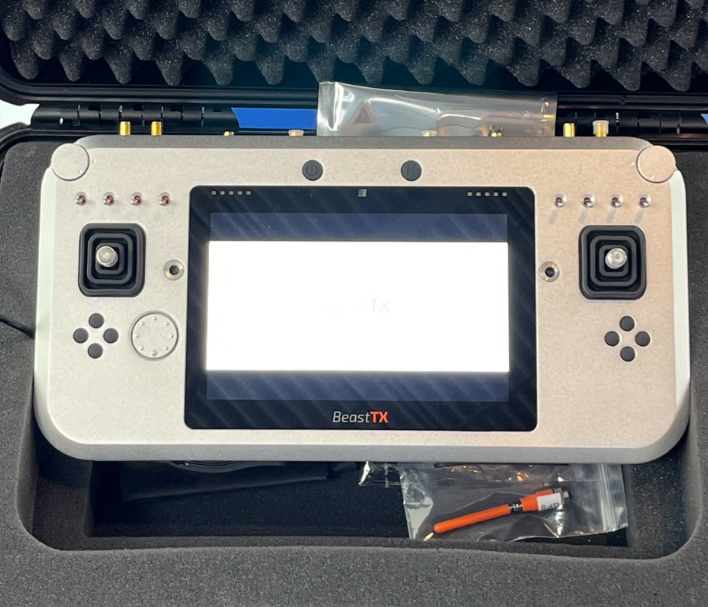
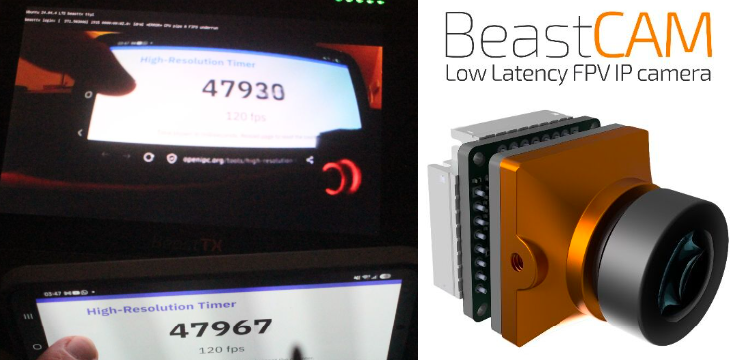
With the announcement that BeastTX has achieved 35-45 milliseconds glass-to-glass (G2G) latency for digital HD FPV streaming, BeastUAS has crossed an important threshold in the increasingly competitive world of tactical drone systems.
The significance is not simply technical.
It is operational.
Because modern drone warfare has become a competition of reaction time.
And reaction time begins with latency.
The Hidden Enemy Inside Every Drone
Every drone pilot faces an invisible opponent.
Not electronic warfare.
Not air defenses.
Not GPS jamming.
Latency.
The delay between what a camera sees and what the operator sees.
In civilian applications, a few hundred milliseconds may be tolerable.
For infrastructure inspection, agriculture, mapping, or surveying, small delays are largely irrelevant.
Combat is different.
An FPV drone traveling at high speed toward a moving target covers significant distance in fractions of a second. Every millisecond of delay reduces the operator's ability to make fine corrections, avoid obstacles, and react to sudden changes in the environment.
This is why digital video transmission became one of the most fiercely contested technological battlegrounds in the drone industry.
High-definition imagery is valuable.
High-definition imagery delivered too slowly is not.
The challenge has always been balancing image quality with real-time responsiveness.
Until recently, analog systems often maintained an advantage in latency despite their inferior image quality.
Digital systems delivered better pictures but frequently imposed delays that could matter during time-critical operations.
That gap is rapidly closing.
Why 40 Milliseconds Matters
The significance of BeastTX is not that it delivers digital video.
Numerous systems already do that.
The significance is that it achieves 35-45 ms G2G latency, placing it within the performance range traditionally associated with the largest and most established FPV ecosystems.
In practical terms, this means operators gain both clarity and responsiveness.
The trade-off between seeing clearly and reacting quickly becomes smaller.
That matters because modern drones are increasingly expected to perform in highly dynamic environments.
Urban combat.
Low-altitude operations.
Infrastructure inspections.
Security missions.
First-person-view operations where split-second adjustments determine mission success.
The lower the latency, the closer the operator feels to being physically onboard the aircraft.
That sense of immediacy is not merely about user experience.
It directly affects performance.
Building an Ecosystem, Not a Product
Perhaps the most interesting part of the announcement is not the latency number itself.
It is what that number represents.
The company emphasized completion of an integrated chain:
- BeastCAM S digital camera
- High-speed CE-compliant datalink
- BeastTX ground station
This approach reflects a broader trend within the drone industry.
Success increasingly belongs to companies capable of controlling entire ecosystems rather than individual components.
The era of standalone drone products is giving way to integrated architectures.
Sensors.
Communication links.
Ground stations.
Software.
Data processing.
Mission management.
Electronic protection.
The value lies in how all these pieces interact.
The drone itself becomes only one element within a larger operational system.
Lessons From Modern Warfare
The war in Ukraine demonstrated that drone effectiveness is not solely determined by airframes.
Command links matter.
Video transmission matters.
Electronic resilience matters.
The ability to rapidly upgrade and optimize complete systems matters.
Many battlefield losses occur not because drones fail mechanically but because operators lose control, video quality degrades, or communication delays create critical errors during final attack phases.
Reducing latency therefore improves more than pilot comfort.
It improves decision-making.
And decision-making is increasingly the decisive factor in modern warfare.
Military theorists often discuss compression of the OODA loop:
Observe. Orient. Decide. Act.
Low-latency communications accelerate every stage of that cycle.
The operator sees sooner.
Understands sooner.
Acts sooner.
The difference may only be measured in milliseconds.
Operationally, those milliseconds can separate success from failure.
The Next Drone Arms Race
Much discussion surrounding unmanned systems focuses on artificial intelligence, autonomous navigation, and swarm technologies.
All are important.
Yet some of the most consequential advances are occurring in less visible areas.
Video compression.
Signal processing.
Data links.
Transmission efficiency.
Network resilience.
Latency reduction.
These technologies rarely generate headlines.
But they often determine battlefield effectiveness.
The companies that master them are building the foundation upon which future autonomous and semi-autonomous systems will operate.
BeastTX's achievement demonstrates that competition is no longer only about building drones.
It is about building information systems that happen to fly.
And in a world where decisions increasingly occur at machine speed, the next strategic advantage may not come from flying farther.
It may come from seeing faster.
Because in the drone age, victory is often measured in milliseconds.