Terma - Denmark's New Air Defense Doesn't Shoot Drones. It Sees Them First.
For decades, air defense was relatively straightforward.
Detect the aircraft.
Identify the threat.
Launch the interceptor.
Today's drone age has shattered that logic.
The challenge is no longer finding a single hostile aircraft approaching national airspace. It is identifying thousands of possible signals, dozens of sensors, multiple authorities, civilian infrastructure operators, military units, and increasingly autonomous drones moving simultaneously across the battlefield and the homeland.
In this environment, the most important weapon may not be the missile.
It may be information.
That is why Denmark's decision to select Terma to build a nationwide counter-drone command-and-control system deserves attention far beyond Scandinavia. At first glance, the announcement appears to be another procurement contract. In reality, it reflects a broader transformation underway in military thinking across Europe.
The drone revolution has changed the air defense equation.
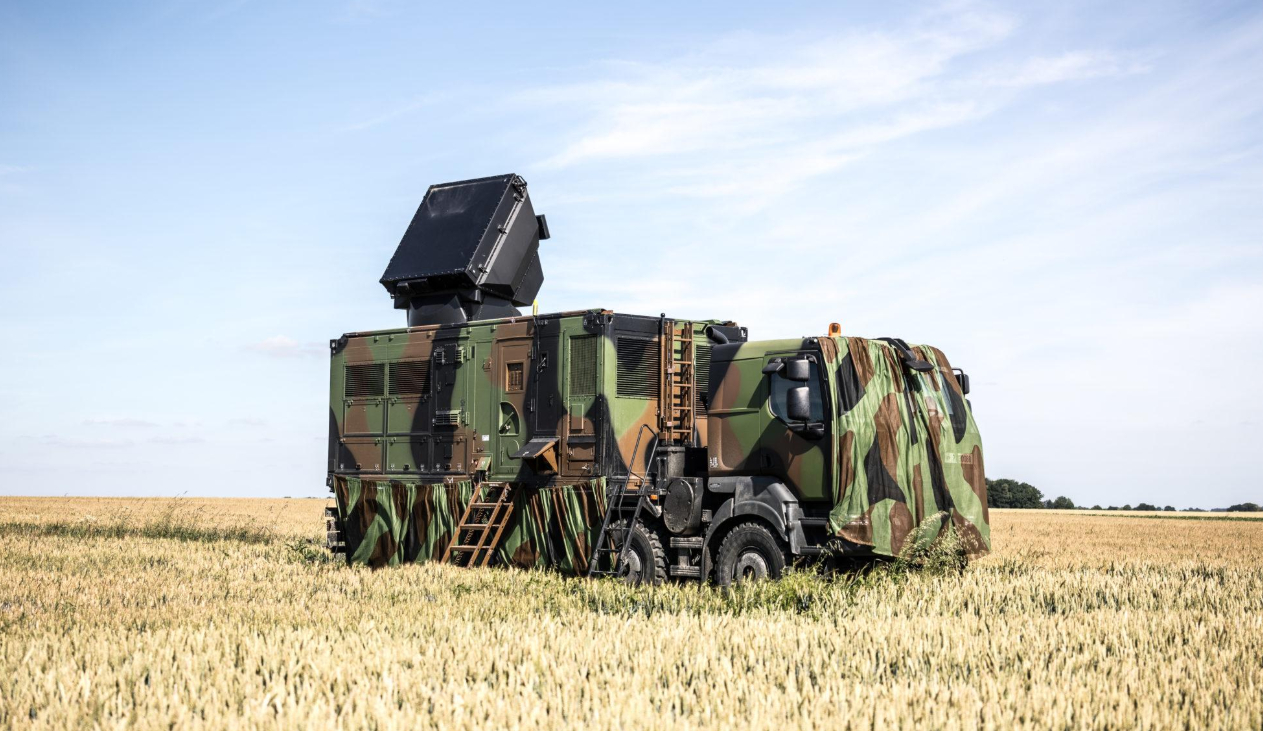
The problem is no longer simply detecting drones. Most modern armed forces already possess radars, cameras, electronic surveillance systems, acoustic sensors, and various counter-drone technologies.
The problem is that these systems often operate independently.
Each sensor sees part of the picture.
Nobody sees the whole picture.
Denmark's new approach attempts to solve precisely that challenge.
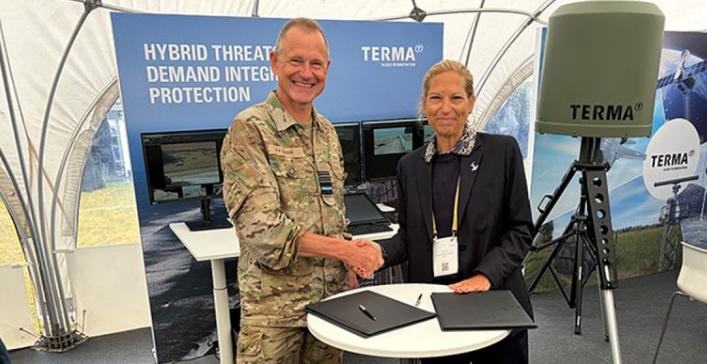
Built on Terma's sovereign multi-domain data backbone, Helion, the system will connect existing and future sensors into a single shared drone situational picture. Military installations, civilian authorities, critical infrastructure operators, and future sensor networks will be able to contribute data into a common operating environment.
The strategic significance lies not in the sensors themselves.
It lies in the integration.
This reflects one of the most important lessons emerging from the war in Ukraine and from growing drone activity around airports, energy facilities, ports, and military bases across Europe.
Detection is no longer the bottleneck.
Decision-making is.
A modern security operator can be overwhelmed by data long before being overwhelmed by drones.
Every radar contact, every camera feed, every electronic signal creates information that must be analyzed, prioritized, and understood in real time.
Human operators alone cannot keep pace.
This explains the growing role of artificial intelligence within next-generation defense systems.
Denmark's new architecture will use AI-supported processing to classify, prioritize, and fuse sensor information. The goal is not to replace human decision-makers. The goal is to ensure they receive relevant information quickly enough to act before a threat becomes a crisis.
That distinction matters.
The future battlefield may not be won by the side possessing the largest number of drones.
It may be won by the side capable of understanding what is happening faster than its opponents.
This is increasingly becoming a competition of decision speed.
Military strategists often discuss OODA loops: Observe, Orient, Decide, Act.
Drones compress that cycle dramatically.
The nation that can detect threats first, understand them first, and coordinate a response first gains a significant advantage.
Denmark appears to be investing directly in that principle.
Another striking aspect of the program is sovereignty.
Across Europe, governments are becoming increasingly sensitive about where operational defense data resides and who controls it.
The Terma solution emphasizes national control of operational sensor data while remaining open enough to integrate technologies from multiple suppliers. This approach addresses both security concerns and future flexibility.
That flexibility could prove critical.
Drone threats evolve faster than almost any other category of military technology.
What works today may be obsolete tomorrow.
A closed architecture risks becoming outdated. An open and modular architecture allows governments to integrate new sensors, countermeasures, and technologies as threats emerge.
In many respects, Denmark is not purchasing a counter-drone system.
It is purchasing a framework for adaptation.
That may prove to be the most important capability of all.
Because the drone challenge is only getting bigger.
Military bases, airports, ports, government buildings, energy infrastructure, and communication networks are all becoming potential targets for increasingly inexpensive and increasingly capable unmanned systems.
The question is no longer whether drones will become a permanent feature of the security environment.
They already are.
The real question is whether governments can build decision-making architectures fast enough to keep up.
Denmark's answer appears clear.
The future of counter-drone defense is not defined by the sensor, the radar, or even the interceptor.
It is defined by the ability to connect them all into a single picture and turn information into action.
In the drone age, seeing first may matter more than shooting first.