Telefónica Wants to Make Drones a Network Service
For years, drones have promised faster inspections, better emergency response, and cheaper aerial data. The bottleneck was never the aircraft—it was everything around it: pilots on site, fragmented permissions, fragile connectivity, and operations that didn’t scale.
Telefónica now believes it has solved that problem.
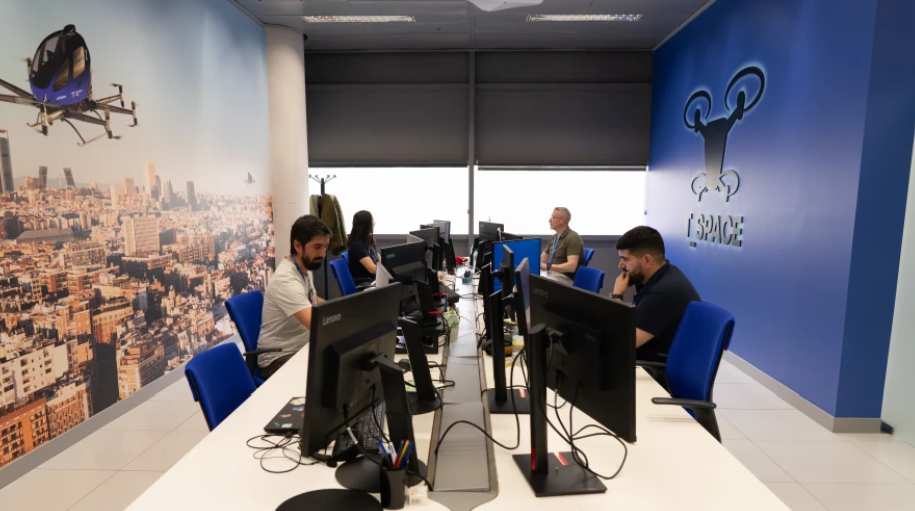
The telecom giant has launched its first commercial remote‑piloted drone service in Spain, operated from T_Space, a new control center inside Telefónica’s National Supervision and Operations Center (CNSO) in Madrid. The result is a fully managed, end‑to‑end drone service—one that eliminates the need to deploy pilots in the field and reframes drones as a network‑native capability, not standalone hardware.
From Aircraft to Infrastructure
At the heart of Telefónica’s approach is a shift in perspective. Instead of selling drones as tools, the company offers them as operational infrastructure.
Pilots no longer travel to each mission site. From T_Space, certified operators remotely control drones deployed across different locations, using 5G connectivity to ensure low latency, continuous command‑and‑control, and real‑time video transmission—even in BVLOS (Beyond Visual Line of Sight) operations.
This is not a partial integration. Telefónica bundles everything into a single service stack:
- Remote piloting
- Drone‑in‑a‑Box systems for autonomous deployment
- 5G connectivity
- Edge computing for real‑time data processing
- AI‑based computer vision
- Network slicing to prioritize critical communications
- Regulatory management and maintenance
The drone becomes just one node in a much larger digital system.
Why 5G Changes the Equation
Telefónica’s competitive advantage lies in something most drone operators cannot replicate: control over the network itself.
Using 5G and network slicing, the company can guarantee bandwidth, latency, and reliability for drone operations—critical in emergency scenarios, industrial inspections, or public safety missions where lost links are not an option.
Edge computing allows data to be processed close to where it is captured, reducing response times and enabling real‑time analytics. Instead of flying first and analyzing later, decisions can be made while the drone is still in the air.
In practical terms, this turns drones into on‑demand sensors tightly coupled to the telecom network.
Two Services, One Operating Model
Telefónica has structured the offering into two commercially distinct—but technologically unified—models:
- Flight as a Service (FaaS): For organizations that already own drones but want to outsource operations, compliance, and connectivity.
- Drone as a Service (DaaS): A fully managed model that includes aircraft, sensors, data processing, and operations.
Both lower the barrier to entry for advanced drone use, especially for public administrations and enterprises that lack aviation expertise or internal infrastructure.
Real‑World Use: Fires, Infrastructure, Security
One of the first live deployments is already operational in Cuacos de Yuste (Cáceres), where Telefónica works with the regional government of Extremadura on wildfire prevention.
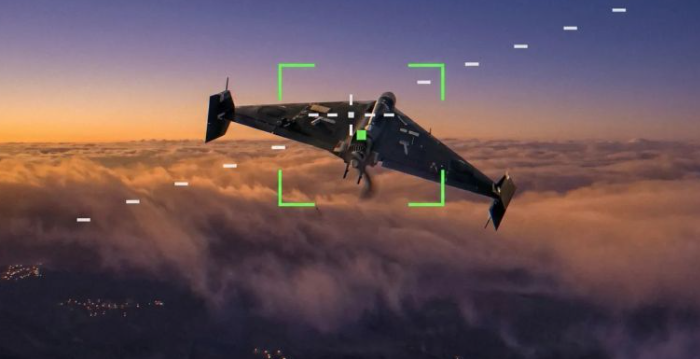
When thermal sensors detect a heat anomaly, drones can be activated remotely from T_Space and dispatched within minutes. They assess the situation from the air and stream live video directly to emergency teams—before ground units even arrive.
The same model applies to:
- Energy and critical infrastructure inspections
- Industrial monitoring
- Logistics and perimeter security
- Public safety and civil protection
The common thread is response time—and eliminating the delays created by moving people instead of data.
Digitizing Airspace, Telco‑Style
Telefónica’s move signals something larger than a new service line. It marks an attempt to digitalize low‑altitude airspace the same way telecoms once digitized voice and data.
By embedding drones into a scalable, software‑defined operating model, Telefónica positions itself not just as a drone service provider—but as a platform owner for connected aerial operations.
If this model holds, drones won’t be deployed project by project. They’ll be triggered by events, data, and algorithms—quietly, remotely, and continuously.
That’s not just drone adoption. That’s infrastructure.
.jpg)
.jpg)