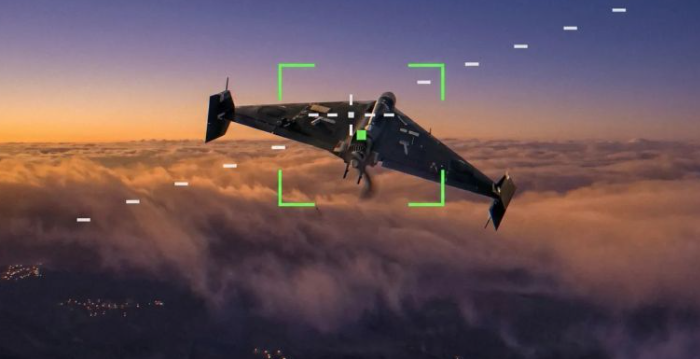
Small Drones, Big Battlefield. How eBee UAVs Are Redefining Tactical Intelligence from the Sky
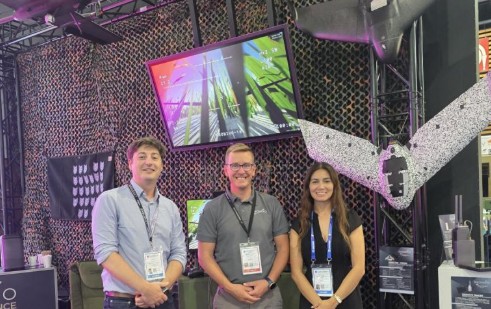
At Eurosatory 2026, the conversation around drones was not only about bigger platforms, heavier payloads or longer-range military systems. One of the most interesting signals came from a different direction: lightweight, portable fixed-wing UAVs designed to get critical intelligence into the hands of operators faster, safer and with less logistical burden.
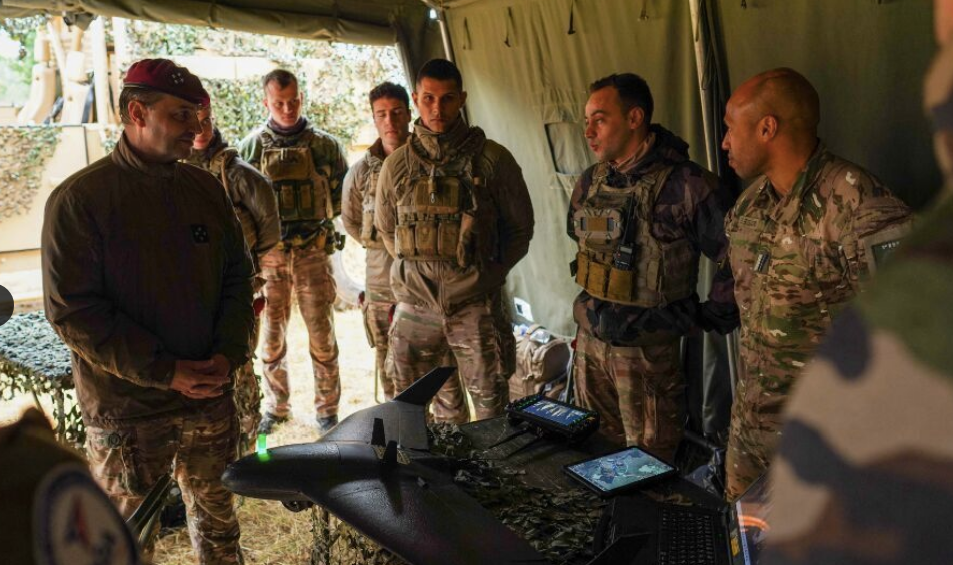
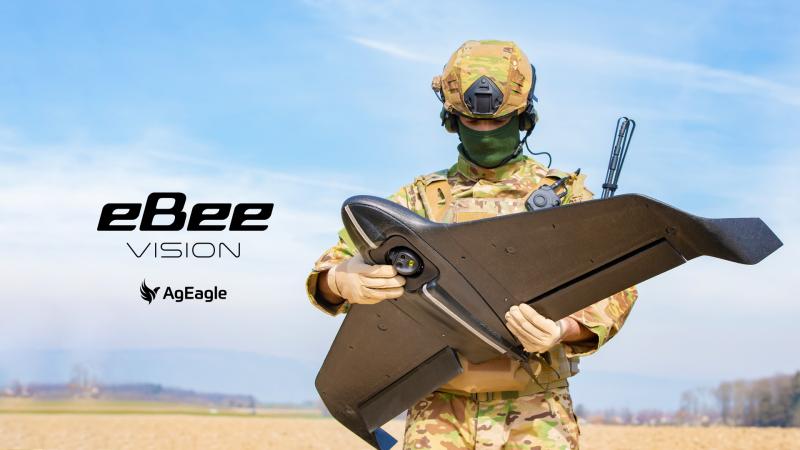
Showcased by Flying Eye and Dronivo GmbH, the eBee VISION and eBee TAC represent a growing shift in defense, public safety and emergency response: the need for compact unmanned aircraft that can be deployed quickly, operated by small teams and trusted in demanding environments.
The core promise is simple but powerful: put eyes in the sky without turning deployment into a mission of its own.
The eBee TAC is built around tactical mapping and operational reliability. With up to 90 minutes of flight time, it is designed for wide-area coverage, precision mapping and use in disconnected or challenging environments. It can be operated by one person, deployed in just three minutes and used for missions where speed and simplicity matter as much as data quality.
For defense and governmental users, that matters. In the field, intelligence loses value when it arrives too late. A drone that is portable, autonomous and fast to launch can help teams understand terrain, monitor changes, map areas and support decision-making before the situation shifts again.
The eBee VISION addresses a different but equally important mission: real-time situational awareness. With HD video transmission, 32x zoom and thermal imaging capability, it is designed for public safety agencies, parapublic organizations and ISR missions where operators need live visual information rather than only post-processed mapping data.
This distinction is important. Mapping drones help build the operational picture. Real-time video drones help act inside it.
Across the eBee family, several features stand out: lightweight deployment, cyber-secure encryption, compatibility with 2D, 3D and thermal mapping, and certifications such as Blue UAS approval, NDAA compliance and Operations Over People approval in the U.S. and Canada for selected models. These details may sound technical, but for professional users they are not minor points. They influence procurement, trust, field use and integration into official operations.
The broader message is clear: modern drone operations are moving toward systems that are not only capable, but practical. A UAV that requires a large crew, complex logistics or long setup times can become difficult to use when every minute matters. By contrast, an ultra-light fixed-wing drone with extended endurance and rapid deployment can become a routine operational tool rather than a special event.
For first responders, that can mean faster mapping after floods, fires or industrial incidents. For security agencies, it can mean improved awareness over large areas. For defense users, it can mean more agile intelligence gathering with a smaller footprint. For infrastructure and governmental applications, it can mean reliable aerial data without the complexity traditionally associated with larger UAV systems.
The eBee X, eBee TAC, eBee TAC Public Safety and eBee VISION each serve a slightly different operational need, but they point toward the same future: professional drones that are portable, secure, mission-ready and designed to support people who need information now.
In crisis situations, the advantage does not always belong to the biggest aircraft. Sometimes it belongs to the system that can be carried, launched and trusted immediately.
That is where the eBee line makes its case: intelligent fixed-wing drones that fly higher, faster and longer, while keeping deployment simple enough for real-world missions.
Eurosatory 2026 showed once again that drone technology is no longer just about flying platforms. It is about usable intelligence, operational speed and giving teams the confidence to act with better information.
In that sense, eBee is not just another drone family. It is a reminder that in defense, safety and security, the future of aerial intelligence may be lighter, faster and much closer to the people on the ground.