Sanctions, Shells, and Silicon - Inside the Shadow Network Fueling Russia’s War Machine from Germany

At first glance, it looked like just another logistics firm in northern Germany—a mid-sized trading company quietly operating out of Lübeck. But behind the façade of routine business activity, investigators allege something far more consequential: a covert supply chain feeding critical technology into Russia’s military-industrial complex, despite sweeping Western sanctions.
The case centered around Nikita S., a 39-year-old businessman arrested in a carefully orchestrated early-morning operation outside a Lübeck hotel. His detention marked the culmination of a four-year investigation that peeled back the layers of what prosecutors describe as a sophisticated sanctions-evasion system. What emerges from the case is not merely one man’s alleged actions, but a blueprint of how modern economic restrictions can be systematically bypassed.
At the heart of the operation was a German company known as Global Trade. Before Russia’s full-scale invasion of Ukraine in 2022, its activities appeared legitimate, exporting goods directly to Russian clients. But as sanctions tightened, investigators say the company evolved into something more strategic: a European procurement node controlled from Moscow.
According to prosecutors, the real command center of the operation was a Russian entity called Kolovrat, already sanctioned by the United States. Rather than acting as a distant client, it allegedly functioned as the operational brain, coordinating purchases, communications, and logistics. In an unusually direct method of control, Kolovrat staff are said to have accessed Global Trade’s internal email systems, impersonating German employees to place orders across Europe. It was a digital disguise that transformed the firm into a remote-controlled instrument of Russian procurement.
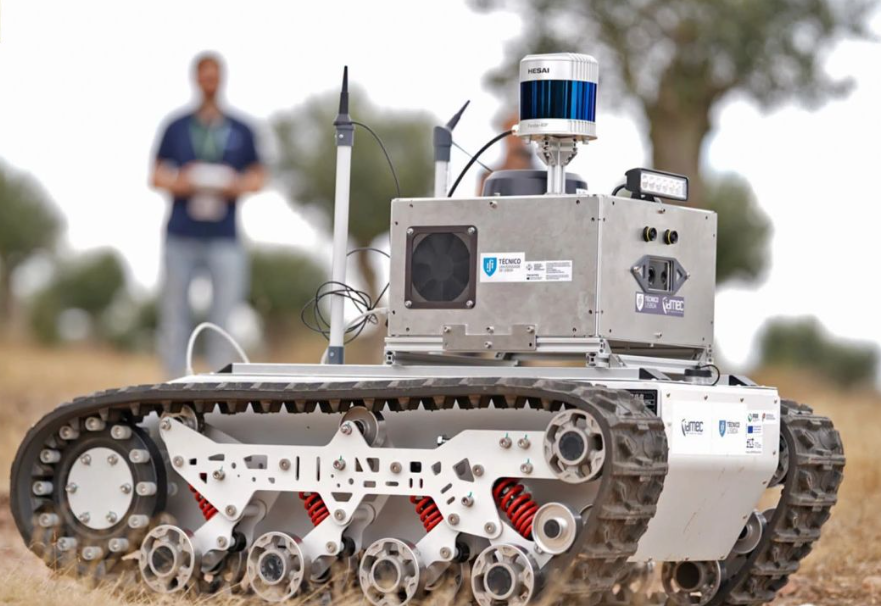
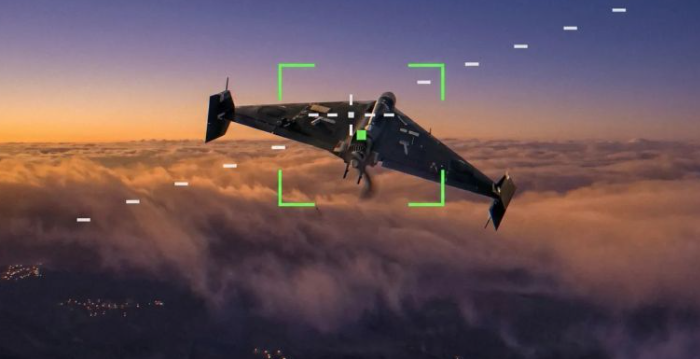
The goods themselves were, on paper, unremarkable: microcontrollers, sensors, oscilloscopes, ball bearings and mechanical parts. Individually, these components could pass as standard industrial supplies. But collectively, and in the right configuration, they become the building blocks of advanced military systems. This dual-use nature—civilian in appearance, military in potential—lies at the core of the sanctions challenge.
To avoid detection, the network allegedly relied on a well-practiced method: rerouting shipments through third countries. Turkey appears to have played a central role as a transit hub, with goods exported from the European Union and re-imported into Russia within days. Companies such as MR Global reportedly acted as intermediaries, obscuring the final destination. Additional German entities—some with minimal staff or shared office space—provided further layers of concealment, creating a dense web of corporate fronts.
Internal communications cited in the investigation reveal a striking level of operational awareness. Instructions such as “Make it look clean. No Russian reference anywhere” and “Remove all documents from the boxes before shipment” reflect a system in which deception was routine, not exceptional. The language suggests that participants were not only aware of the sanctions but actively working to circumvent them.
The scale of the operation is equally striking. Prosecutors believe around 16,000 shipments, worth more than €30 million, passed through this network. What might appear as isolated transactions instead forms a continuous pipeline of technology moving from European suppliers into Russia, sometimes reaching sensitive end users such as defense contractors and nuclear research institutes.
A turning point in the investigation came when Germany’s intelligence service, the BND, gained access to internal materials from the Russian side. This access provided a rare, end-to-end view of the supply chain—from European order placement to delivery within Russia. It transformed suspicion into traceable evidence, allowing investigators to map financial flows, shipment routes and communication chains.
Yet the case also highlights a structural weakness: intelligence alone is insufficient for prosecution. Authorities had to painstakingly reconstruct the network using customs data, financial records and surveillance, converting intelligence leads into legally admissible evidence. This process underscores the complexity of enforcing sanctions in an interconnected global economy.
Beyond the individuals involved, the broader implication is clear. This was not an isolated scheme, but part of a larger ecosystem exploiting regulatory gaps, international trade routes and corporate anonymity. The ability to mask end users, reroute shipments and fragment transactions across borders reveals the limits of sanctions as a tool—particularly when enforcement must contend with adaptive and well-organized networks.
In the end, the arrest of Nikita S. represents both a success and a warning. It demonstrates that such networks can be uncovered and disrupted. But it also exposes how deeply embedded and resilient they can be.
In a world where advanced technology drives both industry and warfare, controlling its flow is no longer just a matter of policy—it is a high-stakes game of detection, adaptation and persistence.