No more Chinese drones in Germany - Police in Baden-Württemberg develop their own drone

For years, police forces across Germany have quietly integrated drones into their daily operations. From documenting crime scenes to searching for missing persons and monitoring large public events, unmanned aerial systems have become an essential tool for modern law enforcement.
But there is one issue that has increasingly raised concerns among security officials: most of these drones are manufactured abroad.
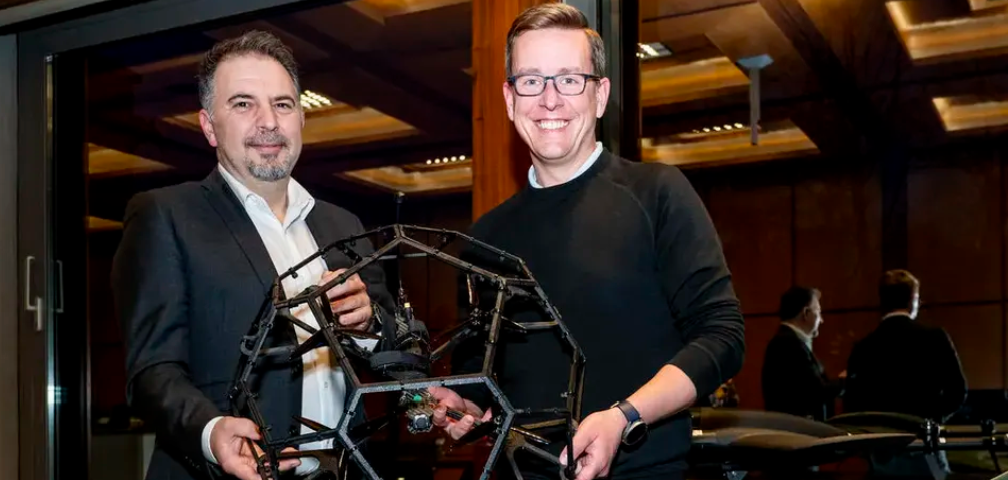
Now the German state of Baden-Württemberg is taking steps to change that. The state government has announced plans to develop a domestically produced police drone, aiming to reduce dependence on foreign technology and strengthen Germany’s digital sovereignty in critical security infrastructure.
The initiative was announced by Interior Minister Thomas Strobl (CDU) ahead of the state’s first Drone Innovation Conference in Stuttgart.
“Drones are no longer just toys for technology enthusiasts,” Strobl said. “They can also represent potential threats from the air.”
The conference brings together experts from research institutions, industry, law enforcement agencies, the military and civil protection organizations to discuss the future of drone technology and develop the foundations for a new police drone platform designed in Baden-Württemberg.
Growing Dependence on Foreign Drone Technology
Police forces across Germany already rely on drones for a wide range of missions.
These include:
- reconnaissance during police operations
- documentation of crime scenes
- disaster response and rescue missions
- monitoring of large public gatherings
- search operations for missing persons
However, according to the Interior Ministry, most drones currently used by German police forces are manufactured by foreign companies, particularly Chinese producers.
While these systems are technologically advanced and widely used globally, reliance on foreign manufacturers has raised concerns related to data security, supply chains and strategic independence.
Sensitive operations conducted by law enforcement agencies often involve collecting video data, mapping environments and transmitting information through networked systems.
If those systems depend on external technology providers, authorities worry that potential vulnerabilities could emerge.
Baden-Württemberg’s initiative aims to address exactly these concerns.
According to the Interior Ministry, the goal is to create a drone platform developed entirely within Germany, tailored specifically to the operational requirements of police forces.
Building a Collaborative Drone Ecosystem
Rather than developing the technology within government institutions alone, the project focuses on creating a collaborative innovation network.
The Stuttgart Drone Innovation Conference is intended to connect a wide range of stakeholders, including:
- universities and research laboratories
- drone manufacturers and technology companies
- police authorities and emergency services
- the German armed forces (Bundeswehr)
- civil protection organizations
By bringing these groups together, the state hopes to accelerate innovation while ensuring that the resulting drone system meets real operational needs.
Authorities also emphasize that drone technology itself is evolving rapidly.
Advances in autonomous flight systems, battery endurance, and artificial intelligence are enabling drones to operate longer, process information more effectively and support more complex missions.
For police forces, these developments could translate into significant improvements in operational efficiency.
Autonomous drones, for example, could assist officers by scanning large areas during search operations or automatically detecting unusual activity during large events.
AI-assisted systems could help analyze video footage in real time, allowing officers to identify risks faster.
A Shift Toward Technological Sovereignty
Baden-Württemberg’s project also reflects a broader political shift across Germany.
At the end of 2025, Germany’s Conference of Interior Ministers called for stronger national development of police drone technology.
The goal is to reduce reliance on external suppliers and ensure that sensitive security technologies remain under domestic control.
Such initiatives are increasingly common across Europe, where governments are seeking to strengthen technological sovereignty in sectors considered strategically important.
Drones fall squarely into that category.
In addition to supporting police operations, unmanned aerial systems are also used for border control, disaster response, infrastructure monitoring and defense applications.
At the same time, the growing availability of consumer drones has introduced new challenges for security agencies.
Unauthorized drones have appeared near airports, government facilities and large public events, forcing authorities to adapt to a rapidly changing aerial environment.
Developing domestically controlled drone platforms could help police forces both improve operational capabilities and respond more effectively to emerging aerial threats.
A Potential National Model
Although the initiative originates in Baden-Württemberg, the state government hopes the project could eventually benefit police forces across Germany.
If successful, the resulting drone technology could be offered nationwide, providing a standardized platform designed specifically for German law enforcement needs.
For now, the Drone Innovation Conference in Stuttgart marks the first step in that direction.
As drone technology continues to evolve, governments are increasingly recognizing that control over critical systems may be just as important as their capabilities.
For Baden-Württemberg, the message is clear: the future of police drones should not only be advanced — it should also be developed at home.
%20(1).jpg)