Merz’s €600 billion defense push is rippling across Germany

For decades, defence spending in Germany was treated as a necessary discomfort—politically sensitive, economically secondary, strategically constrained. That era is ending fast.
Germany’s €600 billion defence push is now showing tangible industrial and macroeconomic effects. Analysts estimate the programme could add around half a percentage point to GDP growth by 2028, a meaningful uplift for an economy long criticised for stagnation. But the real story is not the headline number—it’s the way defence has quietly morphed into an industrial policy lever.
Procurement, once notorious for glacial timelines and regulatory inertia, is accelerating. New rules allow faster approvals and direct awards, reducing friction across the supply chain. The results are visible. Rheinmetall brought a new ammunition plant online in just 15 months—an almost unthinkable timeline by German standards. Hensoldt, a key defence electronics supplier, reported a 62% jump in orders in 2025. This is not stimulus theory; it is factory floors, balance sheets, and hiring plans.
Crucially, around 85% of defence contracts are now staying within Germany and Europe. That localisation effect matters. Unlike past defence cycles that leaked spending abroad, today’s framework prioritises domestic capacity, regional suppliers, and European autonomy. The multiplier is stronger, the spillovers wider.
Banks have noticed. Financial institutions that once kept defence at arm’s length are adjusting their stance. Dedicated defence financing teams are emerging, and private capital—previously hesitant due to ESG constraints—is flowing into the sector under revised risk and policy assumptions. Defence is no longer treated as an ethical outlier; it is increasingly framed as critical infrastructure.

The transformation runs deeper than the traditional primes.
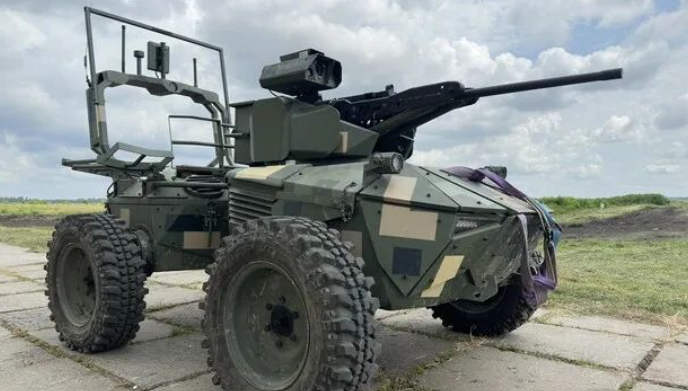
A new layer of defence‑tech startups is scaling alongside established players. ARX Robotics is developing autonomous ground systems. Tytan Technologies recently raised €30 million to expand interceptor drone production. These companies look less like old‑school arms manufacturers and more like deep‑tech ventures: software‑heavy, capital‑intensive, and export‑oriented.
Perhaps most striking is what’s happening at the edges of Germany’s industrial base. Parts of the automotive sector—long squeezed by electrification costs, Chinese competition, and soft demand—are pivoting toward defence manufacturing. Precision machining, sensors, power electronics, and systems integration translate surprisingly well. Defence is absorbing skills, tooling, and capacity that might otherwise be lost.
This marks a structural shift. Defence spending is no longer just about replenishing stockpiles or meeting alliance commitments. It is actively reshaping how and where Germany manufactures. Factories are being repurposed, supply chains rewired, and capital reallocated with a clarity rarely seen in recent decades.
There are risks, of course. Capacity constraints, labour shortages, and regulatory bottlenecks remain real. Over‑reliance on defence demand could distort incentives if not balanced with civilian innovation. And execution—Germany’s perennial challenge—will determine whether ambition translates into sustained output.
Still, the direction is clear. What began as a security imperative is becoming an economic strategy. Defence has moved from the margins of policy to the centre of Germany’s industrial future.
Europe has long debated how to reindustrialise, how to restore manufacturing scale, how to align capital with strategic goals. Germany may have found an answer—almost by accident—through defence.
The question now is not whether this shift will reshape Europe’s manufacturing base. It already is. The question is how far it will go.