Loyal Wingmen Reloaded. Airbus’ Ravenstorm Signals Europe’s Entry into the Age of Autonomous Air Combat

The future of air combat didn’t arrive with a roar—it arrived without a pilot.
At ILA 2026 in Berlin, Airbus unveiled a full-scale model of its Uncrewed Collaborative Combat Aircraft (UCCA) U760 Ravenstorm. On the surface, it is another step in Europe’s long march toward unmanned systems. But in reality, it is something far more disruptive: a signal that the era of manned supremacy in air combat is ending—and fast.
Because Ravenstorm is not designed to replace fighter jets.
It is designed to fight with them.
This distinction is critical.
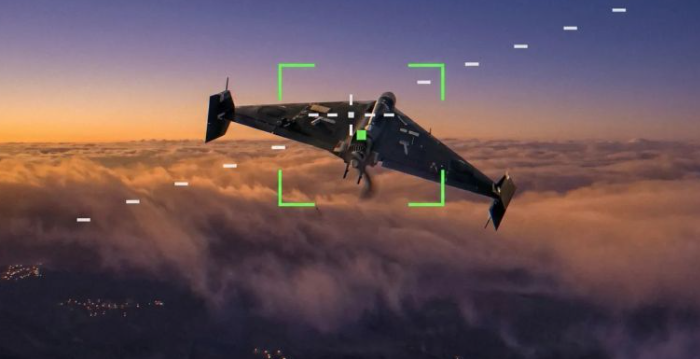
Unlike traditional drones, which operate either remotely or autonomously on predefined missions, collaborative combat aircraft represent a fundamentally new concept. They act as force multipliers—extensions of manned platforms that can sense, strike, jam, and absorb risk in ways pilots never could.
The Ravenstorm is built for exactly that role.
With a wingspan of 10 meters and a length of 13 meters, it sits squarely in the class of high-performance unmanned combat aircraft. Airbus describes it as optimized for multi-domain operations, capable of delivering precision air-to-ground strikes, engaging airborne threats with medium- and long-range missiles, and conducting electronic warfare missions to suppress enemy defenses.
In other words, it is not a specialist.
It is a battlefield generalist—modular, adaptable, and designed for contested environments.
But the real breakthrough is not its payload. It is its purpose.
Ravenstorm is part of a broader vision: a scalable family of collaborative combat drones that can operate alongside platforms like the Eurofighter or future systems such as the Future Combat Air System (FCAS). These drones are expected to take on the most dangerous tasks—penetrating defended airspace, drawing fire, jamming radars—while human pilots remain at a safer distance, orchestrating the fight.
This is the “loyal wingman” concept, reimagined for Europe.
And it is long overdue.
While the United States and China have been aggressively advancing similar systems, Europe has often moved more cautiously, constrained by fragmented defense structures and slower procurement cycles. The Ravenstorm suggests that Airbus—and by extension Europe—is accelerating its ambitions in this domain.
Yet, the path forward is not purely technological.
Developing a capable unmanned combat aircraft is only one piece of the puzzle. Integrating it into existing air forces, defining command structures, and ensuring interoperability across nations are far more complex challenges. Who controls the drone? How much autonomy does it have? How are decisions made under combat conditions? These questions are not engineering problems—they are strategic and political ones.
And they are becoming urgent.
Modern air warfare is evolving toward highly dynamic, multi-domain operations where speed of decision-making is critical. Human pilots alone cannot process the volume of data generated in such environments. Collaborative drones, equipped with advanced sensors and increasingly powered by AI-driven systems, offer a way to bridge that gap.
They do not just add firepower.
They add time—and time is the most valuable resource in combat.
The timeline reflects both ambition and caution. Airbus indicates availability in the early 2030s, suggesting a deliberate, phased development approach built on decades of prior work, including the Barracuda demonstrator. This evolutionary strategy may reduce risk—but it also raises a question: can Europe move fast enough in a field where competitors are already operationalizing similar concepts?
Because the battlefield is not waiting.
The emergence of collaborative combat aircraft marks a shift from platform-centric warfare to system-centric warfare. Victory will not depend on the performance of a single jet, but on the coordination of an interconnected ecosystem of manned and unmanned systems.
Ravenstorm is Airbus’ answer to that reality.
It is not just a drone. It is a statement—that the future of air combat will not be decided by pilots alone, but by how effectively humans and machines fight together.
And in that fight, the side that commands autonomy—not just airspace—will have the advantage.