JEKTA Tests Electric Amphibian Aircraft PHA-ZE 100 with Large-Scale Model
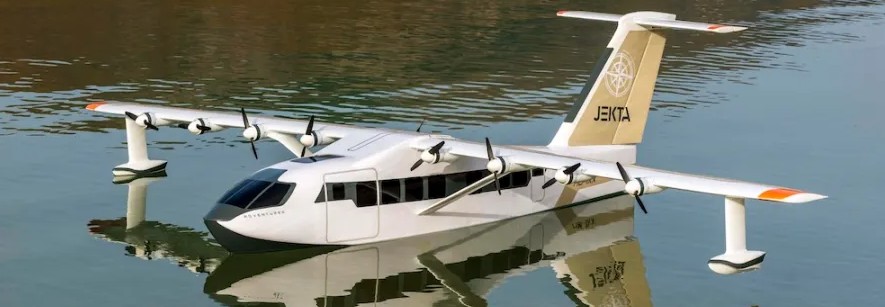
The Swiss aircraft developer JEKTA is making significant progress in the development of its electric amphibious aircraft, the PHA-ZE 100, by conducting tests with a large-scale, fully operational model. This approach allows the company to validate digital simulations against real-world performance data and optimize the aircraft’s design before moving to full-scale production.
The PHA-ZE 100 (Passenger Hydro Aircraft – Zero Emissions) is designed as an emissions-free, electrically powered amphibious aircraft, intended to provide flexible regional air transport while minimizing environmental impact. JEKTA is testing a 1:9 scale model to measure performance during both flight and water operations. The company has now released the first images of the model, giving a glimpse into the design and engineering behind this innovative aircraft.
Compared to the original concept drawings, the model has eight motors instead of ten, reflecting refinements in design for efficiency and control. The tests are being conducted at an undisclosed lake in Italy, with both flight and water trials ongoing. Initially, JEKTA had planned to complete the testing phase by September 2025, but the company continues to collect critical data to improve the aircraft.
Innovative Features for Enhanced Operations
The PHA-ZE 100 promises exceptional maneuverability on water due to its use of reverse thrust technology, which enables precise handling during docking and low-speed operations. Its propellers also provide additional lift by directing airflow over the wings, leveraging the Blown Lift Effect to allow for short takeoff distances. This feature could be particularly valuable for operations in small or restricted airfields.
Passenger experience is another key focus. The aircraft is designed with large panoramic windows, providing occupants with an immersive flight experience and maximizing visibility over water and landscapes. These design choices highlight JEKTA’s aim to combine practical performance with passenger comfort and enjoyment.
George Alafinov, JEKTA co-founder and CEO, commented:
"The 1:9 scale model is large enough to provide representative data for the full-size aircraft. It allows us to expand the testing area efficiently while validating the data already collected in our digital simulations. Based on the model test results, we will continue refining the aircraft configuration and update our models to ensure the PHA-ZE 100 is ready for integration into the global air transport network by 2030."
Market Potential and Future Variants
The PHA-ZE 100 is being developed in accordance with FAA Part 23 regulations and is expected to carry up to 19 passengers. JEKTA envisions multiple variants for business travel, medical transport, and combined cargo-passenger missions, reflecting its versatility and broad commercial potential. The aircraft’s electric propulsion and amphibious capabilities could make it a pioneer in regional air mobility while supporting sustainability goals.
With its ongoing large-scale model tests, JEKTA is positioning the PHA-ZE 100 as a new benchmark in eco-friendly amphibious aircraft, capable of redefining short-haul air travel by 2030. The company continues to use the insights from these tests to refine both the design and operational capabilities, ensuring a balance of efficiency, safety, and passenger comfort.
%20(1)%20(1).jpg)
.jpg)