Jacksonville’s new Drone as First Responder program. The Drone That Arrives Before the Police
The first officer at a crime scene in Jacksonville may soon no longer be a police officer.
It may be a drone.
As cities across America grapple with growing populations, increased service demands, and rising expectations for faster emergency response, the Jacksonville Sheriff's Office (JSO) is betting that the future of public safety is airborne.
The agency's newly expanded Drone as First Responder (DFR) program is not simply another technology initiative. It represents a fundamental shift in how law enforcement gathers information, deploys resources, and responds to emergencies.
And it is moving fast.
According to JSO, drones participating in recent pilot deployments have reached incident locations in as little as 42 seconds, often arriving before the first patrol vehicle could even leave a nearby intersection.
That speed is transformational.
For decades, emergency response has been limited by geography. Officers receive a call, enter their vehicles, navigate traffic, and arrive with limited information about what they will encounter. In critical situations, every minute matters. In some cases, seconds matter even more.
DFR changes that equation entirely.
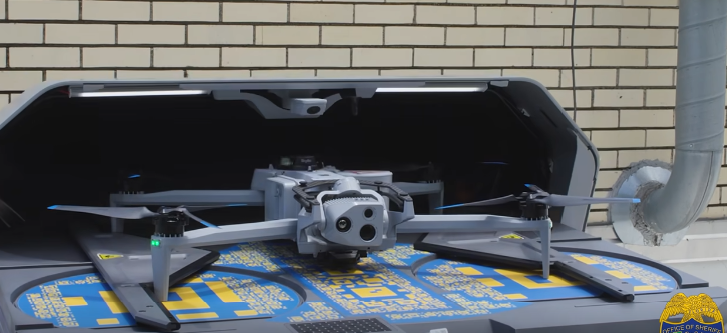
Unlike traditional police drones that must be transported and launched by officers in the field, Jacksonville's new system uses strategically positioned drone docks across the city. When a qualifying incident occurs, a drone can launch remotely, fly directly to the location, and immediately begin transmitting live video and aerial intelligence back to trained operators and responding officers.
The result is a real-time view of unfolding events before boots ever hit the ground.
Supporters argue that the advantages are obvious.
Missing persons can be located faster.
Dangerous suspects can be tracked from the air.
Emergency responders can identify hazards before entering a scene.
Firefighters can use thermal imaging to spot hidden hotspots and monitor rapidly changing conditions.
And officers can approach potentially dangerous incidents with information rather than uncertainty.
The Jacksonville Sheriff's Office already has evidence that the technology is delivering results. Through its Eagle Eye patrol-based drone program, drones have helped locate endangered individuals, recover critical evidence, track fleeing suspects, and provide aerial support during emergencies.
The DFR program takes those capabilities a step further by eliminating one of the biggest challenges in drone deployment: response time.
But perhaps the most important impact is officer safety.
Every police officer has experienced the uncertainty of arriving at a scene without knowing exactly what is waiting. Is the suspect armed? Are multiple individuals involved? Has the situation already escalated?
A drone arriving first can answer many of those questions.
Instead of driving into the unknown, officers receive intelligence while still en route. Routes can be adjusted. Additional resources can be requested. Tactical decisions can be made with greater confidence.
That improved situational awareness benefits the public as much as law enforcement.
Better information often leads to better decisions.
Better decisions often lead to safer outcomes.
Jacksonville's investment reflects growing momentum nationwide. Public safety agencies across the United States are increasingly integrating drones into daily operations as technology becomes more reliable, affordable, and capable. What was once considered an experimental tool is rapidly becoming a standard component of modern policing.
The city's commitment is backed by significant funding. Thanks to $610,000 in state support, JSO plans to expand its Eagle Eye fleet and deploy additional equipment across more neighborhoods.
For a rapidly growing city, the timing is strategic.
Population growth creates pressure on every aspect of public safety infrastructure. More residents mean more calls for service, more traffic congestion, and greater demands on police resources. Technology is increasingly viewed not as a luxury, but as a force multiplier.
Still, the rise of drone policing raises important questions.
How should aerial surveillance be governed?
How can agencies maintain public trust while expanding capabilities?
What safeguards ensure that powerful technologies remain focused on public safety missions?
These conversations will continue as drones become more common in American skies.
One reality, however, is already becoming clear.
The future patrol car may still have four wheels.
But increasingly, its most valuable partner may be flying several hundred feet above it.
Jacksonville is not merely adopting drones.
It is helping define what next-generation public safety could look like.
.jpg)