Inside Ukraine’s Interceptor Drone Race. Why Pilots Still Matter in the Age of AI

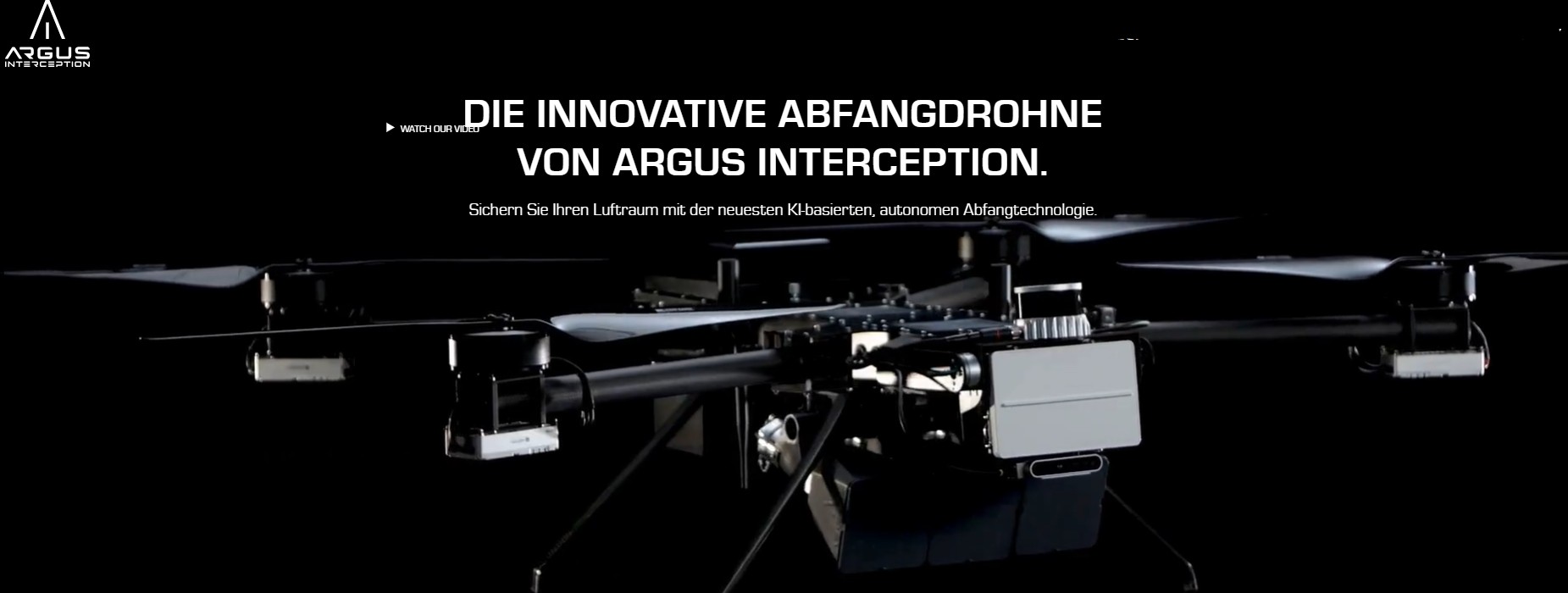
Ukraine's war has transformed the country into the world's most advanced laboratory for drone warfare. While much attention focuses on strike drones and long-range attacks, another technological race is unfolding at remarkable speed: the battle to build effective interceptor drones capable of hunting down enemy UAVs and Shahed-type attack drones.
More than 100 Ukrainian companies are now developing interceptor systems. Yet only a small number have demonstrated consistent battlefield success. Among them is Wild Hornets, the engineering team behind the STING interceptor drone and the revolutionary Hornet Vision Ctrl remote-control system.
In May 2026 alone, STING interceptors reportedly destroyed more than 3,000 aerial targets, making them one of Ukraine's most effective counter-drone weapons.
But despite growing media attention surrounding artificial intelligence and autonomous systems, experienced operators say the reality remains far more complex.
I spoke with an interceptor pilot known by the callsign Gorn, who provided a rare insight into the technologies, challenges, and misconceptions shaping one of the fastest-growing sectors of modern warfare.
From FPV Pilot to Interceptor Hunter
According to Gorn, interceptor drones represent an entirely different discipline than traditional FPV operations.
Unlike conventional FPV drones that largely operate in two dimensions and rely heavily on visual navigation, interceptor drones function in a three-dimensional battlespace where altitude becomes equally important. Pilots often engage targets based primarily on radar information rather than direct visual contact.
"We frequently only have an approximate understanding of where the target is," Gorn explained. "The speeds are extremely high, there are many variables, and the time available to make decisions is very limited."
The result is a flying environment that increasingly resembles aviation rather than classic drone racing or FPV combat.
Operators must continuously calculate their own movement, target trajectory, relative altitude, and interception geometry—often within seconds.
For experienced drone pilots, the transition can take about a week just to master basic operations. Achieving real combat effectiveness requires much longer and demands continuous training.
The STING Advantage
Wild Hornets designed the STING interceptor specifically to lower the barrier for new operators without compromising effectiveness.
The drone cruises at 140–170 km/h, while an upgraded version demonstrated speeds reaching 315 km/h during testing. STING operates at altitudes up to 5,000 meters, with a maximum ceiling of 7,000 meters, climbs at 30 meters per second, and carries a 500-gram payload.
Its operational range reaches 37 kilometers, although tactical return missions are typically limited to about 18.5 kilometers.
According to Gorn, one of STING's greatest strengths is its predictability.
"Compared with many competing systems, STING is exceptionally stable," he said. "It maintains speed efficiently and remains easy to control, even under demanding conditions."
That stability allows pilots to focus on interception rather than simply keeping the aircraft airborne.
Flying a Drone From Another Country
Perhaps the most significant breakthrough from Wild Hornets is not the interceptor itself but the Hornet Vision Ctrl system.
Officially codified by Ukraine's Ministry of Defense in June 2026, the system enables operators to control drones from virtually anywhere in the world.
Since its public unveiling in March, remotely controlled STING drones have destroyed more than 600 targets.
Wild Hornets recently announced a record-setting mission in which a pilot located abroad controlled a drone operating roughly 2,000 kilometers away in northern Ukraine.
The system combines a digital video network, omnidirectional 360-degree antenna coverage, remote command-and-control architecture, and resilient communications designed to withstand electronic warfare.
According to Gorn, latency is roughly 0.2 seconds, but operators quickly adapt.
"The distance itself isn't the critical factor," he explained. "If the system is built properly, geography becomes almost irrelevant."
This opens a future where trained operators could defend critical infrastructure without physically deploying near the battlefield.
AI Is Coming—But It Isn't Ready Yet
Ukraine's interceptor ecosystem is increasingly embracing artificial intelligence.
Through the Brave1 Dataroom, developed with Palantir, more than 100 Ukrainian companies now train AI models using real combat data. One focus area is automatic drone detection and interception.
Companies such as The Fourth Law have already introduced systems like the TFL Anti-Shahed module, capable of automatically guiding interceptor drones toward hostile targets.
However, Gorn cautions against exaggerated expectations.
Automatic terminal guidance remains under development across the industry. Every manufacturer is pursuing the technology, but battlefield reliability remains the biggest challenge.
"The principle works," he said. "The question is whether it works every single time under real combat conditions."
Wild Hornets is pursuing its own AI initiatives, including target identification, navigation assistance, and last-mile guidance within the broader Hornet Vision ecosystem.
Notably, the company's goal is not to replace operators but to support them.
The Quest for Speed
If there is one dominant technological trend in the interceptor sector, it is speed.
Every manufacturer is attempting to build faster systems.
The reason is simple: Russia is increasingly deploying jet-powered drones.
According to reports, Moscow aims to make jet-powered systems a much larger share of future strike operations. This creates a new challenge for Ukrainian defenders.
An interceptor flying at 310 km/h has little practical advantage against a target flying above 300 km/h.
Pilots estimate that an interceptor needs roughly a 25% speed advantage to ensure reliable engagements.
To address this challenge, Wild Hornets developed STING 2.0.
Interestingly, the company decided not to chase extreme speeds beyond 400 km/h. Instead, engineers focused on balancing velocity with endurance, ensuring the drone can not only catch targets but also search for them long enough to complete the mission.
The Biggest Myth About Interceptors
Despite growing discussion surrounding AI and autonomous weapons, Gorn believes the industry's most common misconception remains unchanged.
People assume interceptor drones are already automated.
"They are not," he said.
Successful operations still require coordinated crews consisting of pilots, navigators, and technical specialists. Human judgment remains central to target acquisition, navigation, engagement decisions, and mission execution.
The lesson extends beyond Ukraine.
Countries seeking to strengthen air defense often focus on buying drones. Yet Ukraine's experience suggests that platforms alone are insufficient.
Technology matters.
But people matter more.
As interceptor systems become faster, smarter, and increasingly networked, one reality remains unchanged: the most important component in the kill chain is still the trained operator behind the controls.