How Autonomous Drone Racing Is Becoming the World’s Most Extreme AI Testbed
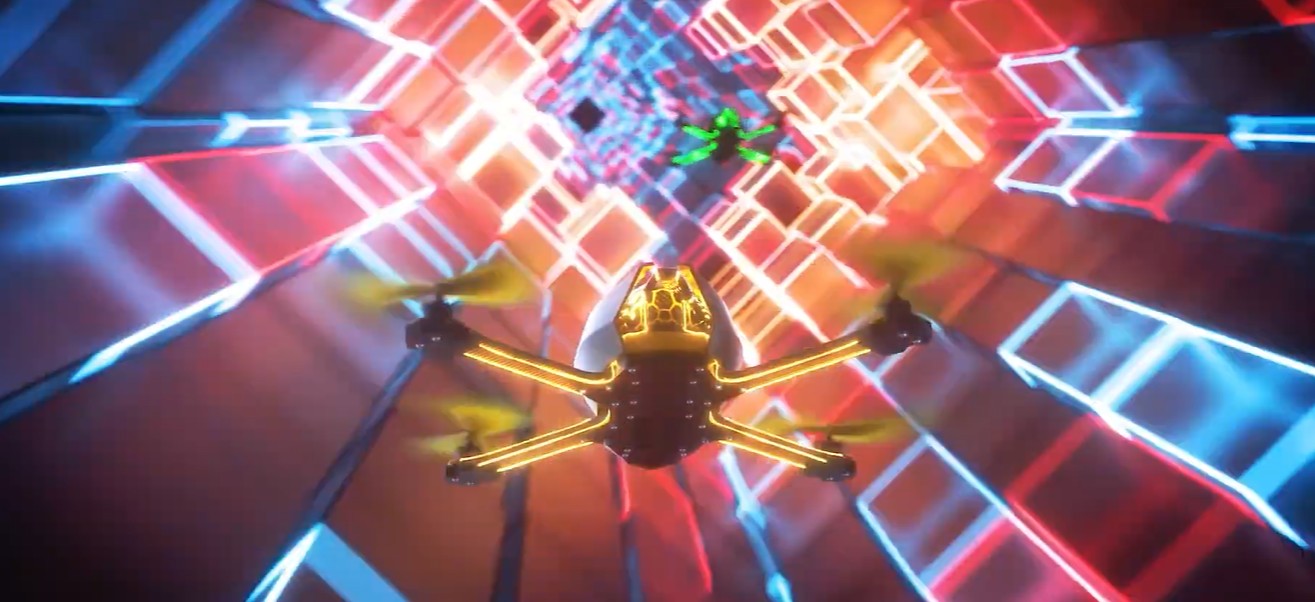
With the launch of the AI Grand Prix, autonomous drone racing is entering a new era—one where algorithms, not thumbs, determine victory. Backed by Anduril and operated by Drone Champions League (DCL), the competition is transforming drone racing into something far bigger than a sport. It is becoming one of the world’s most demanding proving grounds for artificial intelligence.
This isn’t a simulation-only academic exercise. It’s real hardware, real physics, real crashes, and real consequences.
And that is exactly the point.
From Joysticks to Neural Networks
Traditional drone racing celebrates elite human skill. Autonomous drone racing flips the challenge entirely: engineers must design software capable of perceiving the world, making decisions, and executing aggressive flight maneuvers—without any human intervention.
In the AI Grand Prix, teams will fly identical drones built by Neros Technologies. No hardware modifications are allowed. No human pilots. The only differentiator is software.
Every advantage comes from code:
Perception pipelines.
Sensor fusion.
State estimation.
Planning algorithms.
Control systems.
Learning strategies.
The result is a pure autonomy contest.
As Michael Kostka, Markus Stampfer, and Alexander Lena, Co-CEOs of DCL, put it:
“AI Grand Prix pushes autonomous drone racing into a new dimension. In partnership with Anduril, we are applying DCL’s AI racing experience to create a global benchmark.”
They are not exaggerating.
Racing as a Stress Test for Intelligence
Autonomous flight is already hard. Autonomous flight at racing speeds is brutal.
Drones must fly centimeters from obstacles, through narrow gates, while accelerating, decelerating, and changing direction multiple times per second. GPS may be unreliable or absent. Lighting conditions vary. Air turbulence distorts sensors. Small errors compound instantly.
In this environment, traditional robotics approaches struggle. Hand-tuned logic alone cannot keep up. End-to-end learning alone is risky. Successful systems will likely blend classical robotics with modern machine learning.
This is why autonomous drone racing matters.
It compresses years of autonomy development into seconds of flight. Either the system works—or it crashes.
That binary outcome creates a powerful filter for real capability.
Simulation First, Reality Always
The competition begins with a remote qualification phase in spring 2026. Teams submit autonomy software that races in a virtual environment. This lowers the barrier to entry and attracts global participation—from university labs to independent engineers.
But simulation is only step one.
Top teams move to in-person training, where their software must transfer from pixels to propellers. This “sim-to-real” gap is one of the hardest problems in robotics. Noise, vibration, imperfect sensors, and unexpected edge cases quickly expose fragile designs.
The season culminates in a live head-to-head autonomous race in November 2026 in Columbus, Ohio.
No editing. No do-overs.
Just machines making decisions at hundreds of times per second.
Why Anduril Is Betting on Racing
Anduril’s interest goes far beyond entertainment.
Modern warfare, security, and industrial automation are becoming autonomy-first domains. Systems must sense, decide, and act faster than humans can. They must operate in contested environments. They must scale cheaply.
Autonomous drone racing is a near-perfect proxy problem.
If an autonomy stack can win races, it likely has:
- Fast perception
- Low-latency control
- Robust state estimation
- Efficient onboard compute
- Strong generalization
These are the same ingredients required for next-generation defense and industrial systems.
That’s why the AI Grand Prix doesn’t just offer prize money. The top performer gets a direct interview path into Anduril.
The race is also a recruiting engine.
A New Kind of Global Arena
Future seasons of the AI Grand Prix will expand across Asia, the Middle East, and Europe. That matters.
Autonomy talent is globally distributed. Breakthroughs often come from small teams, unconventional backgrounds, and independent builders. The competition gives them a visible, merit-based pathway into elite engineering roles.
In a sense, the AI Grand Prix is becoming the Formula 1 of autonomy.
Not for engines.
Not for aerodynamics.
But for intelligence.
The Bigger Picture
Autonomous drone racing may look like a niche sport.
It isn’t.
It is a high-speed laboratory for the future of robotics, defense, logistics, and mobility. It turns abstract AI claims into measurable performance. It rewards systems that work, not slide decks that sound good.
And most importantly, it makes building real autonomy exciting.
Because when machines race, every lap is an experiment.
And every crash teaches something.
The age of racing drivers is giving way to the age of racing algorithms.
The starting lights are about to go out.