HHLA Sky. The Most Dangerous Infrastructure Failure Is the One Nobody Sees Coming

Most people think electricity comes from a socket.
Until it doesn't.
In January, a cable bridge fire in Berlin-Lichterfelde plunged approximately 45,000 households, more than 2,000 businesses, and critical facilities including hospitals into darkness for days during freezing winter temperatures. It became the city's longest major power outage since 1945.
The incident exposed a reality that modern societies often prefer to ignore: our most essential systems are deeply interconnected, and their resilience is far more fragile than it appears.
Electricity powers communications.
Communications support emergency services.
Emergency services protect transportation networks.
Transportation enables supply chains.
Supply chains sustain healthcare.
When one critical element breaks, consequences can ripple far beyond the original point of failure.
The question is no longer whether critical infrastructure is important.
The question is whether we are watching it closely enough.
Critical Infrastructure Has Entered a New Era
Governments across Europe increasingly recognize that protecting critical infrastructure is no longer just a cybersecurity challenge.
Physical resilience matters too.
Energy grids, ports, logistics hubs, rail corridors, water systems, industrial facilities, and telecommunications infrastructure are becoming central elements of national security discussions.
The challenge is scale.
Modern infrastructure networks stretch across thousands of kilometers and cover vast operational footprints. Many assets are located in remote, inaccessible, or difficult-to-monitor locations.
Even the best-trained teams face a simple problem:
No human workforce can be everywhere at once.
That reality creates blind spots.
And blind spots create risk.
The Wrong Question
When discussing infrastructure protection, organizations often ask:
Can technology prevent an attack?
Can technology stop a failure?
These are important questions.
But they are not the most important ones.
A more useful question might be:
How often does somebody actually look?
And equally important:
How quickly does somebody know something has happened?
The difference between a minor incident and a major operational crisis is often measured in minutes, not days.
Infrastructure failures rarely become catastrophic instantly.
They become catastrophic when warning signs go unnoticed.
The Rise of Persistent Infrastructure Awareness
This is where companies like HHLA Sky are changing the conversation.
Rather than focusing exclusively on reacting to incidents, the company is helping operators establish continuous situational awareness across large-scale infrastructure environments.
The concept is remarkably straightforward.
Infrastructure that is inspected regularly is more likely to reveal problems early.
Infrastructure that is monitored consistently generates better data.
Infrastructure that is documented systematically creates accountability.
Yet achieving that level of visibility across extensive assets has historically been expensive, labor-intensive, and difficult to maintain.
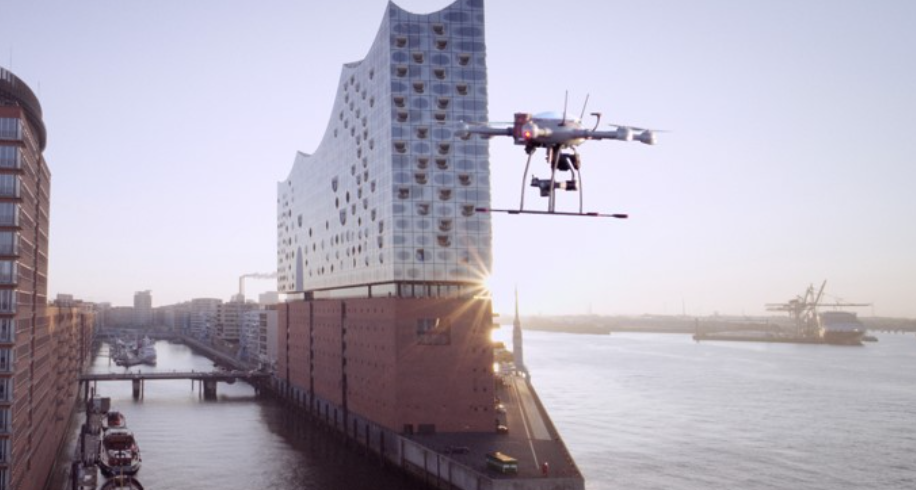
Automated drone systems fundamentally change the equation.
Instead of inspections occurring only when resources are available, monitoring can happen according to predefined schedules, with consistent quality standards and documented results.
The result is not merely efficiency.
It is predictability.
From Inspection to Intelligence
The value of aerial automation extends beyond routine checks.
When incidents occur, speed becomes everything.
A damaged power corridor.
A suspected intrusion.
A disrupted logistics facility.
A hazardous industrial event.
Sending personnel into uncertain situations can consume valuable time and introduce additional risk.
Autonomous aerial systems can provide an immediate overview of the situation, delivering visual intelligence within minutes and enabling informed decisions before field teams are deployed.
In this model, drones are no longer flying cameras.
They become part of the operational nervous system.
A source of real-time awareness.
A tool for resilience.
Why HHLA Sky Has Skin in the Game
HHLA Sky's perspective carries particular weight because it is not merely serving infrastructure operators.
It is part of a major port and logistics ecosystem itself.
That distinction matters.
The company understands firsthand that resilience is not an abstract concept discussed in policy papers.
Resilience affects real cargo flows, real logistics networks, real businesses, and real communities.
When infrastructure falters, operational consequences arrive quickly.
That reality creates urgency.
Seeing Is Part of Resilience
There is no single technology that guarantees security.
No platform can eliminate every threat.
No sensor can prevent every failure.
True resilience emerges from a combination of physical hardening, operational processes, trained personnel, and effective technology.
But one principle stands above all others:
You cannot respond to what you cannot see.
In an age of increasingly complex infrastructure networks, continuous visibility may become one of the most valuable assets any operator possesses.
Because the most dangerous infrastructure failure is rarely the largest.
It's the one developing quietly, unnoticed, until it suddenly becomes everyone else's problem.
.jpg)