Germany’s New Missile Truck Could Rewrite Air Combat. Meet COBRA, the Flying IRIS-T Launcher
Every few decades, military innovation produces a deceptively simple idea that forces strategists to rethink the battlefield.
Not because it is larger.
Not because it is faster.
But because it changes the economics of warfare.
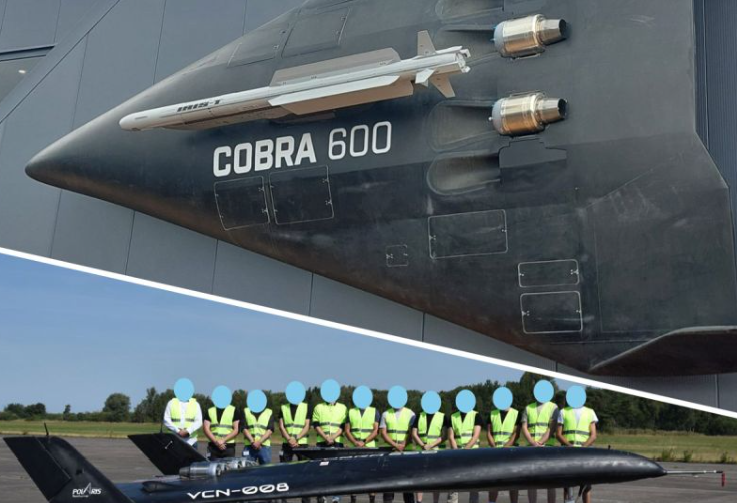
Germany's new COBRA unmanned aircraft may be one of those ideas.
Developed by Bremen-based startup POLARIS Spaceplanes in cooperation with Diehl Defence, COBRA recently completed its successful maiden flight, covering more than 20 kilometers over the Baltic Sea. On paper, it is merely another experimental drone entering an increasingly crowded defense market.
In reality, it could represent something much bigger.
A new category of weapon system.
At the center of the concept is a remarkably straightforward proposition: instead of sending expensive fighter jets closer to danger, send a relatively inexpensive unmanned aircraft carrying a single IRIS-T air-to-air missile.
The drone flies forward.
The missile launches.
The threat is destroyed.
The drone returns home.
Simple.
Potentially revolutionary.
For decades, air power has depended on an uncomfortable equation: extending missile range usually requires exposing expensive aircraft and highly trained pilots to greater risk.
COBRA attempts to break that equation.
By acting as a forward missile carrier, it effectively pushes the launch point closer to the target without pushing the pilot closer to danger.
That changes everything.
Imagine a future air operation where fighter aircraft remain hundreds of kilometers from hostile defenses while multiple unmanned carriers move ahead.
Instead of the enemy facing a handful of missile launch platforms, it suddenly faces dozens.
The result is not merely greater firepower.
It is greater uncertainty.
And uncertainty is one of the most powerful weapons in warfare.
The design philosophy behind COBRA is equally noteworthy.
Military aviation traditionally rewards complexity. More sensors. More processors. More expensive platforms.
COBRA goes in the opposite direction.
The aircraft is designed to rely heavily on the guidance and sensing capabilities already embedded in the IRIS-T missile itself. By minimizing the complexity of the carrier platform, developers aim to keep costs significantly lower than conventional combat aircraft.
This is a lesson increasingly learned on Ukrainian battlefields and in modern drone warfare generally:
The most effective platform is not necessarily the most sophisticated.
It is often the most affordable system that can be produced at scale.
Scale is becoming the defining military advantage of the 2020s.
A fighter jet costs tens or hundreds of millions.
A reusable missile carrier drone costs a fraction of that.
In a prolonged conflict, those economics matter.
Significantly.
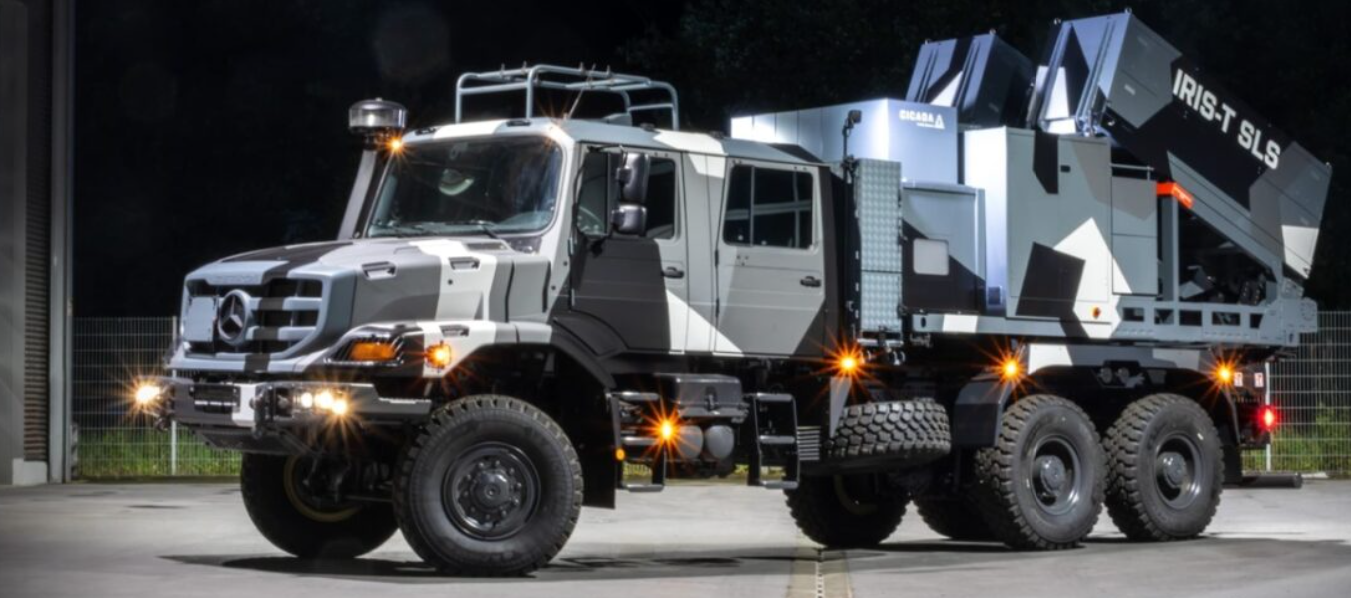
The concept also opens intriguing possibilities for ground-based air defense.
Traditionally, surface-to-air missiles are limited by geography and radar horizon. An unmanned launcher operating at altitude could potentially extend engagement opportunities against hostile aircraft before they release stand-off weapons or glide bombs.
This has become one of the most important military challenges in Europe.
Modern air forces increasingly rely on long-range precision weapons designed to keep aircraft outside conventional air-defense envelopes.
COBRA's architecture offers one possible answer.
Move the missile forward instead of moving the battery forward.
Fight range with range.
The project is particularly interesting because it comes from a company whose primary ambition is not military aviation at all.
POLARIS is best known for pursuing hypersonic spaceplane technology intended to transform access to space. COBRA represents how commercial aerospace innovation is increasingly flowing into defense applications.
This trend may become one of the defining characteristics of future military competition.
Tomorrow's breakthrough weapons may not originate from traditional defense giants.
They may emerge from agile startups applying commercial engineering concepts to military problems.
The successful maiden flight therefore carries significance beyond one drone.
It demonstrates that Europe continues to generate innovative defense technologies at a time when strategic autonomy, industrial competitiveness, and military modernization are becoming urgent priorities.
The biggest question now is not whether COBRA can fly.
It can.
The question is whether it can successfully evolve into a combat-capable system that delivers on its promise.
If it does, Europe may have just introduced something entirely new to the battlefield:
A reusable flying missile truck that makes air power cheaper, smarter, and far more difficult to defeat.