Germany's Drone Revolution Is Taking Shape Inside a Wingcopter Factory Few Have Seen
The future of aviation is not being built exclusively by aerospace giants.
It is not emerging solely from government laboratories, multinational defense contractors, or Silicon Valley technology campuses.
Some of the most significant innovations in flight are taking shape in places few people ever visit: advanced drone manufacturing facilities where engineers, software developers, and aviation specialists are quietly redefining what aircraft can do.
One such place is Wingcopter.
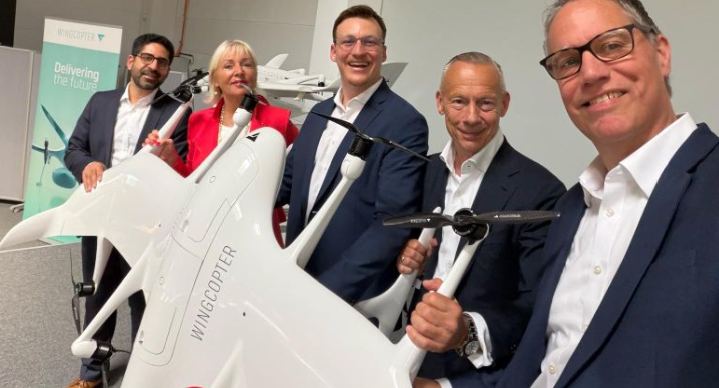
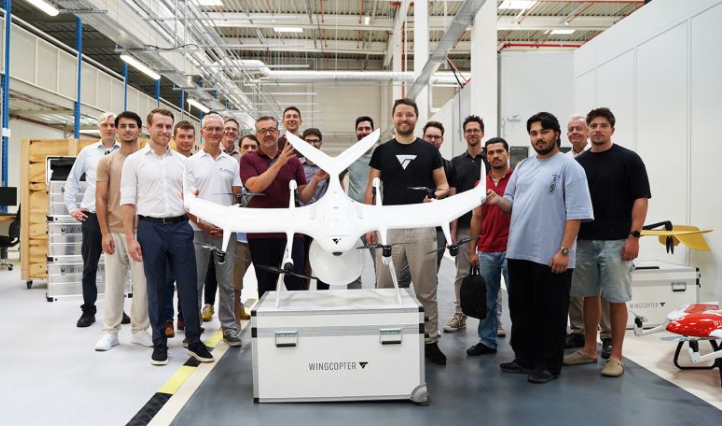
Recently, representatives from Hessen Aviation, House of Logistics and Mobility (HOLM), industry stakeholders, and students from Hochschule RheinMain visited the company's facilities to gain a closer look at one of Germany's most promising aerospace innovators.
What they discovered was something bigger than a drone manufacturer.
They witnessed a glimpse of the next era of aviation.
The Aerospace Industry Is Being Reinvented
For more than a century, aviation followed a predictable formula: larger aircraft, larger airports, and increasingly complex infrastructure.
That model is now being challenged.
Autonomous systems, electric propulsion, advanced materials, artificial intelligence, and automated logistics networks are changing assumptions that have defined aviation for decades.
The result is a profound shift in how goods move, how infrastructure is monitored, how emergency services operate, and how remote communities connect to critical supplies.
Wingcopter sits directly at the intersection of these changes.
The company's aircraft are designed to combine the efficiency of fixed-wing flight with the flexibility of vertical take-off and landing, solving one of the longstanding challenges of drone operations.
But technology alone is not the story.
From Raw Materials to Intelligent Aircraft
Visitors received a rare behind-the-scenes look at how a modern drone is manufactured.
The journey begins with essential components—composite materials, batteries, electronics, propulsion systems, and sophisticated onboard software.
From there, every stage of production reflects the increasing complexity of modern aerospace engineering.
Today's drones are not simply flying machines.
They are airborne computing platforms.
Sensors continuously collect information. Flight-control systems process data in real time. Communication modules connect aircraft to broader digital ecosystems. Software increasingly determines capability just as much as physical hardware.
This transformation is reshaping manufacturing itself.
Increasingly, successful aerospace companies are becoming as much software organizations as they are aircraft manufacturers.
The New Logistics Race
Perhaps the most provocative aspect of Wingcopter's vision lies in its implications for logistics.
The global transportation sector faces mounting pressure to become faster, cleaner, and more efficient.
Traditional delivery methods struggle in remote areas, disaster zones, and regions with limited infrastructure.
Autonomous aerial delivery offers an alternative.
What once sounded like science fiction is rapidly becoming operational reality.
Medical supplies, spare parts, laboratory samples, and urgent shipments can increasingly travel through the air rather than congested roads.
For governments and industries seeking resilient supply chains, this capability is becoming strategically important.
The next logistics revolution may not happen on highways.
It may happen above them.
Why Students Matter More Than Investors
One of the most important aspects of the visit may have been the presence of students.
The aerospace industry faces a growing challenge: finding the talent required to support rapid technological transformation.
Tomorrow's aviation workforce must understand not only aerodynamics and mechanical engineering, but also software development, artificial intelligence, data analytics, autonomy, cybersecurity, and systems integration.
The boundaries between disciplines are disappearing.
Future aerospace leaders will need to think like engineers, software developers, entrepreneurs, and innovators simultaneously.
By connecting students directly with industry pioneers, initiatives like this help bridge the gap between education and technological reality.
Germany's Opportunity
Germany has long been recognized for excellence in engineering and industrial manufacturing.
The rise of advanced drone companies presents an opportunity to extend that reputation into the next generation of aviation technologies.
Countries around the world are investing aggressively in autonomous systems, aerial logistics, advanced mobility, and drone ecosystems.
The competition is global.
The winners will not necessarily be the nations that produce the most aircraft.
They will be the ones that best integrate hardware, software, manufacturing expertise, and innovation culture.
That is precisely the challenge facing Europe today.
Looking Beyond the Horizon
The discussions sparked during the visit revealed something encouraging.
The future of aviation is no longer being shaped behind closed doors.
Industry leaders, students, researchers, entrepreneurs, and innovators are increasingly collaborating to address challenges that will define the coming decades.
What visitors observed at Wingcopter was not simply a production line.
It was a living example of how aerospace innovation is evolving.
Because the aircraft of tomorrow will not merely transport people and cargo.
They will connect industries, strengthen supply chains, transform logistics, and redefine the boundaries of what flight can achieve.
And in a facility in Germany, that future is already taking off.

.jpg)