From Trainees to Teachers: Why Ukraine Is Now Training the German Army
For decades, European armies trained for wars they hoped would never come. Doctrine, exercises, and simulations filled the gap left by the absence of real combat experience. That era is ending — and Germany’s armed forces are making it official.
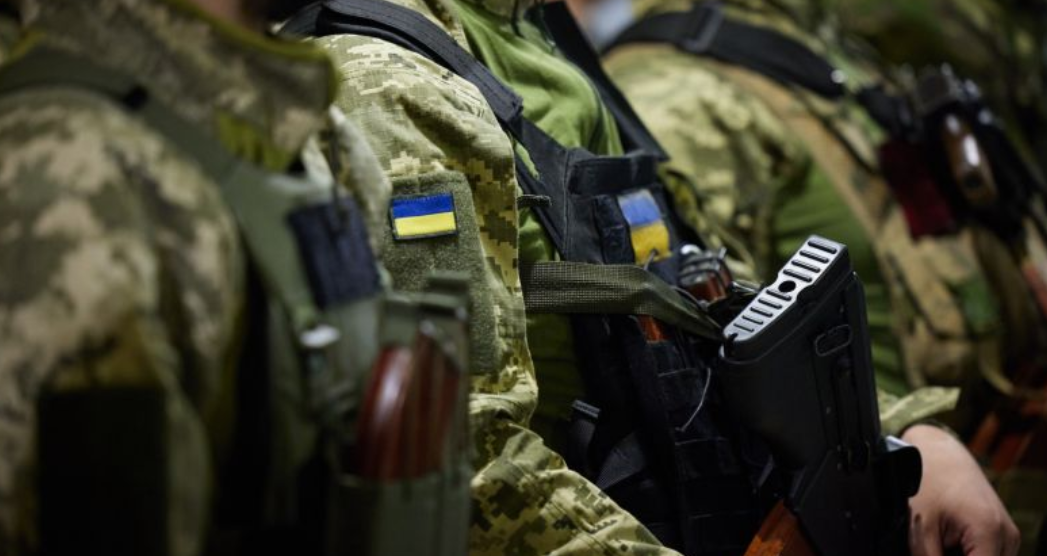
Under a newly signed agreement between the German and Ukrainian Ministries of Defence, Ukrainian military instructors will begin teaching at Bundeswehr army schools, bringing direct frontline experience from the war in Ukraine into Germany’s training system.
The move marks a striking reversal of roles. For years, Western militaries trained Ukrainian soldiers. Now, the Bundeswehr is acknowledging that the most relevant battlefield knowledge in Europe resides not in manuals, but in units that have been fighting a high‑intensity war since 2022.
A battlefield that rewrote the rules
German army officials openly state the reason for the shift: the battlefield in Ukraine has changed how wars are fought. Ukrainian soldiers have accumulated unmatched experience in drone warfare, counter‑drone tactics, and the rapid integration of modern command‑and‑control technologies at unit level.
These are not theoretical lessons. They are adaptations forged under fire — often within weeks, sometimes days — as technologies, tactics, and countermeasures evolve at unprecedented speed.
According to German military leadership, no other armed force currently possesses comparable frontline experience against a peer adversary.
What Ukrainian instructors will teach
Under the agreement, Ukrainian instructors will be embedded at Bundeswehr troop schools, primarily within the Army. Their expertise is expected to span drone employment and counter‑measures, artillery coordination, engineering operations, armored warfare, and command and control.
The instructors will rotate through Germany for limited periods, allowing frontline knowledge to be continuously refreshed as the war evolves. While precise numbers have not been publicly disclosed, German officials have confirmed that the initial contingents will be in the double‑digit range.
This approach reflects a deeper recognition: modern warfare knowledge has a shelf life.
Preparing for a harder future
The urgency behind the decision is not hidden. German defense planners openly reference assessments suggesting that Russia could be capable of mounting a large‑scale military challenge to NATO by the end of the decade.
For the Bundeswehr, integrating Ukrainian combat experience is about compressing learning curves. Training cycles that once unfolded over years now need to adapt in months. Exercises that once assumed air superiority must now account for contested airspace filled with cheap, lethal drones.
This is not about copying Ukraine’s army. It is about understanding the environment any European force could face next.
Beyond the barracks: civilian resilience
The exchange of experience extends beyond military training grounds. In northern Germany, the state government of Schleswig‑Holstein is hosting a two‑day security conference with a delegation from Ukraine’s Kherson region, focusing on civil defense, resilience, and civil‑military cooperation.
German officials openly acknowledge that resilience is not only a military issue. Infrastructure protection, crisis response, and societal preparedness are now central components of national defense.
As Schleswig‑Holstein’s Minister‑President Daniel Günther put it, Germany itself faces major challenges when it comes to defense capability, resilience, and civil‑military cooperation.
A signal to Europe
The Bundeswehr’s decision sends a message far beyond Germany. It signals that Europe’s security architecture is entering a phase where experience outweighs tradition, and where learning flows east‑to‑west as much as west‑to‑east.
Ukraine is no longer viewed only as a recipient of assistance, but as a provider of critical military expertise. For European armed forces, this may be one of the most consequential shifts since the end of the Cold War.
The lesson is blunt: the next war will not wait for doctrine to catch up. Germany’s answer is to learn from those already fighting it.