Europe's Drone Wingmen War Begins. Germany's Race for Collaborative Combat Aircraft

A new competition is taking shape in Europe—and this time, the future fighter might not even have a pilot onboard.
Germany is rapidly positioning itself as one of the most important battlegrounds for Collaborative Combat Aircraft (CCA), autonomous drones designed to operate alongside crewed fighter jets. Similar concepts are already being developed in the United States, Australia and Asia, but Europe is now accelerating its own ambitions.
At stake is much more than a new aircraft.
The emerging CCA market could define the future of European air power for decades.
A New Era of Air Combat
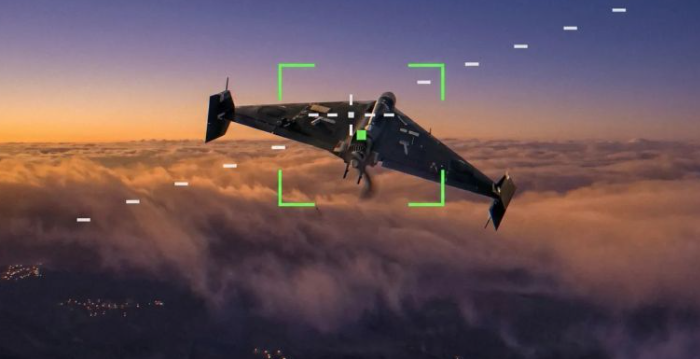
Collaborative Combat Aircraft are often described as "loyal wingmen." These unmanned systems are intended to work together with manned aircraft, carrying sensors, electronic warfare payloads, communications equipment or weapons.
Unlike traditional drones, CCAs are designed as force multipliers. A single fighter pilot may eventually control several autonomous aircraft during combat missions.
The concept promises greater survivability, lower operating costs and increased combat mass without requiring additional pilots.
For many defense planners, autonomous wingmen represent one of the most significant changes in military aviation since the introduction of stealth aircraft.
Germany Becomes Europe's Test Ground
Germany's future Eurofighter force is expected to play a central role in integrating CCA capabilities.
Several companies are positioning themselves for potential programs, including Airbus, Rheinmetall and international partners.
Airbus has selected the Kratos XQ-58A Valkyrie as a flying test platform to accelerate development and better understand operational requirements. Rather than waiting for a fully domestic solution, Airbus is choosing a faster approach by learning from an already proven system.
"We know it works," Airbus executives explained, emphasizing the importance of quickly bringing collaborative combat capabilities to market.
At the same time, other competitors are exploring alternative paths with different aircraft and industrial partnerships.
Sovereignty Versus Speed
One of the key debates surrounding Europe's CCA programs concerns strategic autonomy.
European governments increasingly want to reduce dependence on foreign technologies while maintaining interoperability with allies.
This creates a difficult balance.
Developing completely indigenous systems can strengthen sovereignty but may require longer timelines and higher costs. Partnering with existing platforms can accelerate deployment but potentially increase dependence on external suppliers.
Germany's approach appears to favor a combination of both strategies: rapid capability development today and stronger European industrial participation in the future.
Software Is Becoming the Real Weapon
The aircraft itself is only part of the equation.
Modern CCAs rely heavily on communications networks, artificial intelligence, sensor fusion and mission management software. In many ways, the software ecosystem behind these systems may prove more valuable than the airframe.
Future operations could involve multiple unmanned aircraft sharing data in real time, supporting pilots with targeting information, electronic warfare and reconnaissance.
The result is an increasingly connected battlespace where information superiority becomes just as important as firepower.
The Beginning of a New Arms Race
Collaborative Combat Aircraft are no longer experimental concepts.
They are becoming a reality.
As the United States pushes forward with its own CCA programs, Europe recognizes that maintaining technological competitiveness requires action.
Germany's decisions over the next few years may influence not only its own air force, but also the future direction of European defense cooperation.
The age of autonomous wingmen has arrived.
And the battle to build them has only just begun.