European Defence Agency's CapTech Maritime. How Europe Is Building the Navy of the Future Before the Next Conflict Begins
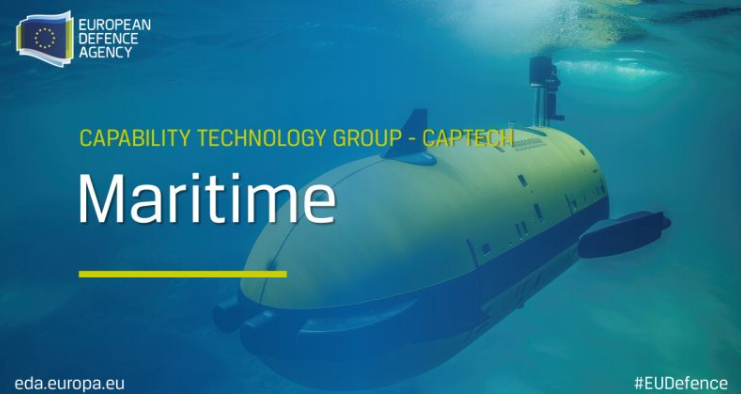
Warships are often judged by what can be seen.
The size of a destroyer. The firepower of a frigate. The missile launchers mounted on a corvette. The sleek profile of a next-generation submarine.
But the future of naval power is increasingly being determined by what remains invisible.
Algorithms.
Sensors.
Data networks.
Autonomous systems.
Artificial intelligence.
And the ability of nations to innovate together rather than compete against one another.
That is precisely where the European Defence Agency's CapTech Maritime enters the picture.
Outside specialist circles, few people have heard of it. Yet it may be one of the most strategically important organizations shaping Europe's future naval capabilities.
At a time when maritime security is becoming a defining geopolitical challenge, CapTech Maritime functions as a unique meeting point where military experts, researchers, government representatives, industry leaders, and academics collaborate on technologies that could determine Europe's naval advantage for decades to come.
In many ways, the initiative reflects a simple reality.
Modern naval power is no longer built solely in shipyards.
It is built in laboratories, research centers, software environments, simulation systems, and innovation hubs.
The challenges confronting European navies are evolving rapidly.
Underwater infrastructure requires protection.
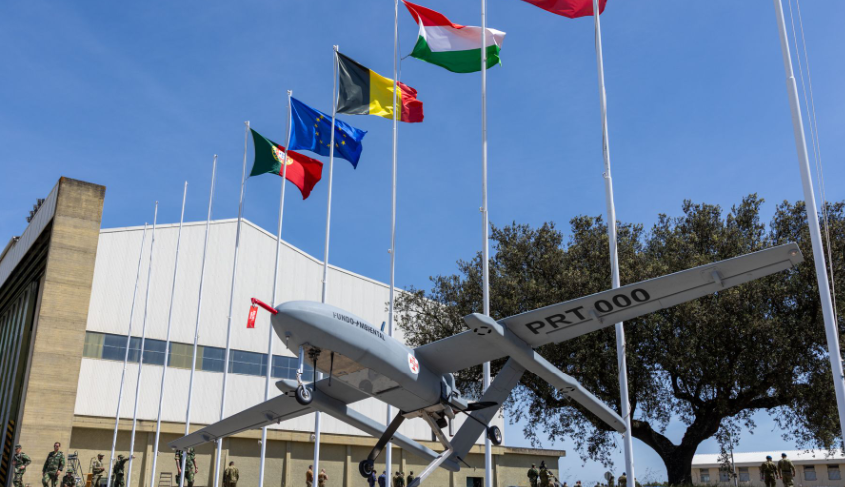
Autonomous vessels are becoming operational realities.
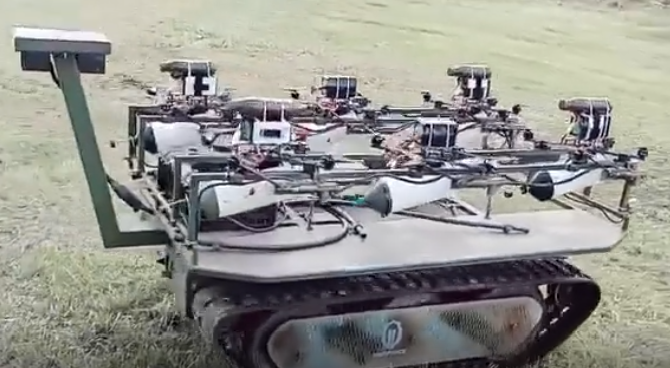
Drone swarms can threaten even sophisticated warships.
Cyberattacks can disrupt naval operations without a single shot being fired.
Artificial intelligence is transforming decision-making processes.
Traditional approaches alone are no longer sufficient.
Europe's response is increasingly based on cooperation.
Instead of every country independently developing solutions, CapTech Maritime seeks to pool expertise, reduce duplication, share testing environments, establish common standards, and accelerate innovation.
The logic is compelling.
Security threats are becoming more complex.
Defense budgets remain finite.
Collaboration creates scale.
And scale creates capability.
The technological priorities identified by CapTech Maritime reveal exactly where naval warfare is heading.
Integrated maritime communication and sensor networks aim to create a more connected battlespace, where information flows seamlessly between ships, underwater systems, aircraft, and command centers.
Naval warfare simulation and training are leveraging digital twins, immersive technologies, artificial intelligence, and advanced modeling to prepare crews for increasingly complex operational environments.
Platform survivability focuses on modularity, resilience, and adaptability, recognizing that future warships must remain effective against constantly evolving threats.
Perhaps even more revealing is the emphasis on energy resilience.
Navies around the world are discovering that energy is becoming a strategic weapon in itself. Advanced propulsion systems, onboard power management, and sustainable energy architectures are no longer engineering details. They are factors that directly affect operational endurance and combat effectiveness.
Then there is autonomy.
This may be the most transformative area of all.
Unmanned surface vessels.
Unmanned underwater vehicles.
Swarming technologies.
Human-machine teaming.
These concepts are no longer science fiction.
They are becoming central elements of maritime strategy.
The future fleet may contain as many algorithms as sailors.
And that future is arriving faster than many policymakers realize.
The same applies to threat detection and countermeasures.
Modern naval environments are becoming saturated with drones, autonomous systems, cyber threats, and electronic warfare capabilities. Detecting, classifying, and neutralizing these threats requires entirely new technological frameworks.
Advanced sensing systems.
Counter-UxV solutions.
Electromagnetic effectors.
Hypervelocity weapons.
These are not future concepts.
They are present-tense development priorities.
Yet perhaps the most important area is decision support.
The amount of data generated during military operations is overwhelming. Commanders increasingly require AI-driven tools capable of processing information, identifying patterns, generating insights, and enabling faster decision-making.
Speed is becoming as important as firepower.
The side that understands the situation first often gains the decisive advantage.
This is why CapTech Maritime matters.
It is not simply about improving ships.
It is about improving Europe's ability to innovate collectively.
For years, critics argued that European defense suffered from fragmentation, duplication, and inefficiency.
CapTech Maritime represents the opposite approach.
Shared research.
Shared expertise.
Shared priorities.
Shared capability development.
In an era of growing maritime competition, contested sea lanes, underwater infrastructure threats, autonomous systems, and geopolitical uncertainty, Europe is quietly preparing for the future.
Not through headlines.
Not through grand political speeches.
But through sustained cooperation among experts who understand that tomorrow's naval supremacy will belong not only to those who build the biggest fleets.
But to those who build the smartest ones.