Europe Arms Itself Against the Drone Swarm. Alpine Eagle and Origin Robotics Redefine Air Defence
Europe is rewriting the rules of air defence—and the trigger is not a fighter jet or a missile system, but the relentless rise of drones.
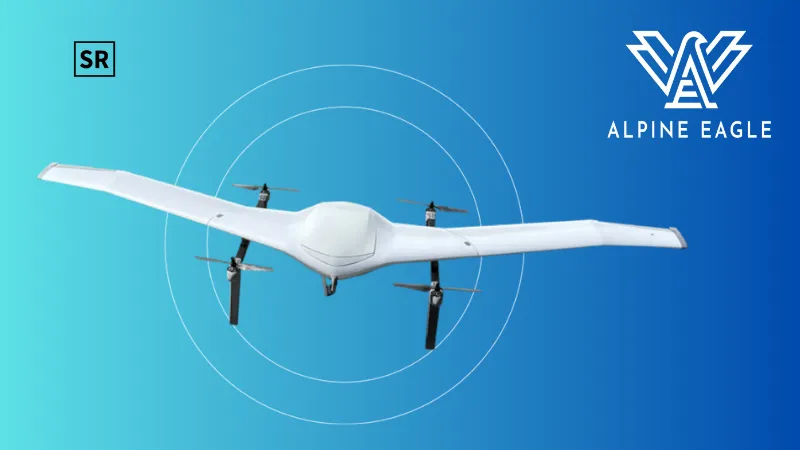
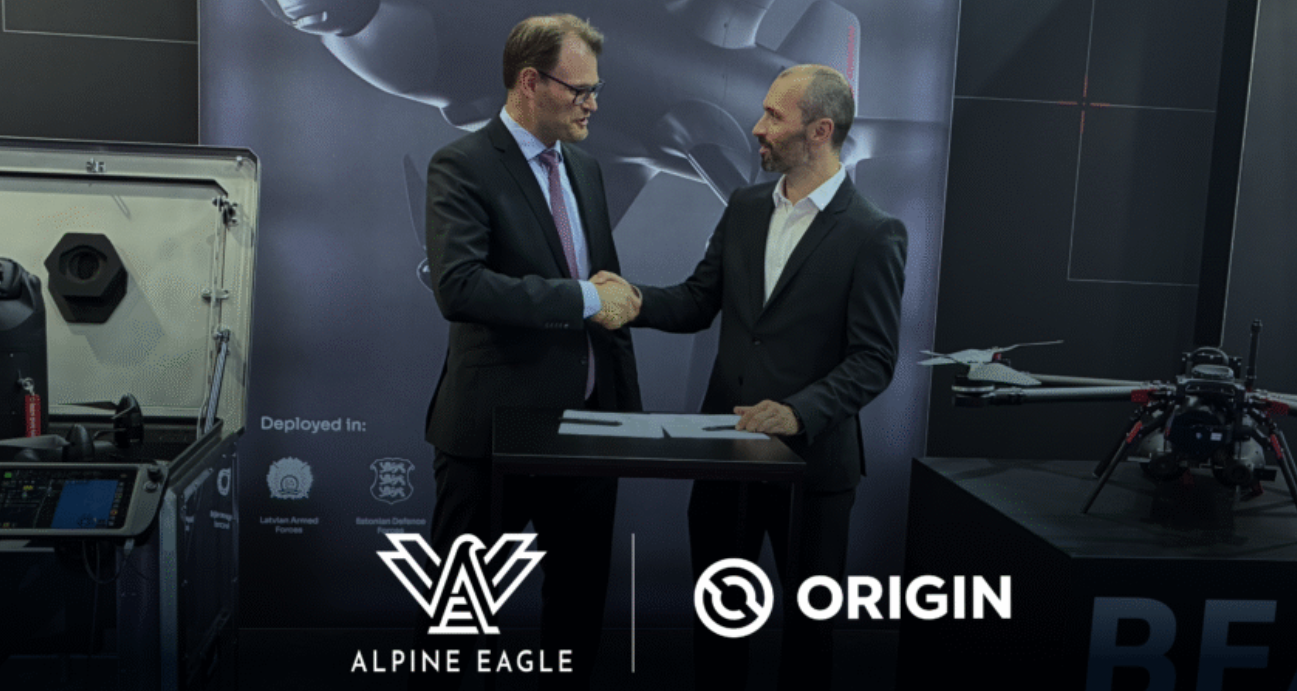
In a move that signals both urgency and ambition, Germany’s Alpine Eagle and Latvia’s Origin Robotics have joined forces to create a new generation of counter-drone capability. Their partnership, unveiled at Eurosatory 2026 in Paris, is more than a technological integration—it is a strategic statement about the future of warfare in Europe.
At its core lies a simple but disruptive idea: air defence is no longer about isolated systems. It is about networks.
By integrating Origin Robotics’ BLAZE interceptor into Alpine Eagle’s Sentinel architecture, the two companies are building what defence planners increasingly call a “sensor-to-effector” system. In practice, this means linking detection, decision-making, and interception into one coordinated, layered network capable of reacting to threats in real time.
This is not evolution—it is a shift in doctrine.
The Sentinel system already combines airborne and ground-based radar with distributed sensor networks, all orchestrated through its Sentinel-OS software backbone. The addition of BLAZE introduces an autonomous interception layer, designed specifically to counter drones and loitering munitions—a class of weapons that has reshaped battlefields from Ukraine to the Middle East.
And that context matters.
Recent conflicts have exposed a harsh reality: traditional air defence systems are often too slow, too expensive, or simply not designed to handle the scale and speed of mass drone attacks. Cheap, agile, and increasingly autonomous, drones have become the weapon of choice for disrupting even the most sophisticated militaries.
The result? A race to adapt.
What Alpine Eagle and Origin Robotics are proposing is a different answer—one rooted in scalability, cost-efficiency, and integration. Instead of relying on high-value interceptors to defeat low-cost threats, their architecture emphasizes layered defence, where detection happens earlier, decisions are made faster, and response options are diversified.
The inclusion of BLAZE is central to this approach. As a radar-guided autonomous interceptor, it brings a targeted, scalable response to aerial threats. But the real power lies in how it connects to the broader system. It is not just a standalone weapon—it is part of a coordinated network where sensors, software, and effectors operate as a single entity.
This “system-of-systems” concept is rapidly becoming the defining principle of modern defence.
Yet perhaps the most provocative aspect of the partnership is not technological—it is industrial.
The agreement includes plans for local manufacturing of BLAZE in Germany, a move that aligns with Europe’s growing push for defence sovereignty. In an era of strained supply chains and geopolitical uncertainty, the ability to produce critical defence technologies within Europe is no longer a luxury—it is a necessity.
This collaboration also highlights a broader trend: the rise of agile, specialized defence tech companies working together to outpace larger, slower-moving programmes. By combining niche expertise—AI-driven sensing from Alpine Eagle and autonomous interception from Origin Robotics—the partnership creates a capability that neither could deliver alone.
It is a model that challenges the traditional defence industry playbook.
And it could scale fast.
With initial efforts focused on integration, demonstrations, and operational validation, the companies are already positioning themselves for future deployments. Their presence at Eurosatory—Europe’s premier defence exhibition—signals confidence that the market is ready.
More importantly, it signals that the demand is real.
Governments across Europe are accelerating investment in counter-drone technologies, driven by the lessons of modern conflict. The question is no longer whether such systems are needed, but how quickly they can be deployed—and how effectively they can be integrated into national and allied defence frameworks.
In that race, timing is everything.
Alpine Eagle and Origin Robotics are betting that the future belongs to those who can connect the dots—between sensors and shooters, between software and hardware, and between countries willing to collaborate at speed.
Because the battlefield has changed.
And in the age of drone swarms, the advantage will not go to the biggest system—but to the fastest network.
.png)