Estonia scraps €500M in armored vehicles to invest in drones and air defense
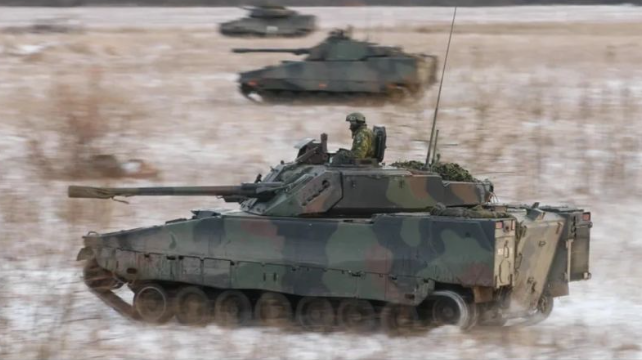
When Estonia quietly shelved a €500 million plan to buy new infantry fighting vehicles, it did something many NATO countries are still struggling to do: admit that the battlefield has fundamentally changed.
Rather than doubling down on heavy armor scheduled to arrive in 2029 or 2030, Tallinn made a hard and disciplined choice. The money will now flow toward drone defense, air defense, unmanned systems, and situational awareness—capabilities that are already determining who survives and who doesn’t in Ukraine.
This was not an emotional decision, nor a political stunt. Estonia’s defense minister, Hanno Pevkur, made clear that the shift was driven by lessons learned from Ukraine and direct military advice from the commander of the Estonian Defence Forces. Heavy platforms still matter, but their dominance no longer defines combat power. That reality is now impossible to ignore.
Ukraine has shown us the truth in brutal detail. Drones now deliver surveillance, targeting, electronic warfare, and precision strike at a tempo that traditional systems cannot match. Persistent aerial observation compresses decision time, punishes static forces, and exposes anything slow to move or adapt. Armor that once offered protection increasingly attracts attention instead.
Estonia understands something that much larger militaries are still debating: preparing for the last war is no longer an option when the next engagement may arrive with minimal warning—and under constant observation.
Importantly, Estonia is not abandoning its existing fleet. Instead, it will extend the service life of its CV90 infantry fighting vehicles by at least a decade, upgrading where necessary at a fraction of the cost of replacement. The savings are then reinvested where returns are highest—eyes, ears, and counters in the air.
This gets to the heart of the issue for NATO.
Alliance discussions still tend to revolve around exquisite platforms, long procurement timelines, and limited pilot programs for unmanned systems. But the war in Ukraine has made something painfully clear: small, cheap, and numerous systems—properly networked and operated by trained soldiers—are reshaping combat effectiveness faster than traditional acquisition cycles can keep up.
Short-range air defense is a perfect example. Not every drone threat warrants a missile. Gun-based solutions, electronic warfare, sensors, and layered detection systems are essential when facing mass, low-cost aerial threats. Estonia’s focus on improving situational awareness and counter‑drone capabilities reflects this reality.
Equally important is how capability is distributed. Drone power cannot sit only at brigade or national level. The real advantage comes when companies and platoons can see, decide, and strike without waiting on higher headquarters. That is how you increase lethality and survivability without increasing manpower.
Well-trained drone teams already deliver effects that once required artillery, air support, or heavy indirect fire. Embedded at the tactical level, they give commanders immediate options—find, fix, strike, and adapt in minutes, not hours.
Estonia’s decision deserves more than polite acknowledgment. It should trigger uncomfortable conversations across NATO capitals.
The battlefield has already changed. The question now is not if others will adapt—but whether they do so deliberately, or under fire.