Energy as a Weapon System - Why Europe’s Defence Future Is Being Rewritten in Nicosia at CF SEDSS
For decades, energy in defence planning was treated as a background issue—logistics, infrastructure, fuel contracts. Today, that thinking is obsolete.
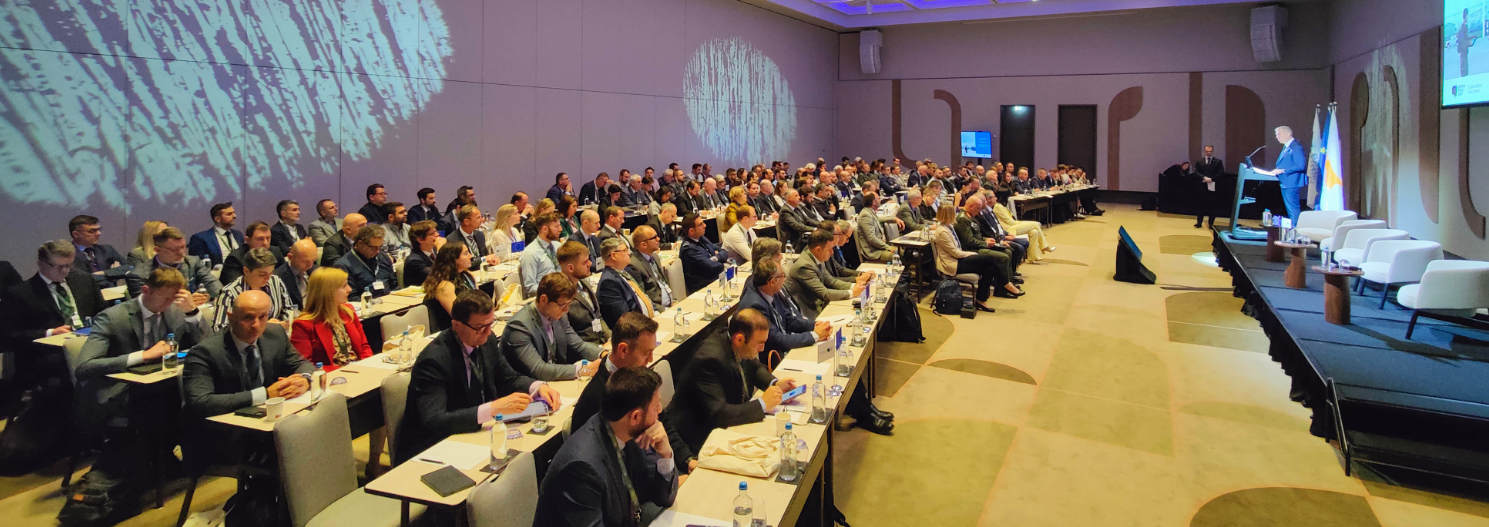
At the 3rd CF SEDSS IV Plenary Conference, held on 5–6 May 2026 in Nicosia, Cyprus, Europe’s defence and energy communities delivered a clear message: energy is no longer a support function—it is a determinant of military power and vulnerability.
Convened under the auspices of the Cypriot Presidency of the Council of the EU and hosted by the Cypriot Ministry of Defence, the conference marked the largest gathering since the start of Phase IV of the Consultation Forum for Sustainable Energy in the Defence and Security Sector (CF SEDSS). More than 180 experts, representatives from 26 EU Member States, and 21 exhibiting companies underscored the Forum’s evolution into Europe’s central defence‑energy coordination platform.
“Energy is no longer just a support function — it is a foundation of military capability and a source of vulnerability,” said Anders Sjöborg, Deputy Chief Executive of the European Defence Agency (EDA). His warning was blunt: forces dependent on fragile energy systems are forces at risk, while those that are diversified and resilient are the ones that endure.
That assessment reflects the lessons of recent conflicts, where supply‑chain disruptions, cyber interference, and dependency on single energy sources have exposed operational weaknesses. In response, European defence planners are no longer asking whether energy belongs in military strategy—but how fast resilience can be built.
From Policy Talk to Operational Reality
Unlike traditional conferences heavy on rhetoric, CF SEDSS is structured around delivery.
Participants used the plenary and parallel working‑group sessions to complete the first full cycle of Phase IV deliverables, including 15 concrete project ideas, draft roadmaps, and guidelines aimed at strengthening defence energy resilience across Europe.
These outputs span energy efficiency in military infrastructure, renewable integration on bases, and more resilient energy supply systems designed to function under crisis conditions—all areas now viewed as directly linked to operational readiness.
“Energy is no longer a supporting factor of defence, but a core element of security and strategic autonomy,” said Stelios Kountouris, Acting Permanent Secretary of the Cypriot Ministry of Defence. Cyprus, he explained, treats energy as a fundamental pillar of national and European security, not a supplementary concern.
The Cypriot Ministry highlighted ongoing efforts to upgrade military infrastructure, integrate renewable solutions, and reduce dependency on vulnerable supply chains—actions explicitly aligned with EU‑level initiatives coordinated by the EDA.
A Forum Shaped by a Changing Threat Landscape
The growing relevance of CF SEDSS is inseparable from changes in the defence environment itself.
Increased digitisation, electrification of systems, and reliance on data‑driven capabilities have sharply increased energy demand while simultaneously increasing exposure to disruption. Against this backdrop, energy resilience has become a strategic variable—one shaping defence planning alongside manpower, equipment, and command systems.
The Forum addresses this shift by acting as a convergence point between defence ministries, industry, academia, and research institutions. Its role is not to dictate solutions, but to accelerate their development, scaling, and adoption across national defence frameworks.
The initiative is managed by the European Defence Agency and supported by the European Commission’s Directorate‑General for Energy (DG ENER). Co‑funded by the EU LIFE programme, Phase IV will run until September 2028, focusing on affordability, sustainability, and resilience of defence energy systems across Europe.
Why CF SEDSS Matters Now
The strategic takeaway from Nicosia is unmistakable: Europe is institutionalising defence energy resilience.
CF SEDSS no longer operates on the margins of defence innovation. It now functions as a policy‑to‑practice engine—translating energy strategy into tangible defence capability at a time when vulnerability equals exposure.
In modern defence, energy is not just what keeps the lights on.
It is what keeps forces moving, communicating, and surviving under pressure.