Dufour Aerospace. Big Aviation Breakthroughs Rarely Begin With Big Teams
The aviation industry often treats scale as a sign of strength.
Large engineering departments, global supply chains and enormous development budgets are expected to produce the most advanced aircraft. Yet some of aviation’s most important breakthroughs were created by surprisingly small teams operating with exceptional focus.
Dufour Aerospace is building its organisation around that idea.
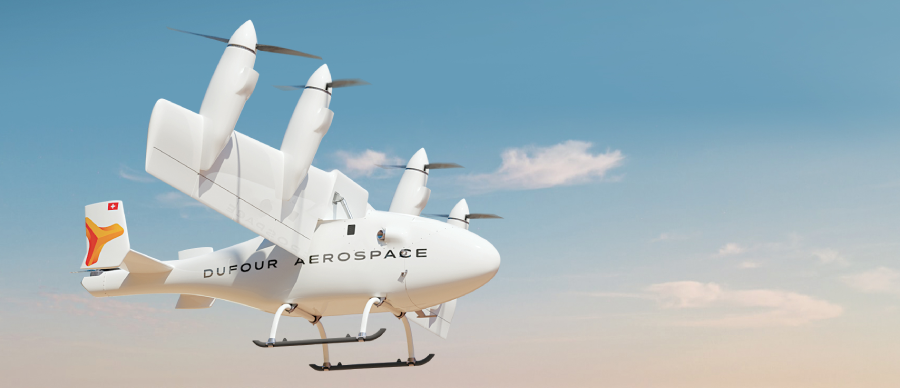
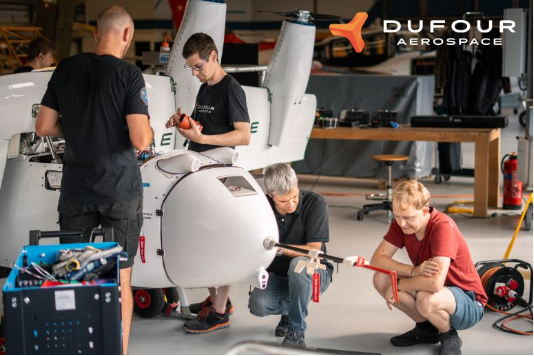
Rather than assembling the largest possible workforce, the Swiss aviation company has intentionally created a concentrated engineering team made up of specialists in aerodynamics, avionics, propulsion, flight-control systems and certification.
The philosophy is simple: progress in aviation is not determined by how many engineers attend a meeting. It depends on whether the right experts can solve difficult problems together.
There is strong historical precedent for this approach.
Lockheed’s Skunk Works became famous for developing revolutionary aircraft through small, highly capable teams that worked with clear objectives, limited bureaucracy and significant technical authority.
The team behind the SR-71 Blackbird reportedly included only a few dozen core engineers. Yet they delivered an aircraft that flew above 80,000 feet, exceeded Mach 3 and remained one of the most technically extraordinary platforms ever created.
The lesson was not that complex aircraft are easy to build.
It was that small teams can move quickly when expertise, responsibility and decision-making are tightly connected.
Dufour Aerospace is applying a similar principle to the development of modern aircraft systems.
Its engineers bring experience from organisations including Airbus, Pilatus, Solar Impulse, Sikorsky, Leonardo, NASA and Google. That mix spans conventional aerospace engineering, rotorcraft, electric propulsion, software, advanced systems and aircraft certification.
This diversity matters because the next generation of aviation will not be created by improving one isolated technology.
Electric and hybrid-electric aircraft require propulsion, aerodynamics, energy management, avionics and control systems to work as one integrated architecture. A design that performs well in simulation may still fail if its systems are too heavy, difficult to certify or unreliable in real operating conditions.
Focused multidisciplinary teams can identify these conflicts earlier.
An aerodynamics specialist can work directly with propulsion engineers. Flight-control developers can coordinate closely with avionics and verification teams. Certification considerations can influence the aircraft from the beginning rather than being added late in development.
This is especially important in aviation, where certification is not a final administrative step.
It shapes the entire product.
Every critical function must be analysed, verified and supported by evidence. Software and hardware must behave predictably during normal operation, failures and unexpected conditions. Design decisions made early can determine whether certification later becomes manageable or painfully expensive.
Dufour Aerospace’s leadership reflects that priority.
Chief Verification and Certification Officer Christophe Colucci brings more than 25 years of aerospace and defence engineering experience. His background includes work on mission-critical flight-control computers for Airbus Defence and Space and Airbus Helicopters.
That type of experience can be more valuable than simply adding more people to a programme.
An engineer who understands both system design and certification can help teams avoid dead ends, recognise risk earlier and build processes that support regulatory approval from the start.
Small teams also offer another advantage: accountability.
In a large organisation, decisions can pass through several departments before anyone takes ownership. Communication slows down, responsibilities overlap and technical compromises may become difficult to trace.
In a focused team, every engineer is closer to the product and closer to the consequences of each decision.
That can create faster feedback, stronger collaboration and a clearer understanding of the complete aircraft.
However, small does not automatically mean effective.
A compact team only works when it has deep expertise, strong leadership and a clear mission. If key disciplines are missing or too much responsibility is concentrated in too few people, the same structure can become fragile.
The challenge is therefore not simply to remain small.
It is to remain complete.
Dufour Aerospace appears to be pursuing that balance: a limited but multidisciplinary team capable of addressing the full aircraft-development chain, from aerodynamic performance to certification evidence.
The company’s message also challenges a common assumption across the technology sector.
More employees do not automatically create more innovation. Beyond a certain point, additional size can introduce more coordination, more management and more distance between a technical problem and the person able to solve it.
Aviation’s greatest achievements have often come from teams that were small enough to move quickly but experienced enough to understand the risks.
The SR-71 demonstrated what such a structure could achieve in the age of titanium, jet propulsion and Cold War reconnaissance.
Dufour Aerospace is betting that the same principle still applies in the age of advanced flight controls, electric propulsion and next-generation aviation.
Great aircraft are not built by the largest room of engineers.
They are built by the right people in the room.