DroneShield’s $23.2M. The War Against Drones Has Already Begun

The defining military competition of the next decade may not be between tanks and missiles.
It may be between drones and the systems designed to stop them.
Across Europe, defense planners are drawing an uncomfortable conclusion from the battlefields of Ukraine, the Middle East, and other conflict zones: the sky below 1,000 meters has become one of the most dangerous and contested spaces in modern warfare.
Cheap drones are changing everything.
And Europe is scrambling to catch up.
DroneShield's announcement of $23.2 million in new reseller contracts is more than a business success story. It is another signal that counter-drone technology, once considered a niche capability, has become a strategic necessity.
Behind the contract sits a much larger trend.
The drone revolution is forcing militaries to rethink the fundamentals of defense.
The Age of the $500 Threat
For decades, military power was measured in billion-dollar assets.
Aircraft carriers.
Fighter jets.
Missile defense systems.
Advanced armored vehicles.
Today, a drone costing a few hundred or a few thousand dollars can threaten equipment worth millions.
The economics are brutal.
A small drone equipped with a camera can reveal troop movements.
A modified commercial drone can drop explosives.
A coordinated swarm can overwhelm traditional defenses.
The battlefield has become radically more democratic.
Technology once reserved for nation-states is now available to smaller militaries, irregular forces, and even non-state actors.
This reality is driving unprecedented demand for Counter-UAS (CUAS) solutions across Europe.
Why Europe Is Moving Fast
The continent's new urgency is not theoretical.
European governments have spent years observing how drones transformed combat operations in Ukraine.
Reconnaissance drones now constantly scan the battlefield.
FPV strike drones hunt vehicles with extraordinary precision.
Swarms increasingly threaten critical infrastructure, logistics nodes, command centers, and air-defense systems.
Military planners understand a simple truth:
If drones can see you, they can target you.
If they can target you, they can disrupt your mission.
And if enough drones appear at once, even sophisticated forces can become vulnerable.
Counter-drone systems are therefore evolving from specialty equipment into a core layer of battlefield protection.
The mission is no longer merely detecting hostile aircraft.
It is defending entire operational ecosystems.
The New Shield Over the Battlefield
This is where companies like DroneShield are finding growing opportunities.
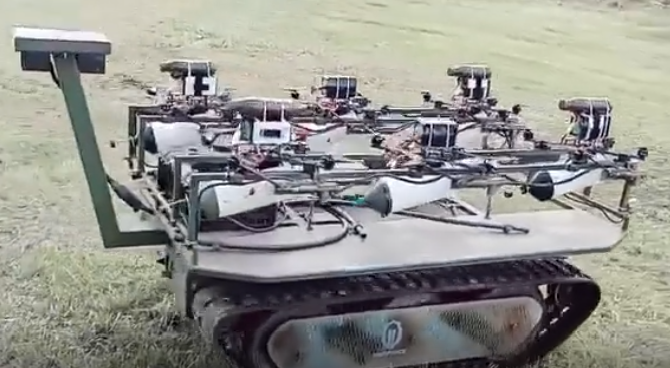
The newly announced contracts include vehicle-mounted counter-drone systems supplied through longstanding European partner COBBS BELUX BV.
The concept reflects how military requirements are changing.
Protection cannot remain fixed to bases or permanent installations.
It must move with troops.
It must protect convoys.
It must accompany armored formations.
It must function wherever threats emerge.
Mobility increasingly matters as much as capability.
Because the drone threat itself is mobile, adaptive, and persistent.
A New Arms Race
What makes the counter-drone market particularly fascinating is that it represents an entirely new military competition.
Every improvement in drone technology creates pressure for better detection systems.
Every advancement in electronic warfare drives innovation in autonomous navigation.
Every new countermeasure generates a new workaround.
The cycle never stops.
It is an arms race measured in software updates as much as hardware upgrades.
And unlike traditional military development cycles that can take years, drone warfare evolves in months.
Sometimes weeks.
The side that learns fastest gains the advantage.
Beyond Technology
The most important lesson is that counter-drone capability is no longer simply about equipment.
It is about resilience.
Modern military operations depend on maintaining freedom of movement, communications, intelligence gathering, and force protection.
Uncontrolled drone threats can compromise all four.
As a result, air superiority is being redefined.
In previous generations, control of the skies meant dominating high altitudes with fighters and bombers.
Today, dominance must extend to the lowest levels of airspace, where thousands of small autonomous systems may operate simultaneously.
The Future Is Already Here
DroneShield's European expansion reflects a broader shift underway across defense markets.
The question military leaders once asked was:
"How many drones do we need?"
The new question is:
"How do we survive in a world where everyone has drones?"
That challenge will shape procurement decisions, defense budgets, and military doctrine for years to come.
The battlefield of the future is not arriving.
It has already arrived.
And increasingly, victory may belong not to the side with the most drones, but to the side that can detect, disrupt, and defeat them first.