Buttocks, Boundaries & Bots - Inside the EU’s Awkward Battle to Ban AI Nudification

It’s not every day that European policymakers find themselves debating the legal definition of “buttocks.” Yet in Brussels, such conversations are now at the center of one of the most urgent digital policy battles of our time: how to stop the rise of AI-generated sexualized deepfakes.
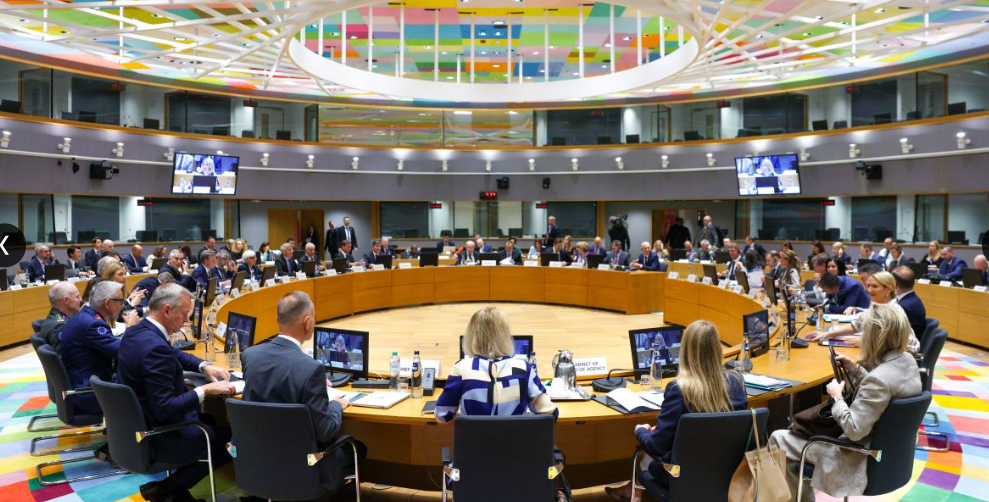
What might sound absurd on the surface—bureaucrats dissecting the nuances of “intimate parts”—is in fact a reflection of a deeper and more complex challenge. The European Commission, alongside the European Parliament and EU member states, is working to refine the bloc’s landmark AI regulation. At stake is a proposed ban on AI systems capable of generating non-consensual nudified images of real individuals.
The issue gained urgency earlier this year following backlash against Grok, an AI tool associated with xAI. The platform was widely criticized for enabling users to generate explicit images of real people without consent. According to estimates by digital safety groups, millions of such images were created in a matter of days before restrictions were introduced.
This incident crystallized a growing concern: AI-powered “nudification” tools are no longer fringe technologies. They are rapidly becoming accessible, scalable, and difficult to control. For lawmakers, the question is no longer whether to act—but how.
And that’s where things get complicated.
To enforce a ban, regulators must define what exactly is prohibited. The draft legislation reportedly includes terms such as “genitals, pubic area, anus, fully exposed buttocks, or female nipple or areola.” Even the inclusion of breasts has sparked what insiders describe as “political” debate.
These discussions may seem trivial, but they highlight a fundamental tension in tech regulation. The more precise the definition, the clearer the enforcement—but also the greater the risk of loopholes. A narrowly defined list could allow harmful content to slip through simply because it falls outside the specified categories. On the other hand, a broader, more flexible definition could create legal uncertainty and inconsistent enforcement across jurisdictions.
This dilemma is not new. The European Union has often been criticized for being overly detailed in its digital laws, sometimes at the expense of adaptability. The ongoing reform of the AI Act—often referred to as the “AI omnibus”—was intended to simplify the regulatory framework. Yet this very case shows how difficult simplification can be when dealing with rapidly evolving technologies.
At its core, the debate is about harm, not anatomy. AI-generated sexualized images can have devastating consequences for victims, including reputational damage, psychological distress, and even professional or social exclusion. The fact that these images can be created without any physical interaction makes them particularly insidious.
Moreover, the scale at which such content can be produced amplifies the risk. What once required technical expertise can now be done with a few clicks. This democratization of harmful tools forces regulators to think beyond traditional legal categories and consider new forms of digital abuse.
The EU’s approach—attempting to codify protections into law—is both ambitious and necessary. By explicitly banning AI systems that generate sexualized deepfakes of identifiable individuals, the bloc is setting a global precedent. However, the effectiveness of this ban will depend heavily on how well the definitions hold up in practice.
As negotiations enter their final phase, with key discussions scheduled in the coming weeks, the stakes are high. A poorly defined rule could undermine enforcement. A well-crafted one could become a benchmark for digital rights worldwide.
In the end, the debate over “buttocks” is not about language—it’s about limits. It reflects the growing realization that in the age of AI, protecting human dignity requires confronting uncomfortable questions head-on.
And sometimes, that starts with defining exactly what needs to be protected.