Boris Johnson Enters Ukraine’s Kill Zone. The Former UK Prime Minister Went Where Many Western Leaders Wouldn’t Dare
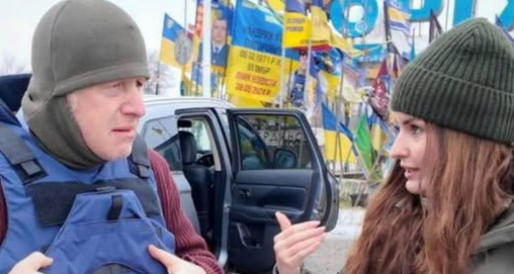
While many Western politicians debate Ukraine from conference rooms, television studios, and government offices thousands of miles from the front line, Boris Johnson chose a different approach. The former British Prime Minister traveled quietly into one of the world's most dangerous conflict zones to witness the war firsthand.
The result is Boris Johnson: Into Ukraine’s Kill Zone, a documentary that offers viewers an unfiltered look at a country fighting for its survival and a former world leader returning to his roots as a journalist.
Without major publicity or political fanfare, Johnson arrived in Ukraine and spent 72 hours documenting life under constant threat of attack. The film, broadcast by Britain's Channel 5 on July 24, 2026, follows his journey from Kyiv toward the Zaporizhzhia region, where the realities of modern warfare are impossible to ignore.
What makes the documentary so compelling is not merely Johnson's presence. It is the decision to put himself directly into environments where danger is not theoretical.
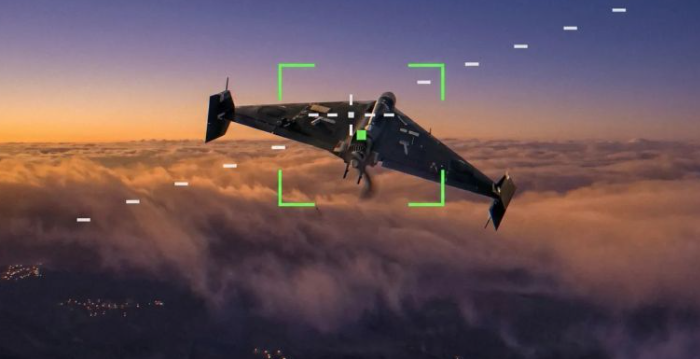
During filming, Johnson visited destroyed villages scarred by war, met Ukrainian soldiers defending their country, toured drone units, and observed improvised workshops where Ukrainians are rapidly developing tools and technologies to counter Russian attacks. The documentary highlights how innovation has become one of Ukraine's most important weapons, particularly in the realm of drone warfare.
One night, Johnson embedded with mobile air-defense teams of Ukraine's 112th Territorial Defense Brigade, units tasked with protecting Kyiv from drone attacks. It was not a symbolic visit. During his first night near operational positions, a drone strike reportedly hit a neighboring residential building, abruptly demonstrating the everyday reality faced by millions of Ukrainians.
For a politician often associated with bold rhetoric and colorful public appearances, the documentary reveals a different side. Cameras capture moments of curiosity, admiration, and occasional tension. According to journalists involved in the production, one of the few visible flashes of concern came when Ukrainian soldiers playfully waved a homemade explosive device nearby before assuring him that the detonator had not yet been installed.
Even Johnson's famously recognizable appearance became a security concern.
To avoid attracting attention while traveling through sensitive locations, he reportedly moved largely incognito. His trademark hairstyle, familiar around the world, made anonymity difficult, leading him to swap traditional headwear for a balaclava during parts of the trip.
Yet the documentary is about more than Boris Johnson.
It is fundamentally a story about Ukrainians.
The former prime minister serves as narrator and interviewer, speaking directly with soldiers, volunteers, priests, and civilians whose lives have been transformed by the conflict. Throughout the film, he appears to connect easily with people from vastly different backgrounds, whether congratulating a soldier for intercepting an enemy drone or discussing family life and fatherhood with those serving on the front lines.
The production also enters politically sensitive territory.
Johnson has long been one of Ukraine's most outspoken international supporters, and the documentary openly examines the consequences of delays in Western military assistance. The film argues that slow decision-making by allies carries real human costs, measured not in political headlines but in lives lost and opportunities missed on the battlefield.
That message has predictably generated controversy. Critics continue to argue over Johnson's historical role in Western policy toward Ukraine, while supporters view his visit as evidence of a commitment rarely demonstrated by senior international figures after leaving office.
Regardless of political perspectives, one fact is difficult to dispute: few former world leaders would voluntarily spend days near active combat zones to document a war from the ground.
At a time when global attention is fragmented and the conflict risks becoming background noise for international audiences, Into Ukraine’s Kill Zone seeks to bring viewers back to reality.
It reminds audiences that behind every headline about drones, missiles, and military aid are ordinary people living through extraordinary circumstances.
Whether admired or criticized, Boris Johnson has once again demonstrated a willingness to go where many others stop at words. In doing so, he has delivered a stark message to the West: the war is not distant, the stakes are not abstract, and time remains a luxury Ukraine cannot afford.